









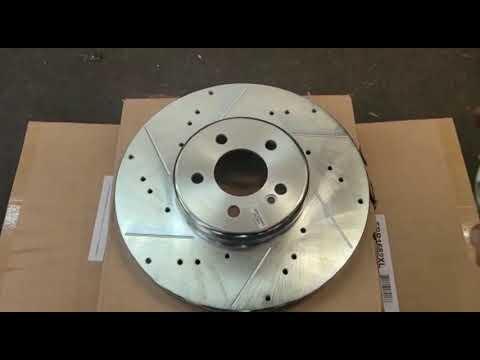







How to Replace Front Brake Pads & Rotors on a 2016-2018 Mercedes-Benz GLC300
Step-by-step DIY guide with tools, parts list, safety tips, wheel bolt torque (130 Nm), and brake bedding procedure
How to Replace Front Brake Pads & Rotors on a 2016-2018 Mercedes-Benz GLC300
Step-by-step DIY guide with tools, parts list, safety tips, wheel bolt torque (130 Nm), and brake bedding procedure for 2016, 2017, 2018


🔧 GLC - Front Brake Pads & Rotor Replacement
Replacing the front brake pads and rotors restores stopping power and prevents vibration or grinding. On your GLC, you’ll remove the caliper, swap the pads and rotors, then reinstall everything and bed the brakes in.
Difficulty Level: Intermediate | Estimated Time: 2-4 hours
Assumption: standard factory (non-AMG) front brakes.
⚠️ Safety & Precautions
- 🧤 Support the vehicle with jack stands; never rely on a jack alone.
- 🧯 Brake dust is harmful; avoid blowing it with compressed air.
- 🔥 Brakes can be very hot; let them cool before starting.
- 🪝 Do not let the caliper hang by the brake hose; support it with a hanger.
- 🧪 Brake fluid can overflow when compressing pistons; watch the reservoir level.
🔧 Required Tools
You'll need the following tools for this repair:
- Floor jack (rated 3-ton minimum)
- Jack stands (rated 3-ton minimum)
- Wheel chocks
- 17mm socket
- Breaker bar (1/2")
- Torque wrench (20–200 Nm range)
- E-Torx socket set E10–E20
- Hex bit socket set 5–10mm
- Torx T30 bit
- Flat-blade screwdriver
- Needle-nose pliers
- Caliper piston compression tool (specialty)
- Caliper hanger hook
- Rubber mallet
- Wire brush
- Brake cleaner
- Shop towels
- Nitrile gloves
- Safety glasses
🔩 Required Parts
HowToo sells all the parts you need for this repair:
- Front brake pad set - Qty: 1
- Front brake rotors - Replace in pairs - Qty: 2
- Front brake pad wear sensor - Qty: 1
- Brake pad hardware/anti-rattle clips (if not included with pads) - Qty: 1
- Brake caliper carrier bolts (single-use if specified by Mercedes) - Qty: 4
- High-temperature brake lubricant - Qty: 1
- Anti-seize compound (hub face, very thin layer) - Qty: 1
📋 Before You Begin
- Park on level ground, put the transmission in Park, and set the parking brake.
- Chock the rear wheels with wheel chocks.
- Loosen the front wheel bolts slightly using a 17mm socket and breaker bar (1/2") before lifting.
- Open the hood and locate the brake fluid reservoir. Do not remove the cap yet, but be ready to monitor fluid level.
- Take a photo of pad/clip layout first.
🔨 Step-by-Step Instructions
Follow these steps in order:
Step 1: Lift and secure the front end
- Lift the front of the vehicle using a floor jack (rated 3-ton minimum) at the correct jacking point.
- Place jack stands (rated 3-ton minimum) under the proper support points and lower onto stands.
- Remove the front wheels using a 17mm socket.
Step 2: Remove the pad wear sensor (if equipped)
- Locate the sensor wire at the caliper/pad area.
- Carefully release clips using a flat-blade screwdriver and/or needle-nose pliers.
- Unplug the connector without pulling on the wire.
- If it’s brittle, replace it.
Step 3: Remove the caliper
- Remove any external anti-rattle spring/clip using a flat-blade screwdriver (keep your face clear; it’s spring-loaded).
- From the back of the caliper, remove the caliper slide/guide fasteners using a hex bit socket set 5–10mm (these are the bolts that let the caliper “slide”).
- Lift the caliper off the bracket and immediately support it with a caliper hanger hook.
Step 4: Remove old pads and inspect
- Pull the pads out of the bracket by hand.
- Inspect the dust boots around the caliper piston for tears and check for brake fluid leaks.
- Clean the bracket and pad contact points using brake cleaner and a wire brush.
Step 5: Compress the caliper piston
- Place an old pad against the piston face to spread the force evenly.
- Compress the piston slowly using a caliper piston compression tool (specialty). (This tool pushes the piston straight back into the caliper.)
- Check the brake fluid reservoir level as you compress. Remove excess fluid if it approaches the top.
Step 6: Remove the caliper carrier (bracket)
- Remove the caliper carrier bolts using an E-Torx socket set E10–E20 and a breaker bar (1/2") if needed.
- Set the carrier aside after cleaning it with brake cleaner.
- Carrier bolts can be very tight.
Step 7: Remove the rotor
- Remove the rotor retaining screw using a Torx T30 bit.
- If the rotor is stuck to the hub, tap the rotor “hat” area with a rubber mallet until it breaks free.
- Clean the hub face with a wire brush and brake cleaner so the new rotor sits perfectly flat.
Step 8: Install the new rotor
- Clean the new rotor friction surfaces with brake cleaner to remove packing oil.
- Apply a very thin film of anti-seize compound to the hub face (avoid getting any on the rotor friction surface).
- Install the rotor and reinstall the retaining screw using a Torx T30 bit.
Step 9: Reinstall the carrier and install new pads
- Reinstall the caliper carrier using an E-Torx socket set E10–E20 and torque wrench to the Mercedes specification for your brake package.
- Install new pad hardware/anti-rattle clips (if applicable) by hand; use a flat-blade screwdriver only if needed.
- Apply high-temperature brake lubricant in a thin layer to pad ears/contact points (metal-to-metal touch points only).
- Slide the new pads into place.
- No grease on pad/rotor surfaces.
Step 10: Reinstall the caliper
- Place the caliper over the new pads/rotor.
- Install and tighten the caliper slide/guide fasteners using a hex bit socket set 5–10mm and torque wrench to the Mercedes specification for your brake package.
- Reinstall the external anti-rattle spring/clip using a flat-blade screwdriver.
Step 11: Install the new wear sensor and route the wire
- Install the new sensor into the pad (it should click/seat firmly).
- Route the wire exactly like the original and secure it in the clips using needle-nose pliers if needed.
- Reconnect the electrical connector fully.
Step 12: Reinstall wheels and torque wheel bolts
- Reinstall the wheels and hand-thread the bolts to avoid cross-threading.
- Lower the vehicle off jack stands using the floor jack (rated 3-ton minimum).
- Tighten wheel bolts in a star pattern using a torque wrench: Torque to 130 Nm (96 ft-lbs).
✅ After Repair
- With the engine off, slowly pump the brake pedal 8–12 times until it feels firm. This seats the pistons against the new pads.
- Check brake fluid level and top off only if needed (use the correct Mercedes-approved brake fluid).
- Start the vehicle and confirm the pedal stays firm.
- Test at low speed first. Listen for scraping, clicking, or pulling.
- Bed-in procedure: make 8–10 moderate stops from ~40 mph to ~10 mph, allowing short cool-down between stops. Avoid hard stops while bedding.
- If the brake warning/wear message remains, re-check the wear sensor connection and routing.
💰 DIY vs Shop Cost
Shop Cost: $600-$1,200 (parts + labor)
DIY Cost: $220-$650 (parts only)
You Save: $380-$550 by doing it yourself!
Shop labor rates vary but typically run $100-$150/hour. This repair takes a shop approximately 2-3 hours.
🎯 Ready to get started?
HowToo makes it easy: same-day/2-day shipping on every part, plus all the tools and specialty tools you need! Check out the parts and tools sections below to add everything to your cart.