















How to Replace Front Brake Pads on a 2020 Toyota GR Supra (DIY Guide)
Step-by-step instructions with required tools/parts, safety tips, wheel torque specs, and pad bedding/reset steps for 2020
How to Replace Front Brake Pads on a 2020 Toyota GR Supra (DIY Guide)
Step-by-step instructions with required tools/parts, safety tips, wheel torque specs, and pad bedding/reset steps for 2020


🔧 Supra - Front Brake Pad Replacement
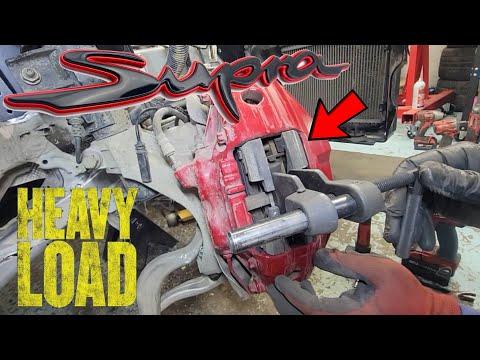
You’ll remove the front wheels, slide the old pads out of the front calipers, compress the caliper pistons, and install the new pads. This restores braking performance and prevents rotor damage when pads get low.
Difficulty Level: Intermediate | Estimated Time: 1.0-2.0 hours
⚠️ Safety & Precautions
- 🛑 Support the car on jack stands before working near the brakes.
- 🛑 Do not press the brake pedal while pads are removed.
- 🛑 Brake dust is irritating—wear a mask and avoid blowing dust with air.
- 🛑 Brakes can be hot—let everything cool before starting.
- 🛑 Watch brake fluid level when compressing pistons; overflow can damage paint.
🔧 Required Tools
You'll need the following tools for this repair:
- Floor jack (rated 3-ton minimum)
- Jack stands (rated 3-ton minimum)
- Wheel chocks
- 17mm socket
- Breaker bar
- Torque wrench (20–200 Nm range)
- Flat-blade screwdriver
- Punch set (3mm–6mm)
- Small hammer
- Brake caliper piston spreader tool (specialty)
- Needle-nose pliers
- Wire brush
- Brake cleaner spray
- Nitrile gloves
- Safety glasses
- Dust mask
🔩 Required Parts
HowToo sells all the parts you need for this repair:
- Front brake pad set - Qty: 1
- Front brake pad wear sensor - Qty: 1
- Brake caliper grease (silicone-based) - Qty: 1
- Brake cleaner - Qty: 1
📋 Before You Begin
- 🧰 Park on level ground, set the parking brake, and place wheel chocks behind the rear wheels.
- 🧰 Loosen the front wheel bolts slightly before lifting the car (do not remove yet).
- 🧰 Open the hood and check the brake fluid reservoir level; if it’s near “MAX,” be ready to remove a little fluid after you compress pistons.
- 🧰 “Piston spreader tool” = a tool that pushes the brake pistons back evenly so the new thicker pads will fit.
🔨 Step-by-Step Instructions
Follow these steps in order:
Step 1: Lift the front and remove the wheels
- Use a floor jack (rated 3-ton minimum) at the approved front jacking point, then support with jack stands (rated 3-ton minimum).
- Use a 17mm socket and breaker bar to remove the front wheel bolts.
Step 2: Check pad/rotor condition before disassembly
- Use a flashlight (phone light is fine) and visually confirm the pads are low and the rotor isn’t deeply grooved.
- If the rotor is heavily grooved, replace rotors.
Step 3: Remove the caliper anti-rattle spring and pad pins
- Use a flat-blade screwdriver to carefully control/remove the front caliper anti-rattle spring.
- Use a punch set (3mm–6mm) and small hammer to tap the pad retaining pins out.
- Use needle-nose pliers to pull the pins the rest of the way if needed.
- Hold the spring so it doesn’t snap out.
Step 4: Remove the old pads and wear sensor
- Slide the pads out of the caliper by hand. If they’re stuck, use a flat-blade screwdriver to gently pry at the pad edge.
- If equipped, disconnect/remove the wear sensor from the old pad and its mounting clips using needle-nose pliers.
- Use brake cleaner spray and a wire brush to clean pad contact areas (where the pad “ears” sit).
Step 5: Compress the caliper pistons
- Position the old pad against the pistons (as a buffer), then use the brake caliper piston spreader tool (specialty) to push the pistons back slowly and evenly.
- Go slowly and watch the brake fluid reservoir under the hood while compressing.
- Compress evenly to avoid cocking a piston.
Step 6: Install the new pads and sensor
- Apply a thin film of brake caliper grease (silicone-based) to pad contact points (pad ears/backing plate contact spots). Do not get grease on pad friction material.
- Slide the new pads into place by hand.
- Install the new wear sensor (if equipped) using needle-nose pliers to seat clips fully.
Step 7: Reinstall pad pins and anti-rattle spring
- Reinsert the pad retaining pins by hand first, then tap fully seated using a punch set (3mm–6mm) and small hammer.
- Reinstall the anti-rattle spring using a flat-blade screwdriver to set it into its grooves/holes.
- Spray any oily fingerprints off the rotor/caliper area using brake cleaner spray.
Step 8: Reinstall wheels and torque the wheel bolts
- Install wheel bolts by hand first to avoid cross-threading.
- Lower the car off the jack stands (rated 3-ton minimum) using the floor jack (rated 3-ton minimum).
- Use a torque wrench (20–200 Nm range) and 17mm socket to tighten wheel bolts in a star pattern: Torque to 140 Nm (103 ft-lbs).
✅ After Repair
- 🧪 Before driving, pump the brake pedal 10–15 times until it feels firm (this seats the pads to the rotors).
- 🧪 Check brake fluid level and top up only if needed.
- 🧪 Do a slow test drive and confirm no pulling, grinding, or warning lights.
- 🧪 If the brake pad warning is on, reset the front brake service item on the iDrive-style screen: Car > Vehicle status > Service requirements > Front brake pads > Reset.
- 🧪 Pad bed-in: do 6–10 medium stops from ~60 to ~20 km/h with cool-down time between stops.
💰 DIY vs Shop Cost
Shop Cost: ₹12,000-₹25,000 (parts + labor)
DIY Cost: ₹6,000-₹18,000 (parts only)
You Save: ₹6,000-₹7,000 by doing it yourself!
Shop labor rates vary but typically run ₹1,000-₹2,500/hour. This repair takes a shop approximately 1.0-2.0 hours.
🎯 Ready to get started?
HowToo makes it easy: same-day/2-day shipping on every part, plus all the tools and specialty tools you need! Check out the parts and tools sections below to add everything to your cart.