









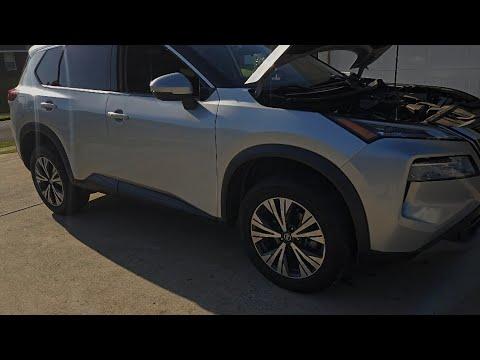







How to Replace Front Brake Pads on a 2020-2024 Nissan Rogue (Step-by-Step) (Trim: SV)
Complete DIY front brake pad change with tools, parts list, torque specs, safety tips, and cost savings breakdown
How to Replace Front Brake Pads on a 2020-2024 Nissan Rogue (Step-by-Step) (Trim: SV)
Complete DIY front brake pad change with tools, parts list, torque specs, safety tips, and cost savings breakdown for 2020, 2021, 2022, 2023, 2024


🔧 Rogue - Front Brake Pad Replacement
You’ll be removing the front wheels, taking off the brake calipers, swapping the pads, and reassembling everything with the correct torque. This restores stopping power and prevents damage to the rotors if your pads are worn or squealing.
Difficulty Level: Beginner/Intermediate | Estimated Time: 1.5–2.5 hours
⚠️ Safety & Precautions
- ⚠️ Always support the Rogue with jack stands; never work under a car held only by a jack.
- ⚠️ Do one side at a time so you can look at the other side as a reference.
- ⚠️ Don’t press the brake pedal with a caliper removed; you can push the pistons out.
- ⚠️ Keep brake fluid off paint; it can damage painted surfaces. Wipe and rinse with water if spilled.
- ⚠️ Front brakes get very hot after driving; let them cool completely before starting.
- ⚠️ Use eye protection when working around springs and compressed parts.
- ⚠️ Set the parking brake firmly and leave the CVT in Park before lifting the Rogue.
🔧 Required Tools
You'll need the following tools for this repair:
- 🛠️ Floor jack (rated 3-ton minimum)
- 🛠️ Jack stands (rated 3-ton minimum, set of 2)
- 🛠️ Wheel chocks
- 🛠️ Lug wrench or 21mm socket
- 🛠️ Ratchet (3/8" drive)
- 🛠️ Breaker bar (1/2" drive)
- 🛠️ Torque wrench (10–150 ft-lbs range)
- 🛠️ 14mm socket
- 🛠️ 19mm socket
- 🛠️ Flathead screwdriver (medium size)
- 🛠️ Brake caliper compression tool (specialty)
- 🛠️ C-clamp (6" or larger)
- 🛠️ Wire brush (small, stiff)
- 🛠️ Bungee cord or metal wire hanger
- 🛠️ Shop rags
- 🛠️ Disposable gloves
- 🛠️ Safety glasses
- 🛠️ Catch pan or drip tray
🔩 Required Parts
HowToo sells all the parts you need for this repair:
- 🧩 Front brake pad set (for Rogue SV AWD) - Qty: 1 set (both front wheels)
- 🧩 Front brake pad shim/hardware kit - Qty: 1 set
- 🧩 Brake caliper grease (high-temperature, silicone or synthetic) - Qty: 1 small tube
- 🧩 Brake cleaner spray - Qty: 1–2 cans
- 🧩 Anti-squeal brake compound - Qty: 1 small tube
- 🧩 Front brake rotors - Qty: 2 (optional but recommended if worn or grooved)
- 🧩 Replacement caliper bracket bolts - Qty: 4 (recommended if original are badly rusted)
📋 Before You Begin
- Park the Rogue on level ground, place the CVT in Park, and set the parking brake.
- Place wheel chocks behind the rear tires so the Rogue cannot roll.
- Loosen the front wheel lug nuts slightly (about one turn) before lifting the vehicle.
- Open the hood and locate the brake fluid reservoir; remove the cap and place it loosely on top. This lets fluid move when you push the pistons back.
- Battery disconnection is not required for front pad replacement.
🔨 Step-by-Step Instructions
Follow these steps in order:
Step 1: Lift and support the Rogue
- Use the lug wrench or 21mm socket to crack loose (do not remove) the front wheel lug nuts.
- Position the floor jack under the front center jacking point or one front pinch weld point specified in the owner’s manual.
- Raise the front of the Rogue until both front wheels are off the ground.
- Place jack stands under the reinforced pinch weld areas on both sides and gently lower the Rogue onto the stands.
- Shake the Rogue gently to ensure it is stable on the jack stands.
Step 2: Remove the front wheels
- Use the 21mm socket and ratchet to remove all lug nuts from one front wheel.
- Remove the wheel and set it aside where it cannot fall.
- Repeat for the other front wheel if you want both sides in the air; you’ll still work one side at a time.
Step 3: Inspect the front brake assembly
- Identify the caliper (the part that squeezes the pads), the caliper bracket behind it, and the rotor (shiny disc).
- Look for the two caliper slide bolts on the back of the caliper; these are usually 14mm on this Rogue.
- Take a photo now so you remember how everything sits.
Step 4: Remove the caliper slide bolts
- Use a 14mm socket and ratchet to loosen and remove the upper and lower caliper slide bolts.
- You may need to hold the slide pin with a wrench if it spins; if so, use an appropriate open-end wrench while turning the bolt with the 14mm socket.
Step 5: Remove and support the caliper
- Use a flathead screwdriver to gently pry the caliper away from the rotor if it is snug.
- Lift the caliper off the pads and rotor.
- Use a bungee cord or metal wire hanger to hang the caliper from the coil spring or strut so it is not hanging by the brake hose.
- Never let the caliper dangle from the rubber hose.
Step 6: Remove the old brake pads and hardware
- Slide the inner and outer brake pads out of the caliper bracket by hand or with a flathead screwdriver if they are stuck.
- Remove the metal pad clips (also called hardware or shims) from the caliper bracket.
- Inspect the rotor surface; if it’s deeply grooved, rusted, or has a lip, plan to replace or resurface it.
Step 7: (Optional) Remove the caliper bracket and rotor
- If you’re replacing rotors, use a 19mm socket and breaker bar to remove the two caliper bracket bolts from the steering knuckle.
- Remove the caliper bracket and set it aside.
- Pull the rotor off the hub. If it’s stuck, tap around the hat area with a rubber mallet.
- Clean the hub face using a wire brush so the new rotor sits flat.
- Install the new rotor onto the hub and hold it in place with one lug nut threaded by hand.
- Reinstall the caliper bracket using the 19mm socket and torque wrench and tighten the bolts to 137 Nm (101 ft-lbs).
Step 8: Clean and prepare the caliper bracket
- Use brake cleaner spray to clean the caliper bracket, especially the pad contact areas.
- Use a wire brush to remove rust and debris from where the pad hardware clips sit.
- Install the new metal hardware clips from the hardware kit onto the caliper bracket; press them fully into place by hand.
- Apply a very thin layer of brake caliper grease on the areas of the clips where the pads will slide. Do not get grease on rotor or pad friction surfaces.
Step 9: Compress the caliper piston
- Place an old brake pad against the caliper piston face.
- Use the C-clamp or brake caliper compression tool to slowly push the piston fully back into the caliper housing.
- Watch the brake fluid reservoir under the hood; if the level gets close to the top, use a shop rag and catch pan to remove some fluid so it doesn’t overflow.
- Compress the piston slowly to avoid damage.
Step 10: Install the new brake pads
- Check your new pads: one is usually the “inner” and one the “outer.” The inner may have a wear indicator tab.
- Apply a thin layer of anti-squeal brake compound to the metal backing of each pad (not the friction surface) if recommended by the pad manufacturer.
- Slide the new pads into the hardware clips on the caliper bracket; make sure they move freely but without excessive play.
Step 11: Reinstall the caliper
- Carefully lower the caliper back over the new pads and rotor.
- Align the caliper slide bolt holes with the threaded holes on the caliper bracket.
- Apply a small amount of brake caliper grease to the smooth parts of the slide pins (not the threads).
- Install the upper and lower slide bolts by hand to avoid cross-threading.
- Use a 14mm socket and torque wrench to tighten the caliper slide bolts to 34 Nm (25 ft-lbs).
Step 12: Repeat on the other side
- Move to the other front wheel and repeat Steps 3–11.
- Doing both sides keeps braking even.
Step 13: Reinstall the wheels
- Place the wheel back onto the hub and hand-thread the lug nuts.
- Use the 21mm socket and ratchet to snug the lug nuts in a star pattern with the Rogue still on jack stands.
- Use the floor jack to raise the Rogue slightly, remove the jack stands, then lower the Rogue fully to the ground.
- Use the 21mm socket and torque wrench to torque each lug nut in a star pattern to 113 Nm (83 ft-lbs).
Step 14: Final under-hood checks
- Check the brake fluid level in the reservoir; it should be between the MIN and MAX marks.
- If it’s above MAX, use a shop rag and catch pan to remove a little until it’s at the correct level.
- Reinstall the brake fluid reservoir cap securely.
✅ After Repair
- Before driving, sit in the driver’s seat and press the brake pedal slowly 5–10 times until it feels firm; this seats the pads against the rotors.
- Start the engine and check for any brake warning lights on the dash.
- With the area clear, roll forward slowly and test the brakes gently at low speed.
- For the first 300–500 km, avoid hard braking if possible; this helps “bed in” the new pads and rotors for best performance.
- After a short drive, check that the wheels are not excessively hot and that there are no burning smells or grinding noises.
💰 DIY vs Shop Cost
Shop Cost: $350–$550 (parts + labor)
DIY Cost: $80–$180 (parts only)
You Save: $170–$470 by doing it yourself!
Shop labor rates typically run $100–$150/hour. This repair takes a shop approximately 1.0–1.5 hours.
🎯 Ready to get started?
HowToo makes it easy: same-day/2-day shipping on every part, plus all the tools and specialty tools you need! Check out the parts and tools sections above to add everything to your cart.
Guide for Disc Brake Pad Set replace for these Nissan vehicles
| Year Make Model | Sub Model | Engine | Body Style |
|---|---|---|---|
| 2024 Nissan Rogue | S | - | - |
| 2024 Nissan Rogue | SL | - | - |
| 2024 Nissan Rogue | SV | - | - |
| 2024 Nissan Rogue | Platinum | - | - |
| 2023 Nissan Rogue | S | - | - |
| 2023 Nissan Rogue | SL | - | - |
| 2023 Nissan Rogue | SV | - | - |
| 2023 Nissan Rogue | Platinum | - | - |
| 2023 Nissan Rogue | Midnight Edition | - | - |
| 2022 Nissan Rogue | S | - | - |
| 2022 Nissan Rogue | SL | - | - |
| 2022 Nissan Rogue | SV | - | - |
| 2022 Nissan Rogue | Platinum | - | - |
| 2021 Nissan Rogue | S | - | - |
| 2021 Nissan Rogue | SL | - | - |
| 2021 Nissan Rogue | SV | - | - |
| 2021 Nissan Rogue | Platinum | - | - |
| 2020 Nissan Rogue | S | - | - |
| 2020 Nissan Rogue | SL | - | - |
| 2020 Nissan Rogue | SV | - | - |