









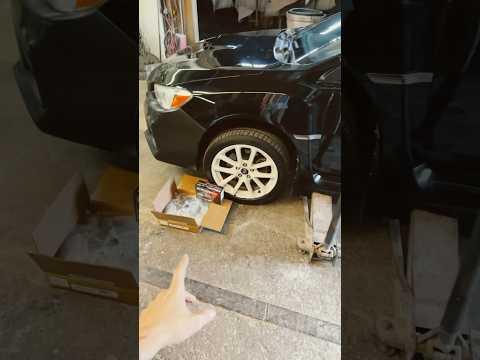







How to Replace Front Brake Pads on a 2015-2021 Subaru WRX (DIY Step-by-Step Guide)
Tools, parts list, safety tips, and torque specs for a smooth front pad install and proper bed-in
How to Replace Front Brake Pads on a 2015-2021 Subaru WRX (DIY Step-by-Step Guide)
Tools, parts list, safety tips, and torque specs for a smooth front pad install and proper bed-in for 2015, 2016, 2017, 2018, 2019, 2021


🔧 WRX - Front Brake Pad Replacement
You’ll remove the front wheels, slide the old pads out of the front calipers, push the caliper pistons back, and install new pads with the hardware seated correctly. This restores safe braking and prevents rotor damage when pads get thin.
Difficulty Level: Intermediate | Estimated Time: 1.0-2.0 hours
⚠️ Safety & Precautions
- ⚠️ Work on level ground and support the car with jack stands before going under/around the wheels.
- ⚠️ Brake dust is harmful—avoid blowing dust; use brake cleaner and wear a mask.
- ⚠️ Do not press the brake pedal while pads/pins are removed.
- ⚠️ Keep brake fluid off paint; wipe spills immediately.
- ⚠️ If the brake fluid reservoir is full, pushing pistons back can overflow—monitor fluid level.
🔧 Required Tools
You'll need the following tools for this repair:
- Floor jack (rated 3-ton minimum)
- Jack stands (rated 3-ton minimum)
- Wheel chocks
- 19mm lug nut socket
- Breaker bar (1/2")
- Torque wrench (1/2", 20–150 ft-lbs range)
- 17mm socket
- 17mm box wrench
- 5mm punch
- Hammer (12–16 oz)
- Flathead screwdriver
- Needle-nose pliers
- Brake piston spreader tool (specialty)
- Wire brush
- Brake cleaner spray
- Shop towels
- Nitrile gloves
- Safety glasses
🔩 Required Parts
HowToo sells all the parts you need for this repair:
- Front brake pad set - Qty: 1
- Front pad hardware kit (clips/pins/spring, if not included with pads) - Qty: 1
- Brake grease (silicone or high-temp ceramic) - Qty: 1
- Brake cleaner - Qty: 1
📋 Before You Begin
- Park on level ground, leave the transmission in 1st gear, and set the parking brake.
- Place wheel chocks behind the rear wheels.
- Open the hood and locate the brake fluid reservoir so you can watch the fluid level while pushing pistons back.
- Take a photo before disassembly.
🔨 Step-by-Step Instructions
Follow these steps in order:
Step 1: Loosen lug nuts and lift the front
- Use a 19mm lug nut socket and breaker bar (1/2") to crack loose the front lug nuts about 1/2 turn.
- Use a floor jack (rated 3-ton minimum) to lift the front of the car at the front center jack point.
- Set the car down onto jack stands (rated 3-ton minimum) placed at the pinch welds.
Step 2: Remove the front wheels
- Remove the lug nuts using the 19mm lug nut socket.
- Remove both front wheels and set them aside.
Step 3: Remove the pad spring and retaining pins
- On the front caliper face, locate the two pad retaining pins and the anti-rattle spring (the thin metal spring that keeps pads from vibrating).
- Use needle-nose pliers to help control the spring, then use a 5mm punch and hammer (12–16 oz) to tap the pins out.
- Remove the anti-rattle spring and set it aside.
- Keep parts in order as removed.
Step 4: Remove the old brake pads
- Slide the pads out of the caliper by hand. If they’re tight, use a flathead screwdriver to gently pry them outward a little.
- Note how the shims/clips are positioned so the new pads go in the same way.
Step 5: Push the caliper pistons back
- Check the brake fluid reservoir under the hood; if it’s near the MAX line, be ready to remove a little fluid to prevent overflow.
- Use a brake piston spreader tool (specialty) to push the pistons back evenly (work side-to-side so pistons retract straight).
- Stop when there’s enough room for the new, thicker pads to slide in freely.
Step 6: Clean and prep the pad contact points
- Use brake cleaner spray and shop towels to clean the caliper pad channels and hardware.
- Use a wire brush to remove rust where the pad ears slide (metal-to-metal contact points).
- Apply a thin layer of brake grease (silicone or high-temp ceramic) to the pad ears and shim contact points (do not get grease on pad friction material or rotor).
Step 7: Install the new pads
- Slide the new pads into place by hand.
- If your pads came with new hardware, install it exactly as the old set was installed.
Step 8: Reinstall the retaining pins and anti-rattle spring
- Position the anti-rattle spring on the caliper.
- Tap the retaining pins back in using the 5mm punch and hammer (12–16 oz) until fully seated.
- Make sure the spring is captured correctly and the pads can’t rattle loosely.
Step 9: Reinstall wheels and torque lug nuts
- Reinstall the wheels and hand-thread the lug nuts.
- Lower the car using the floor jack (rated 3-ton minimum) and remove the jack stands (rated 3-ton minimum).
- Use a torque wrench (1/2", 20–150 ft-lbs range) to tighten lug nuts in a star pattern to Torque to 120 Nm (88.5 ft-lbs).
✅ After Repair
- With the engine OFF, slowly pump the brake pedal 8–12 times until it feels firm (this seats the pistons against the new pads).
- Check the brake fluid level and top off only if needed.
- Do a cautious test drive and confirm no grinding, pulling, or warning lights.
- Bed-in the pads (typical): make 6–10 medium stops from 60 km/h to 15 km/h, then drive 5–10 minutes to cool.
💰 DIY vs Shop Cost
Shop Cost: ₹3,500-₹8,000 (parts + labor)
DIY Cost: ₹2,000-₹6,000 (parts only)
You Save: ₹1,500-₹2,000+ by doing it yourself!
Local labor rates vary; this repair typically bills 1.0–1.5 hours.
🎯 Ready to get started?
HowToo makes it easy: same-day/2-day shipping on every part, plus all the tools and specialty tools you need! Check out the parts and tools sections below to add everything to your cart.