









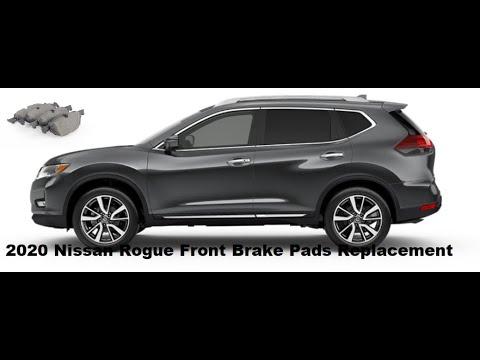






How to Replace Front Brake Pads on a 2014-2020 Nissan Rogue (Step-by-Step) (Trim: SV)
Complete DIY front brake pad change with tools, parts list, torque specs, safety tips, and detailed instructions
How to Replace Front Brake Pads on a 2014-2020 Nissan Rogue (Step-by-Step) (Trim: SV)
Complete DIY front brake pad change with tools, parts list, torque specs, safety tips, and detailed instructions for 2014, 2015, 2016, 2017, 2018, 2019, 2020


🔧 Rogue - Front Brake Pad Replacement
You’ll be removing the front wheels, unbolting the brake calipers, swapping the pads, and then reassembling with everything torqued correctly. This will restore stopping power and prevent damage to the rotors if your pads are worn.
Difficulty Level: Beginner | Estimated Time: 1.5–2.5 hours
⚠️ Safety & Precautions
- 🛑 Always support your Rogue with jack stands; never work under a vehicle held only by a jack.
- 🔥 Brakes can be very hot after driving; let them cool at least 30 minutes before working.
- 🧯 Do not press the brake pedal with a caliper removed; it can push the piston out.
- 😷 Avoid breathing brake dust; do not use compressed air to blow it off. Use brake cleaner spray instead.
- 🔋 Battery disconnect is not required for front pad replacement on your Rogue.
- 🧰 Work on one side at a time so you can use the other side as a reference.
🔧 Required Tools
You'll need the following tools for this repair:
- 🛠️ Floor jack (rated 3-ton minimum)
- 🛠️ Jack stands (rated 3-ton minimum, set of 2)
- 🛠️ Wheel chocks
- 🛠️ Lug nut wrench or 21mm socket
- 🛠️ 3/8" drive ratchet
- 🛠️ 1/2" drive ratchet
- 🛠️ 14mm socket
- 🛠️ 19mm socket
- 🛠️ Torque wrench (3/8" or 1/2" drive, 10–100 ft-lbs range)
- 🛠️ C-clamp or disc brake caliper tool (specialty)
- 🛠️ Flathead screwdriver (medium size)
- 🛠️ Wire brush
- 🛠️ Bungee cord or strong wire
- 🛠️ Brake cleaner spray can
- 🛠️ Disposable shop towels or clean rags
- 🛠️ Mechanic’s gloves
- 🛠️ Safety glasses
- 🛠️ Small pick tool or dental pick
🔩 Required Parts
HowToo sells all the parts you need for this repair:
- 📦 Front brake pad set (left and right) - Qty: 1 set
- 📦 Front brake hardware kit (pad clips/shims) - Qty: 1 set
- 📦 High-temperature brake grease - Qty: 1 tube
- 📦 Brake cleaner - Qty: 1–2 cans
- 📦 Anti-squeal compound (if not included with pads) - Qty: 1
📋 Before You Begin
- 🚗 Park your Rogue on a flat, solid surface, shift to Park, and set the parking brake.
- 🧱 Place wheel chocks behind the rear wheels to prevent movement.
- 📦 Lay out your new pads and hardware so you understand how they will sit in the caliper bracket.
- 🔎 Loosen (but do not remove) the front wheel lug nuts 1/2 turn with the 21mm socket before lifting the vehicle.
🔨 Step-by-Step Instructions
Follow these steps in order:
Step 1: Lift and support the front of the vehicle
- Use the floor jack under the front center jacking point (under the subframe crossmember) to lift the front of your Rogue.
- Place jack stands under the left and right front pinch welds (just behind each front wheel) and slowly lower the vehicle onto the stands.
- Gently rock the vehicle by hand to confirm it is stable on the jack stands.
Step 2: Remove the front wheels
- Use the 21mm socket and ratchet or lug wrench to remove the front wheel lug nuts.
- Remove both front wheels and set them aside.
- Place wheels under frame as extra safety
Step 3: Inspect the brake assembly
- Look at the caliper (the clamp that holds the pads) and the rotor (the shiny disc).
- Note how the existing pads sit in the caliper bracket and how any metal clips are installed; take a clear photo with your phone for reference.
Step 4: Remove the lower caliper slide bolt
- On the back of the caliper, locate the two small bolts that hold the caliper to the bracket; on your Rogue, they are 14mm.
- Use a 14mm socket and 3/8" ratchet to remove the lower caliper bolt completely.
- You can leave the upper bolt in place to allow the caliper to swing upward like a door.
Step 5: Swing up and support the caliper
- Use your hands or a flathead screwdriver carefully between the pad and rotor to gently pry and free the caliper if it feels stuck.
- Rotate the caliper up around the upper bolt and support it with a bungee cord or strong wire tied to the suspension spring.
- Never let caliper hang by rubber hose
Step 6: Remove the old brake pads and hardware
- Slide the inner and outer pads out of the caliper bracket with your hands.
- Note any pad wear indicator tab (a small metal finger); new pads typically go in the same location (usually on the inner pad).
- Use the small pick tool to carefully remove the old metal clips (hardware) from the caliper bracket.
Step 7: Clean the caliper bracket and rotor contact area
- Use brake cleaner spray on the caliper bracket and rotor surface, and wipe with shop towels to remove dust and dirt.
- Use the wire brush to clean the areas of the bracket where the clips sit, but do not scratch the rubber boots or hose.
- Clean metal surfaces help prevent pad sticking
Step 8: Install new hardware (clips)
- Match new clips from your hardware kit to the old ones.
- Press the new clips into the caliper bracket by hand until they snap fully into place.
- Check that they sit flat and are not twisted.
Step 9: Compress the caliper piston
- The piston is the round piece inside the caliper that pushes the inner pad.
- Place an old pad against the piston face.
- Use a C-clamp or disc brake caliper tool between the back of the caliper and the old pad to slowly push the piston back into the caliper until it is nearly flush with the caliper body.
- Go slowly to avoid damaging internal seals.
- If it feels stuck, stop and reassess
Step 10: Apply brake grease to pad contact points
- Apply a thin layer of high-temperature brake grease on the areas of the clips where the pad ears (ends) will slide.
- Apply a thin layer of grease to the metal backing plates of the pads where they will contact the caliper and piston (unless your pads include applied anti-squeal shims already).
- Keep grease off pad friction material and rotor
Step 11: Install the new pads
- Install the inner pad first, making sure any wear indicator tab goes in the same position as the old pad (commonly inner, bottom side on Nissan front).
- Press the pad ears into the clips until they fully seat and move smoothly.
- Install the outer pad the same way.
Step 12: Reinstall the caliper
- Lower the caliper back down over the new pads by hand.
- If it does not fit, the piston may not be fully compressed; compress it a bit more using the C-clamp or caliper tool.
- Align the lower mounting ear with the bracket hole and reinstall the lower 14mm slide bolt by hand first to avoid cross-threading.
- Use the 14mm socket and 3/8" ratchet to snug the upper and lower slide bolts.
- Then use the torque wrench with 14mm socket to tighten both caliper slide bolts to 34 Nm (25 ft-lbs).
Step 13: Repeat on the other front side
- Repeat Steps 4–12 on the other front brake.
- Always replace brake pads on both sides of an axle at the same time.
Step 14: Final cleaning and rotor check
- Spray a light amount of brake cleaner on the rotor surfaces and pads to remove any accidental grease or fingerprints, then allow them to dry.
- Visually confirm pads are seated flat and even against the rotor, and that the brake hose is not twisted.
Step 15: Reinstall wheels
- Place each wheel back onto the hub and hand-thread all lug nuts.
- Use the 21mm socket and ratchet to snug the lug nuts in a star pattern (across from each other).
Step 16: Lower the vehicle and torque the wheels
- Use the floor jack to raise the front slightly and remove the jack stands.
- Lower the vehicle fully to the ground.
- Use a torque wrench with 21mm socket to tighten each lug nut to 113 Nm (83 ft-lbs) in a star pattern.
Step 17: Seat the brake pads (pump the pedal)
- With the engine off, sit in the driver’s seat and slowly press and release the brake pedal 10–15 times.
- The pedal will feel soft at first, then become firm as the pads move into position.
- Do not drive until pedal feels firm
✅ After Repair
- 🧪 Start the engine and gently press the brakes several times; confirm a firm, consistent pedal.
- 🚗 Perform a slow test drive in a safe area: make several gentle stops from 20–30 km/h, then from 40–50 km/h, listening for abnormal noises.
- 🛑 Avoid hard braking for the first 300–500 km; this helps “bed in” the pads to the rotors for best performance.
- 🔎 After the test drive, recheck around the calipers and wheels for any signs of leaks or loose parts.
💰 DIY vs Shop Cost
Shop Cost: $250–$400 (parts + labor)
DIY Cost: $70–$150 (parts only)
You Save: $180–$250 by doing it yourself!
Shop labor rates vary but typically run $100–$150/hour. This repair takes a shop approximately 1–1.5 hours.
🎯 Ready to get started?
HowToo makes it easy: same-day/2-day shipping on every part, plus all the tools and specialty tools you need! Check out the parts and tools sections below to add everything to your cart.
Guide for Disc Brake Pad Set replace for these Nissan vehicles
| Year Make Model | Sub Model | Engine | Body Style |
|---|---|---|---|
| 2020 Nissan Rogue | S | - | - |
| 2020 Nissan Rogue | SL | - | - |
| 2020 Nissan Rogue | SV | - | - |
| 2019 Nissan Rogue | S | - | - |
| 2019 Nissan Rogue | SL | - | - |
| 2019 Nissan Rogue | SV | - | - |
| 2018 Nissan Rogue | S | - | - |
| 2018 Nissan Rogue | SL | - | - |
| 2018 Nissan Rogue | SV | - | - |
| 2017 Nissan Rogue | S | - | - |
| 2017 Nissan Rogue | SL | - | - |
| 2017 Nissan Rogue | SV | - | - |
| 2016 Nissan Rogue | S | - | - |
| 2016 Nissan Rogue | SL | - | - |
| 2016 Nissan Rogue | SV | - | - |
| 2015 Nissan Rogue | S | - | - |
| 2015 Nissan Rogue | SL | - | - |
| 2015 Nissan Rogue | SV | - | - |
| 2014 Nissan Rogue | S | - | - |
| 2014 Nissan Rogue | SL | - | - |
| 2014 Nissan Rogue | SV | - | - |