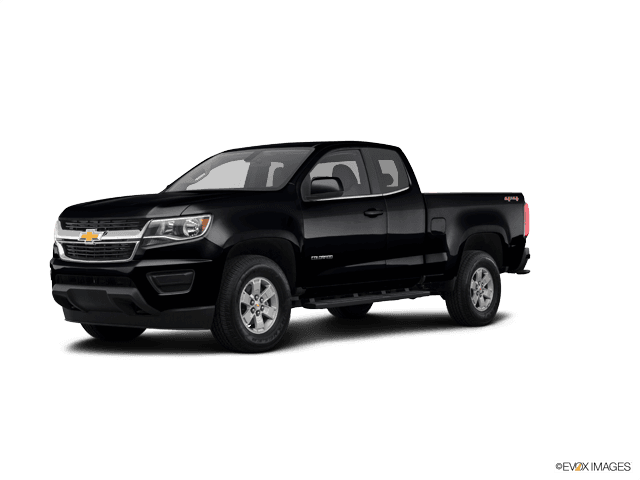
















How to Replace Front Brake Pads and Rotors on a 2018 Chevy Colorado
Step-by-step DIY front brake job with tools, parts list, torque specs, and safety tips for your 2018 Chevrolet Colorado
How to Replace Front Brake Pads and Rotors on a 2018 Chevy Colorado
Step-by-step DIY front brake job with tools, parts list, torque specs, and safety tips for your 2018 Chevrolet Colorado


Colorado - Front Brake Pads & Rotors Replacement 🛠️
Nice project. I’ll walk you through this in simple, safe steps for your first time.
Quick check first:
- ✅ Do you have a floor jack and jack stands? (A floor jack lifts the truck; jack stands safely hold it up.)
- ✅ Are your front brakes disc brakes (you can see a shiny round rotor behind the wheel, not a drum)?
If yes to both, you’re good to follow this guide. If not sure, tell me and I’ll adjust.
Tools & Supplies Needed 🔧
- 🧰 Basic tools
- Floor jack (rated for at least 2 tons)
- Jack stands (2x, rated for at least 2 tons)
- Wheel chocks (blocks for the wheels; wood blocks work in a pinch)
- Lug wrench or 21 mm socket + breaker bar/ratchet (for wheel nuts)
- Socket set (metric):
- 18 mm socket – front caliper bracket bolts
- 13 mm socket – caliper guide pin bolts
- Ratchet and breaker bar (long handle for stuck bolts)
- Torque wrench (tightens bolts to exact spec)
- 🧰 Brake-specific tools
- C-clamp or disc brake piston tool (to push the caliper piston back)
- Wire brush (to clean rust from bracket and hub)
- Bungee cord or strong wire (to hang the caliper so it doesn’t pull on the hose)
- 🧴 Fluids & chemicals
- Brake cleaner spray (for cleaning rotors and parts)
- High-temp brake grease (for pad contact points and slide pins)
- Anti-seize (optional, thin coat on hub face to prevent rotor sticking)
- 🧩 New parts (front axle – always do both sides)
- Front brake pads (for your 2018 Colorado 2.5L RWD)
- Front brake rotors (2x, left and right – usually identical)
- New pad hardware kit (stainless clips that the pads slide in)
- 😷 Safety gear
- Safety glasses
- Mechanic gloves (optional but helpful)
Key Torque Specs 🔩
- 🔧 Front caliper guide pin bolts: ~30 ft-lb (40 N·m)
- 🔧 Front caliper bracket bolts: ~129 ft-lb (175 N·m)
- 🔧 Wheel lug nuts: 140 ft-lb (190 N·m)
Use a torque wrench for these – very important for safety.
Safety Setup 🧱
- 🛑 Park and secure
- Park on a flat, solid surface.
- Put the transmission in 1st gear and set the parking brake.
- Turn the engine off and remove the key.
- 🧱 Chock rear wheels
- Place wheel chocks behind and in front of at least one rear wheel.
- 🧰 Loosen front lug nuts
- Before lifting, crack each front lug nut loose about 1/2 turn with the lug wrench or 21 mm socket.
- 🧗 Lift and support the front
- Place the floor jack under the front crossmember (strong metal beam under the front).
- Lift until both front wheels are off the ground.
- Place jack stands under the frame rails on each side.
- Lower the truck gently onto the stands. Never work under a vehicle supported only by a jack.
Remove Wheels 🚙
- 🔧 Take off front wheels
- Remove the loosened lug nuts completely.
- Pull the wheels off and set them aside.
Remove Caliper & Old Pads (One Side at a Time) 🧲
- 👀 Inspect the setup
- You’ll see:
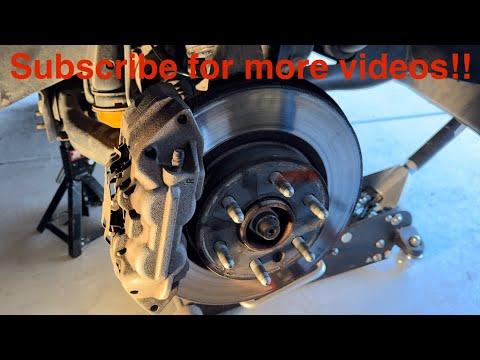
- Rotor – big round disc.
- Caliper – clamps over the rotor.
- Caliper bracket – holds the caliper and pads.
- You’ll see:
- 🔩 Remove caliper guide pin bolts
- On the back of the caliper, find the two smaller bolts (top and bottom) – usually 13 mm.
- Remove both bolts.
- 🪝 Lift off the caliper
- Slide the caliper off the rotor and pads.
- Do NOT let it hang by the rubber brake hose.
- Use a bungee cord or wire to hang it from the coil spring or frame.
- 🧱 Remove old pads
- Slide the brake pads out of the caliper bracket.
- Note how they were installed (inner vs outer) for reference.
Remove Caliper Bracket & Rotor 🔧
- 🔩 Remove caliper bracket
- On the back of the steering knuckle, find the two large bolts holding the bracket – usually 18 mm.
- Use a breaker bar if they are tight; they are torqued high.
- Remove the bracket and set it on a clean surface.
- 🛞 Remove rotor
- If there is a small retaining screw, remove it (often Torx or small bolt; some trucks have none).
- Pull the rotor straight off the hub.
- If it’s stuck from rust, tap the rotor hat (center area) with a rubber mallet from behind, rotating as you go.
Clean Hub & Bracket 🧼
- 🧽 Clean hub face
- Use a wire brush to clean rust and dirt from the hub surface where the rotor sits.
- Spray a little brake cleaner and wipe with a clean rag.
- Optional: apply a very thin coat of anti-seize on the hub face (avoid studs).
- 🧽 Clean caliper bracket
- Remove the old stainless pad clips from the bracket.
- Wire-brush the areas where the clips sit until clean.
- Spray with brake cleaner and wipe.
- 🛢️ Service slide pins
- The caliper bracket has two slide pins (the guide pins you removed bolts from).
- Pull each pin out, one at a time.
- Wipe off old grease and dirt.
- Apply fresh high-temp brake grease to the pin and reinstall; make sure they move smoothly.
Install New Rotor 🛞
- 🧴 Clean new rotor
- New rotors come with an oily coating to prevent rust.
- Spray both sides with brake cleaner and wipe until clean.
- ⚙️ Mount rotor
- Place the new rotor onto the hub, seated flat.
- You can temporarily hold it in place with a lug nut finger-tight to keep it from wobbling.
Reinstall Caliper Bracket & Hardware 🧱
- 🔩 Install caliper bracket
- Position the bracket over the rotor and line up the bolt holes.
- Install the two large bolts by hand first to avoid cross-threading.
- Tighten with a ratchet, then torque to ~129 ft-lb (175 N·m).
- 🧩 Install new pad clips
- Snap the new stainless clips into the bracket where the pads sit.
- Make sure they are fully seated and not bent.
- 🛢️ Grease contact points
- Apply a very thin layer of brake grease on the areas of the clips where the pad ears will slide.
- Do NOT get grease on the rotor or pad friction surfaces.
Compress Caliper Piston & Install New Pads 🧊
- 🧊 Compress piston
- Before compressing, open the hood and remove the cap from the brake fluid reservoir (on the driver side near the firewall). This lets fluid move back more easily.
- Place an old pad against the caliper piston.
- Use a C-clamp between the back of the caliper and the old pad to slowly push the piston fully back into the caliper.
- Go slowly and watch the fluid level in the reservoir; if it gets close to the top, remove some with a clean syringe or turkey baster.
- 🧩 Install new pads
- Place the new inner and outer pads into the bracket, sliding into the new clips.
- Make sure any wear sensor tab (if present) goes in the same position as the old pad.
- 🪝 Reinstall caliper over new pads
- Remove the caliper from the bungee and position it over the new pads and rotor.
- Line up the caliper with the slide pin holes.
- Install the guide pin bolts by hand first, then tighten.
- Torque guide pin bolts to about 30 ft-lb (40 N·m).
Repeat on the Other Side 🔁
- 🔁 Do the same steps on the other front wheel
- Always replace pads and rotors in pairs (both fronts) so braking is even.
Reinstall Wheels & Lower Truck 🚗
- 🛞 Install wheels
- Put the wheels back on the hubs.
- Install lug nuts finger-tight in a star pattern.
- 🧗 Lower the truck
- Jack the truck slightly to remove jack stands.
- Lower the truck fully to the ground.
- 🔧 Torque lug nuts
- Use a torque wrench to tighten lug nuts in a star pattern to 140 ft-lb (190 N·m).
Final Steps – Very Important ✅
- 🦶 Pump the brake pedal
- Before driving, sit in the driver seat and pump the brake pedal slowly until it feels firm.
- This seats the pads against the rotors.
- 🛢️ Check brake fluid
- Check the fluid level in the reservoir; it should be between MIN and MAX.
- Reinstall the cap.
- 🚦 Test drive
- Start with a short, low-speed drive.
- Test braking gently to make sure everything feels normal (no pulling, no grinding, no warning lights).
Pad & Rotor Break-In (Bedding) 🛣️
- 🚗 Bed the brakes
- Make 5–8 medium stops from about 30–40 mph down to 5–10 mph, letting the brakes cool for a minute between stops.
- A light smell is normal; heavy smoke or strong burning smell is not.
Need Parts & Tools? 🧰
Below this answer, HowToo will show you pads, rotors, brake cleaner, grease, a torque wrench, jack stands, and more that fit your Colorado. You can add what you need to your cart from the parts section.
If you want, tell me what tools you already have, and I can trim this down to a shorter, “just what you need next” checklist.
HowToo makes it easy: same-day/2-day shipping on every part, plus all the tools and specialty tools you need! 🚚