















How to Replace Front Ball Joints on a 2016-2021 Jeep Grand Cherokee
Step-by-step DIY guide with required tools, parts, torque specs, and safety tips
How to Replace Front Ball Joints on a 2016-2021 Jeep Grand Cherokee
Step-by-step DIY guide with required tools, parts, torque specs, and safety tips for 2016, 2017, 2018, 2019, 2020, 2021


🔧 Grand Cherokee - Front Ball Joint Replacement
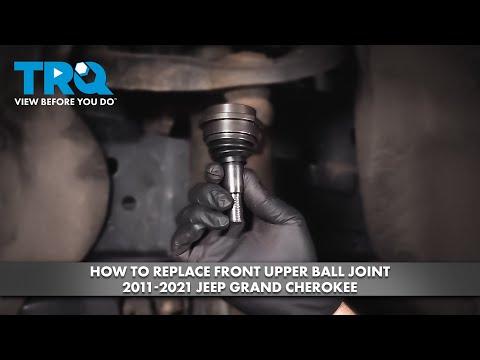
On your Grand Cherokee, the front upper and lower ball joints connect the steering knuckle to the control arms and allow the front wheels to steer and move with the suspension. Worn ball joints can cause clunking, wandering, uneven tire wear, or unsafe looseness in the front suspension.
Assumption: This guide covers front ball joint replacement on the stock AWD front suspension. Ball joints should be checked and replaced side-to-side as needed.
Difficulty Level: Advanced | Estimated Time: 3-5 hours per side
⚠️ Safety & Precautions
- ⚠️ Suspension work is safety-critical. If a ball joint is not seated or torqued correctly, steering control can be lost.
- ⚠️ Support your Grand Cherokee with jack stands only. Never work under a vehicle supported only by a floor jack.
- ⚠️ The front knuckle, brake rotor, and hub are heavy. Keep fingers clear when separating the ball joints.
- ⚠️ Do not hammer directly on the threaded ball joint stud. This can damage the threads.
- ⚠️ Do not let the brake caliper hang by the brake hose. Hang it with mechanic’s wire or a bungee cord.
- ⚠️ An alignment is required after ball joint replacement.
- ⚠️ Battery disconnect is not normally required for this repair.
🔧 Required Tools
You'll need the following tools for this repair:
- Floor jack (rated 3-ton minimum)
- Jack stands (rated 3-ton minimum)
- Wheel chocks
- Safety glasses
- Mechanic gloves
- 1/2-inch drive breaker bar
- 1/2-inch drive torque wrench
- 3/8-inch drive ratchet
- 1/2-inch drive ratchet
- 21mm socket
- 22mm socket
- 24mm socket
- 36mm axle nut socket
- 13mm socket
- 15mm socket
- 18mm socket
- 21mm wrench
- 22mm wrench
- Needle-nose pliers
- Ball joint separator fork (specialty)
- Ball joint press kit with Jeep adapters (specialty)
- Hub puller or axle pusher (specialty)
- Hammer
- Dead blow hammer
- Pry bar
- Flat blade screwdriver
- Mechanic’s wire
- Wire brush
- Paint marker
- Penetrating oil
- Brake cleaner
🔩 Required Parts
HowToo sells all the parts you need for this repair:
- Front upper ball joint - Qty: 1 per side
- Front lower ball joint - Qty: 1 per side
- Ball joint cotter pins - Qty: 2 per side
- Front axle nut - Qty: 1 per side
- Brake caliper bracket bolts - Qty: 2 per side if replacing torque-to-yield hardware
- Wheel alignment service - Qty: 1 after repair
📋 Before You Begin
- Park your Grand Cherokee on level ground and set the parking brake.
- Place wheel chocks behind the rear wheels so the vehicle cannot roll.
- Loosen the front wheel lug nuts slightly before lifting the vehicle.
- Spray penetrating oil on the upper and lower ball joint nuts, axle nut, brake bracket bolts, and hub area.
- A ball joint press is a large C-clamp-style tool used to press ball joints in and out of the control arm or knuckle.
- A cotter pin is a small locking pin that keeps a castle nut from loosening.
- Plan to get a professional alignment immediately after the repair.
🔨 Step-by-Step Instructions
Follow these steps in order:
Step 1: Loosen the Wheel and Axle Nut
- Use a 21mm socket and 1/2-inch drive breaker bar to loosen the front lug nuts one turn.
- Use a 36mm axle nut socket and 1/2-inch drive breaker bar to loosen the axle nut while the tire is still on the ground.
- Do not fully remove the axle nut yet.
- Loosen first, lift second.
Step 2: Raise and Support the Front
- Use a floor jack rated 3-ton minimum under the front jacking point or front crossmember area.
- Raise the front of your Grand Cherokee high enough for the tire to clear the ground.
- Place jack stands rated 3-ton minimum under solid frame or front support points.
- Lower the vehicle gently onto the jack stands.
- Shake the vehicle lightly by hand to confirm it is stable before working.
Step 3: Remove the Front Wheel
- Use a 21mm socket and 1/2-inch drive ratchet to remove the lug nuts.
- Remove the wheel and place it flat under the side of the vehicle as an extra safety backup.
Step 4: Remove the Brake Caliper and Rotor
- Use a 13mm socket to remove the brake caliper slide bolts if removing only the caliper first.
- Use a 21mm socket or 18mm socket, depending on installed hardware, to remove the caliper bracket bolts.
- Lift the caliper and bracket off the rotor.
- Use mechanic’s wire to hang the caliper from the suspension spring or frame area.
- Slide the brake rotor off the hub by hand.
- If the rotor is stuck, tap the rotor hat gently with a dead blow hammer.
- Torque during installation: caliper bracket bolts to approximately 175 Nm (129 ft-lbs).
Step 5: Remove the Axle Nut
- Use a 36mm axle nut socket and 1/2-inch drive ratchet to remove the axle nut completely.
- Use a hub puller or axle pusher if the axle spline is stuck in the hub.
- Do not hit the axle directly with a steel hammer.
- Torque during installation: axle nut to approximately 135 Nm (100 ft-lbs), then verify with the replacement nut instructions.
Step 6: Disconnect the ABS Wire and Brake Hose Brackets
- Use a 10mm socket if equipped to remove small brackets holding the ABS wire or brake hose to the knuckle or control arm.
- If clips are used, gently release them with a flat blade screwdriver.
- Move the wire and hose aside so they are not stretched when the knuckle moves.
Step 7: Separate the Tie Rod End from the Knuckle
- Use needle-nose pliers to remove the cotter pin from the outer tie rod end.
- Use a 21mm socket or 21mm wrench to remove the tie rod nut.
- Use a ball joint separator fork and hammer to separate the tie rod from the steering knuckle.
- Torque during installation: tie rod nut to approximately 75 Nm (55 ft-lbs), then install a new cotter pin.
Step 8: Loosen the Upper and Lower Ball Joint Nuts
- Use needle-nose pliers to remove the cotter pins from the upper and lower ball joint studs.
- Use a 22mm socket or 22mm wrench to loosen the upper ball joint nut a few turns.
- Use a 24mm socket or correct-size wrench to loosen the lower ball joint nut a few turns.
- Leave both nuts threaded on slightly. This helps catch the knuckle when the joints pop loose.
Step 9: Separate the Ball Joints from the Steering Knuckle
- Place the ball joint separator fork between the upper ball joint and knuckle.
- Strike the separator with a hammer until the upper taper releases.
- Repeat with the lower ball joint using the ball joint separator fork and hammer.
- Support the knuckle with one hand or a helper so it does not fall outward.
- Remove the upper and lower ball joint nuts fully with the correct 22mm socket and 24mm socket.
Step 10: Remove the Steering Knuckle
- Carefully slide the steering knuckle and hub assembly off the axle spline by hand.
- If stuck, use a hub puller or axle pusher to push the axle through the hub.
- Set the knuckle on a sturdy work surface.
- Keep the CV axle supported so it does not hang sharply.
Step 11: Press Out the Old Ball Joints
- Clean the ball joint areas with a wire brush and brake cleaner.
- Use a paint marker to mark the installed direction of each old ball joint before removal.
- Set up the ball joint press kit with Jeep adapters so the receiving cup is on the side where the old joint will exit.
- Use a 1/2-inch drive ratchet or breaker bar to tighten the ball joint press and push the old joint out.
- Repeat for the other ball joint.
- Keep the press perfectly straight.
Step 12: Press In the New Ball Joints
- Clean the ball joint bores with a wire brush and wipe them with brake cleaner.
- Start the new ball joint squarely by hand.
- Use the ball joint press kit with Jeep adapters to press the new joint into place.
- Make sure the ball joint seats fully against its mounting surface.
- Repeat for the second ball joint.
- If the ball joint has a retaining clip, install it fully into the groove using needle-nose pliers.
Step 13: Reinstall the Steering Knuckle
- Slide the knuckle back over the axle spline by hand.
- Guide the lower ball joint stud into the knuckle first.
- Guide the upper ball joint stud into the knuckle next.
- Install the ball joint nuts by hand so they do not cross-thread.
- Use a 24mm socket to tighten the lower ball joint nut.
- Use a 22mm socket to tighten the upper ball joint nut.
- Torque during installation: lower ball joint nut to approximately 95 Nm (70 ft-lbs).
- Torque during installation: upper ball joint nut to approximately 70 Nm (52 ft-lbs).
- Install new cotter pins using needle-nose pliers.
Step 14: Reconnect the Tie Rod End
- Insert the tie rod end into the steering knuckle by hand.
- Install the nut by hand.
- Use a 21mm socket or 21mm wrench to tighten the nut.
- Torque to 75 Nm (55 ft-lbs).
- Install a new cotter pin using needle-nose pliers.
Step 15: Reinstall ABS Wire and Brake Hose Brackets
- Route the ABS wire and brake hose exactly as they were before removal.
- Use a 10mm socket to reinstall any brackets.
- Make sure the wire does not rub the tire, axle, or brake rotor.
Step 16: Reinstall the Rotor and Brake Caliper
- Clean the rotor mounting face with a wire brush.
- Slide the brake rotor onto the hub by hand.
- Position the caliper bracket over the rotor.
- Use a 21mm socket or 18mm socket to install the caliper bracket bolts.
- Torque to approximately 175 Nm (129 ft-lbs).
- If the caliper was removed from the bracket, use a 13mm socket to reinstall the slide bolts.
- Torque caliper slide bolts to approximately 35 Nm (26 ft-lbs).
Step 17: Install the Axle Nut
- Install the new axle nut by hand.
- Use a 36mm axle nut socket to snug the axle nut.
- Final torque should be done with the wheel installed and the vehicle on the ground.
- Torque to approximately 135 Nm (100 ft-lbs), unless the replacement axle nut instructions specify otherwise.
Step 18: Reinstall the Wheel
- Place the wheel back on the hub by hand.
- Install the lug nuts finger-tight.
- Use a 21mm socket to snug the lug nuts in a star pattern.
- Raise the vehicle slightly with the floor jack, remove the jack stands, and lower the vehicle to the ground.
- Use a 1/2-inch drive torque wrench and 21mm socket to torque the lug nuts in a star pattern.
- Torque to 176 Nm (130 ft-lbs).
Step 19: Final Torque and Visual Check
- Use a 36mm axle nut socket and 1/2-inch drive torque wrench to final-torque the axle nut.
- Use a flashlight if available to inspect every cotter pin, nut, bracket, and brake hose route.
- Turn the steering wheel fully left and right while parked to check for rubbing or stretching.
✅ After Repair
- ✅ Pump the brake pedal several times before driving. The pedal should feel firm.
- ✅ Test drive slowly in a safe area first. Listen for clunks, scraping, or clicking.
- ✅ Recheck lug nut torque after the first short drive.
- ✅ Schedule a front-end alignment immediately. Ball joint replacement can change wheel alignment.
- ✅ If the steering wheel is off-center, the vehicle pulls, or warning lights appear, stop driving and inspect the repair.
💰 DIY vs Shop Cost
Shop Cost: $750-$1,300 per side including parts, labor, and alignment
DIY Cost: $120-$350 per side for parts, plus tool rental or purchase if needed
You Save: $400-$850 by doing it yourself!
Shop labor rates vary but typically run $100-$150/hour. This repair takes a shop approximately 3-5 hours including alignment handling.
🎯 Ready to get started?
HowToo makes it easy: same-day/2-day shipping on every part, plus all the tools and specialty tools you need! Check out the parts and tools sections below to add everything to your cart.
Guide for Suspension Ball Joint replace for these Jeep vehicles
| Year Make Model | Sub Model | Engine | Body Style |
|---|---|---|---|
| 2021 Jeep Grand Cherokee | - | - | - |
| 2020 Jeep Grand Cherokee | - | - | - |
| 2019 Jeep Grand Cherokee | - | - | - |
| 2018 Jeep Grand Cherokee | - | - | - |
| 2017 Jeep Grand Cherokee | - | - | - |
| 2016 Jeep Grand Cherokee | - | - | - |