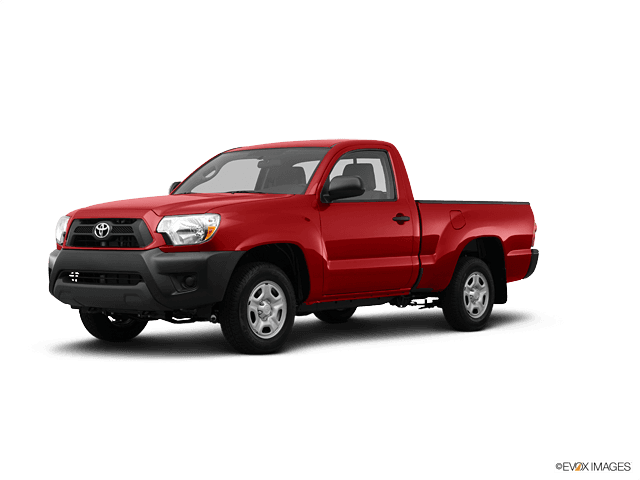









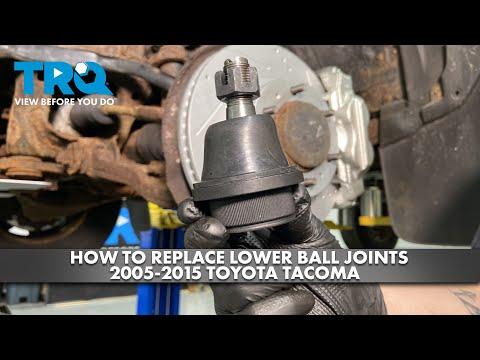







How to Replace Front Ball Joints on a 2005-2015 Toyota Tacoma (Trim: Base)
Step-by-step suspension repair guide with tools, parts, torque specs, and safety tips
How to Replace Front Ball Joints on a 2005-2015 Toyota Tacoma (Trim: Base)
Step-by-step suspension repair guide with tools, parts, torque specs, and safety tips for 2005, 2006, 2007, 2008, 2009, 2010, 2011, 2012, 2013, 2014, 2015


🔧 Tacoma - Front Ball Joint Replacement
This repair replaces the front upper and/or lower ball joints on your Tacoma. Ball joints are pivot points in the front suspension that let the steering knuckle turn while the suspension moves up and down.
On your Tacoma, the front lower ball joint is commonly replaced as a bolt-on assembly at the steering knuckle, while the upper ball joint is part of the upper control arm assembly. Replace worn ball joints promptly because a failed ball joint can cause loss of steering control.
Difficulty Level: Advanced | Estimated Time: 3-5 hours per side
⚠️ Safety & Precautions
- ⚠️ Support your Tacoma with jack stands only; never work under a vehicle held up by a jack.
- ⚠️ The front suspension is heavy. Keep fingers clear when separating the ball joint from the steering knuckle.
- ⚠️ Do not hammer directly on the threaded ball joint stud. This can damage the threads.
- ⚠️ If the rubber dust boot is torn or grease has leaked out, replacement is required.
- ⚠️ Replace cotter pins with new ones. A cotter pin is a small locking pin that prevents a nut from backing off.
- ⚠️ A front wheel alignment is required after replacing upper control arms or disturbing suspension geometry.
- ⚠️ Battery disconnect is not required for this repair.
🔧 Required Tools
You'll need the following tools for this repair:
- Floor jack (rated 3-ton minimum)
- Jack stands (rated 3-ton minimum)
- Wheel chocks
- 21mm lug nut socket
- 1/2-inch drive breaker bar
- 1/2-inch drive torque wrench
- 3/8-inch drive ratchet
- 12mm socket
- 14mm socket
- 17mm socket
- 19mm socket
- 22mm socket
- 12mm wrench
- 14mm wrench
- 17mm wrench
- 19mm wrench
- 22mm wrench
- Needle-nose pliers
- Side cutters
- Ball joint separator (specialty)
- Pitman arm puller (specialty)
- Hammer 2-lb
- Pry bar 18-inch
- Paint marker
- Bungee cord
- Penetrating oil
- Brake cleaner
- Mechanic gloves
- Safety glasses
🔩 Required Parts
HowToo sells all the parts you need for this repair:
- Front lower ball joint assembly - Qty: 2
- Front upper control arm assembly with ball joint - Qty: 2
- Lower ball joint mounting bolts - Qty: 8
- New cotter pins - Qty: 4
- Chassis grease - Qty: 1 tube
Note: Replace left and right sides in pairs when possible. This keeps steering feel and suspension movement even.
📋 Before You Begin
- 🅿️ Park your Tacoma on level ground and set the parking brake.
- 🧱 Place wheel chocks behind the rear wheels.
- 🖊️ Use a paint marker to mark the position of the upper control arm cam bolts before removal. This helps preserve the alignment enough to drive carefully to an alignment shop.
- 🛞 Loosen the front lug nuts slightly before lifting the truck.
- 🔩 Spray penetrating oil on the ball joint nuts, lower ball joint bolts, and upper control arm bolts before starting.
- 📐 Plan for a professional alignment after the repair.
🔨 Step-by-Step Instructions
Follow these steps in order:
Step 1: Lift and Secure the Front of the Truck
- Use a 21mm lug nut socket and 1/2-inch drive breaker bar to loosen the front wheel lug nuts one turn while the tires are still on the ground.
- Use a floor jack (rated 3-ton minimum) under the front frame crossmember to lift the front of your Tacoma.
- Place jack stands (rated 3-ton minimum) under the frame rails.
- Lower the truck gently onto the jack stands.
- Use the floor jack to lightly support the lower control arm on the side you are working on.
- Shake the truck gently to verify stability.
Step 2: Remove the Front Wheel
- Use the 21mm lug nut socket to remove the lug nuts.
- Remove the wheel and set it flat under the frame as an extra safety backup.
Step 3: Disconnect Brake Hose and ABS Wire Brackets
- Use a 12mm socket or 12mm wrench to remove the brake hose bracket bolt from the steering knuckle.
- Use a 10mm socket if your ABS wire bracket uses a smaller bolt.
- Move the hose and wire gently aside.
- Use a bungee cord if needed to hold the hose away from the work area.
- Do not pull on the brake hose or ABS wire.
Step 4: Separate the Tie Rod End from the Steering Knuckle
- Use needle-nose pliers or side cutters to remove the cotter pin from the outer tie rod end.
- Use a 19mm socket and 3/8-inch drive ratchet to remove the tie rod castle nut. A castle nut has slots for a cotter pin.
- Use a ball joint separator (specialty) to separate the tie rod end from the steering knuckle.
- If the separator is tight, use a hammer 2-lb to tap the separator body, not the threaded stud.
Step 5: Remove the Lower Ball Joint from the Steering Knuckle
- Use needle-nose pliers or side cutters to remove the cotter pin from the lower ball joint stud.
- Use a 22mm socket or 22mm wrench to loosen and remove the lower ball joint castle nut.
- Use a pitman arm puller (specialty) or ball joint separator (specialty) to separate the lower ball joint stud from the lower control arm.
- Support the steering knuckle with a bungee cord so it does not pull on the brake hose.
- Go slowly; the knuckle is heavy.
Step 6: Unbolt the Lower Ball Joint Assembly
- Use a 17mm socket and 3/8-inch drive ratchet to remove the four lower ball joint mounting bolts from the steering knuckle.
- Remove the lower ball joint assembly from the knuckle.
- Use brake cleaner and a shop towel to clean the mounting surface.
Step 7: Install the New Lower Ball Joint Assembly
- Position the new front lower ball joint assembly against the steering knuckle.
- Install the new lower ball joint mounting bolts by hand first to avoid cross-threading.
- Use a 17mm socket and 1/2-inch drive torque wrench to tighten the lower ball joint mounting bolts to Torque to 80 Nm (59 ft-lbs).
- Insert the lower ball joint stud into the lower control arm.
- Use a 22mm socket and 1/2-inch drive torque wrench to tighten the lower ball joint castle nut to Torque to 140 Nm (103 ft-lbs).
- Install a new cotter pin using needle-nose pliers.
- If the cotter pin hole does not line up, tighten the nut slightly more. Do not loosen it to align the hole.
Step 8: Remove the Upper Control Arm Assembly
- Use needle-nose pliers or side cutters to remove the cotter pin from the upper ball joint castle nut.
- Use a 19mm socket or 19mm wrench to loosen the upper ball joint castle nut.
- Use a ball joint separator (specialty) to separate the upper ball joint from the steering knuckle.
- Use a paint marker to mark the position of the upper control arm cam washers and bolts.
- Use a 19mm socket and 19mm wrench to remove the upper control arm pivot bolts and nuts.
- Remove the upper control arm assembly from the truck.
Step 9: Install the New Upper Control Arm Assembly
- Position the new front upper control arm assembly with ball joint into the frame mounts.
- Install the pivot bolts and nuts by hand using your alignment marks as a starting point.
- Use a 19mm socket, 19mm wrench, and 1/2-inch drive torque wrench to tighten the upper control arm pivot bolts to Torque to 135 Nm (100 ft-lbs).
- Insert the upper ball joint stud into the steering knuckle.
- Use a 19mm socket and 1/2-inch drive torque wrench to tighten the upper ball joint castle nut to Torque to 81 Nm (60 ft-lbs).
- Install a new cotter pin with needle-nose pliers.
Step 10: Reconnect the Tie Rod End
- Insert the outer tie rod end stud into the steering knuckle.
- Use a 19mm socket and 1/2-inch drive torque wrench to tighten the tie rod castle nut to Torque to 91 Nm (67 ft-lbs).
- Install a new cotter pin using needle-nose pliers.
Step 11: Reinstall Brake Hose and ABS Wire Brackets
- Use a 12mm socket or 12mm wrench to reinstall the brake hose bracket bolt.
- Use a 10mm socket if your ABS wire bracket uses a smaller bolt.
- Tighten small bracket bolts snugly to Torque to 8 Nm (71 in-lbs).
- Make sure the brake hose is not twisted and does not rub the tire or suspension.
Step 12: Grease the Ball Joints if Fittings Are Present
- If the new ball joints have grease fittings, use a chassis grease tube with a grease gun to add grease until the boot just begins to swell.
- Do not overfill the boot.
- If the new ball joints are sealed, no grease is added.
Step 13: Reinstall the Wheel
- Place the wheel back on the hub.
- Thread the lug nuts by hand.
- Use a 21mm lug nut socket to snug the lug nuts in a star pattern.
- Use the floor jack to raise the truck slightly and remove the jack stands.
- Lower your Tacoma until the tire just touches the ground.
- Use a 21mm lug nut socket and 1/2-inch drive torque wrench to tighten the lug nuts to Torque to 113 Nm (83 ft-lbs).
Step 14: Repeat on the Other Side
- Repeat the same steps on the opposite front side using the same tools.
- Replacing in pairs is strongly recommended for even handling.
✅ After Repair
- ✅ Turn the steering wheel fully left and right while parked. Listen for binding, popping, or rubbing.
- ✅ Check that all cotter pins are installed and bent securely.
- ✅ Check that brake hoses and ABS wires are clipped back in place.
- ✅ Test drive slowly first. Avoid highway speeds until alignment is completed.
- ✅ Get a professional front wheel alignment as soon as possible.
- ✅ Recheck lug nut torque after 50-100 miles: Torque to 113 Nm (83 ft-lbs).
💰 DIY vs Shop Cost
Shop Cost: $700-$1,300 (parts + labor)
DIY Cost: $250-$650 (parts only)
You Save: $450-$650 by doing it yourself!
Shop labor rates vary but typically run $100-$150/hour. This repair takes a shop approximately 3-5 hours.
🎯 Ready to get started?
HowToo makes it easy: same-day/2-day shipping on every part, plus all the tools and specialty tools you need! Check out the parts and tools sections below to add everything to your cart.
Guide for Suspension Ball Joint replace for these Toyota vehicles
| Year Make Model | Sub Model | Engine | Body Style |
|---|---|---|---|
| 2015 Toyota Tacoma | Pre Runner | - | - |
| 2014 Toyota Tacoma | Pre Runner | - | - |
| 2013 Toyota Tacoma | Pre Runner | - | - |
| 2012 Toyota Tacoma | Pre Runner | - | - |
| 2011 Toyota Tacoma | Pre Runner | - | - |
| 2010 Toyota Tacoma | Pre Runner | - | - |
| 2009 Toyota Tacoma | Pre Runner | - | - |
| 2008 Toyota Tacoma | Pre Runner | - | - |
| 2007 Toyota Tacoma | Pre Runner | - | - |
| 2006 Toyota Tacoma | Pre Runner | - | - |
| 2005 Toyota Tacoma | Pre Runner | - | - |