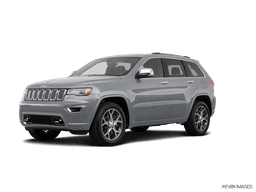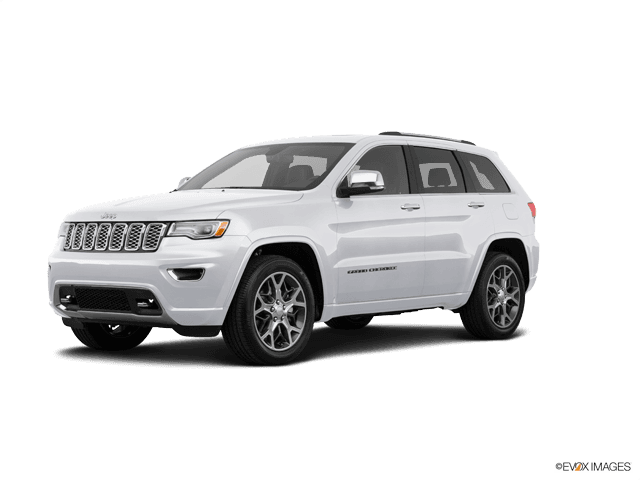









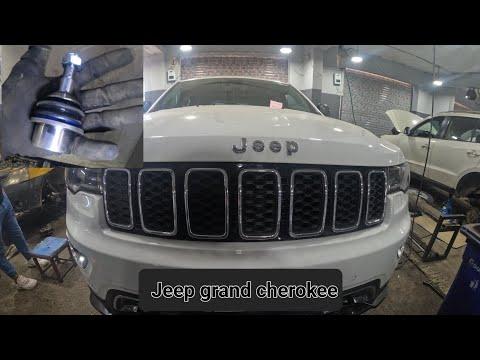






How to Replace Front Ball Joints & Control Arms on a 2016-2021 Jeep Grand Cherokee
Step-by-step DIY suspension repair with tools, parts list, safety tips, and torque guidance for front upper and lower control arms
How to Replace Front Ball Joints & Control Arms on a 2016-2021 Jeep Grand Cherokee
Step-by-step DIY suspension repair with tools, parts list, safety tips, and torque guidance for front upper and lower control arms for 2016, 2017, 2018, 2019, 2020, 2021


🔧 Grand Cherokee - Front Ball Joint / Control Arm Replacement
On your Grand Cherokee, the front ball joints are built into the control arms from the factory. For a beginner, the safest and most common method is to replace the entire control arm assembly instead of pressing ball joints in and out.
Difficulty Level: Advanced (for a beginner) | Estimated Time: 4–6 hours for both sides
⚠️ Safety & Precautions
- 🛑 Always support the vehicle with jack stands; never work under a vehicle held only by a jack.
- 🛑 Suspension parts are heavy; keep fingers clear of pinch points and wear safety glasses.
- 🛑 Wheel alignment will be required after replacing control arms/ball joints; plan a trip to an alignment shop.
- 🛑 Do not loosen or remove any part of the front coil spring or strut assembly itself.
- 🛑 If any fastener is badly rusted or damaged, replace it instead of reusing.
- 🛑 Chock the rear wheels and keep the transmission in Park with the parking brake set.
🔧 Required Tools
You'll need the following tools for this repair:
- 🛠️Floor jack (rated 3-ton minimum)
- 🛠️Jack stands (rated 3-ton minimum, set of 2)
- 🛠️Wheel chocks
- 🛠️Lug wrench (21mm)
- 🛠️Socket set (8mm–24mm, metric)
- 🛠️Ratchet (3/8" and 1/2" drive)
- 🛠️Breaker bar (1/2" drive)
- 🛠️Torque wrench (10–200 ft-lbs range)
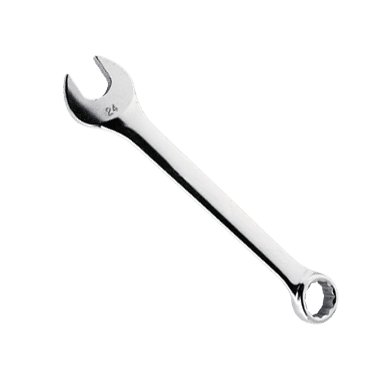
- 🛠️Combination wrench set (metric 10mm–24mm)
- 🛠️Ball joint separator / pickle fork (specialty)
- 🛠️Hammer (2–3 lb)
- 🛠️Pry bar (18"–24")
- 🛠️Flat-head screwdriver (medium)
- 🛠️Torque-angle gauge (specialty)
- 🛠️Needle-nose pliers
- 🛠️Wire brush
- 🛠️Penetrating oil spray
- 🛠️Paint marker or white correction pen
- 🛠️Gloves
- 🛠️Safety glasses
- 🛠️Shop light or flashlight
🔩 Required Parts
HowToo sells all the parts you need for this repair:
- 🔩Front lower control arm assembly (left) - Qty: 1
- 🔩Front lower control arm assembly (right) - Qty: 1
- 🔩Front upper control arm assembly (left) - Qty: 1 (if upper ball joint is also worn)
- 🔩Front upper control arm assembly (right) - Qty: 1 (if upper ball joint is also worn)
- 🔩Front lower control arm bolts and nuts kit - Qty: 1 set
- 🔩Front upper control arm bolts and nuts kit - Qty: 1 set
- 🔩New ball joint nuts and cotter pins - Qty: 4
- 🔩Anti-seize compound - Qty: 1 small tube
- 🔩Rust-penetrating oil - Qty: 1 can
📋 Before You Begin
- 🧰 Park the Grand Cherokee on level ground, set the parking brake, and place wheel chocks behind the rear tires.
- 🧰 Loosen the front wheel lug nuts 1/2 turn with the 21mm lug wrench while the vehicle is on the ground.
- 🧰 Gather all tools and parts so you are not searching mid-job.
- 🧰 Spray all visible control arm bolts, nuts, and ball joint studs with penetrating oil and let them soak for at least 10–15 minutes. Spray again if they look very rusty.
- 🧰 You do not need to disconnect the battery for this repair.
🔨 Step-by-Step Instructions
Follow these steps in order:
Step 1: Lift and support the front of the vehicle
- Place the floor jack under the front subframe or crossmember (center point) and raise the front until both front wheels are off the ground.
- Position jack stands under the factory jacking points or frame rails on both sides and lower the vehicle gently onto the stands.
- Give the vehicle a firm push to confirm it is stable on the stands.
- Remove the front wheel lug nuts completely with the 21mm socket and ratchet and take off both front wheels.
Step 2: Identify the ball joints and control arms
- The lower control arm is the large arm running from the body to the bottom of the steering knuckle (where the wheel hub is mounted).
- The lower ball joint is at the outer end of that arm, attached to the bottom of the steering knuckle.
- The upper control arm is the smaller arm above, with its ball joint attached to the top side of the steering knuckle.
- Decide now if you are doing lower only, upper only, or both.
Step 3: Support the steering knuckle
- Place the floor jack under the lower control arm, near the ball joint, and raise it slightly until it just supports the weight of the knuckle and hub.
- This prevents the brake hose and CV joint from being stressed.
Step 4: Remove the lower ball joint nut
- Locate the lower ball joint nut at the bottom of the steering knuckle.
- If there is a cotter pin, remove it with needle-nose pliers.
- Use the appropriate socket and ratchet or breaker bar (usually 21mm or 22mm) to loosen and remove the ball joint nut.
- If the stud starts turning, hold it with a wrench on the flat part of the stud (if provided) while loosening the nut.
Step 5: Separate the lower ball joint from the knuckle
- Insert the ball joint separator / pickle fork between the lower control arm ball joint and the steering knuckle.
- Strike the back of the separator with the hammer until the ball joint taper pops free from the knuckle.
- Alternatively, you can strike the side of the steering knuckle where the ball joint passes through (not the stud itself) with the hammer to shock it loose.
- Keep the floor jack under the control arm so the knuckle does not drop suddenly.
Step 6: Mark the lower control arm mounting positions
- Use the paint marker to mark around the alignment cams or washers at the inner control arm bolts where they attach to the subframe.
- This helps keep alignment close until you get a proper alignment.
Step 7: Remove the lower control arm bolts
- Locate the inner pivot bolts of the lower control arm where it attaches to the frame/subframe.
- Use the appropriate socket and breaker bar on one side and a wrench on the nut side to loosen each bolt.
- Once broken free, remove the bolts completely with the ratchet and socket, supporting the arm with one hand or with the floor jack.
- Lower the floor jack slightly and remove the lower control arm from the vehicle.
Step 8: Install the new lower control arm
- Position the new lower control arm in place, aligning the inner bushing sleeves with the mounting holes in the frame/subframe.
- Insert the new inner bolts by hand, matching the orientation and approximate position of the painted marks.
- Thread the new nuts on but leave them slightly loose so the arm can still pivot.
- Guide the ball joint stud into the hole in the bottom of the steering knuckle.
- Install the new ball joint nut and tighten it snugly with the socket and ratchet, but do not fully torque yet.
Step 9: Torque the lower ball joint nut
- With the stud fully seated in the knuckle, use the socket and torque wrench to tighten the lower ball joint nut to the manufacturer specification (refer to Jeep service data).
- If the nut requires an additional angle (for example, “+90°”), use the torque-angle gauge to add the turn after the initial torque value.
- Install a new cotter pin through the castle nut and stud (if used) and bend the ends with needle-nose pliers.
Step 10: Replace the upper control arm (if needed)
- Support the steering knuckle again with the floor jack.
- Remove the cotter pin from the upper ball joint nut with needle-nose pliers.
- Remove the upper ball joint nut with the appropriate socket and ratchet.
- Use the ball joint separator and hammer to separate the upper ball joint from the steering knuckle.
- Locate the inner bolts for the upper control arm at the body/frame.
- Use the socket, breaker bar, and wrench to remove the inner bolts and take out the upper control arm.
- Install the new upper control arm, insert the inner bolts, and start the nuts by hand (do not fully tighten yet).
- Insert the new upper ball joint stud into the knuckle and install the new nut.
- Tighten the upper ball joint nut with the torque wrench to the manufacturer specification (refer to Jeep service data) and install a new cotter pin if required.
Step 11: Preload the suspension before final tightening
- Place the floor jack under the lower control arm ball joint area and raise it until the vehicle just starts to lift off the jack stand slightly (simulating normal ride height).
- This positions the rubber bushings in their normal driving angle.
- With the suspension in this position, use the socket, wrench, and torque wrench to tighten all inner control arm bolts (upper and lower) to manufacturer specification (refer to Jeep service data).
- Do not tighten control arm bushings with the suspension hanging.
Step 12: Reinstall wheels
- Lower the floor jack until the vehicle is resting again fully on the jack stands, then remove the jack.
- Reinstall the wheels on the hubs and hand-thread the lug nuts.
- Raise the vehicle slightly with the floor jack, remove the jack stands, and then lower the vehicle to the ground.
- Use the 21mm socket and torque wrench to tighten the wheel lug nuts in a star pattern to the manufacturer wheel lug torque specification (refer to Jeep service data).
✅ After Repair
- 🚗 Start the engine and slowly turn the steering wheel from lock to lock while stationary. Listen for any unusual noises.
- 🚗 Take a short, low-speed test drive around your area. Listen for clunks, pops, or pulling.
- 🚗 The steering wheel may not be perfectly straight; this is normal until alignment is done.
- 🚗 Schedule a professional wheel alignment as soon as possible; driving long without alignment can cause tire wear.
- 🚗 After the first drive, recheck all visible nuts and bolts for any signs of looseness.
💰 DIY vs Shop Cost
Shop Cost: $800–$1,400 (parts + labor) for both sides, upper and lower
DIY Cost: $300–$600 (parts only, depending on brand and how many arms you replace)
You Save: $500–$800 by doing it yourself!
Shop labor rates vary but typically run $100–$150/hour. This repair takes a shop approximately 2–3 hours.
🎯 Ready to get started?
HowToo makes it easy: same-day/2-day shipping on every part, plus all the tools and specialty tools you need! Check out the parts and tools sections above to add everything to your cart.
Guide for Suspension Control Arm and Ball Joint Assembly replace for these Jeep vehicles
| Year Make Model | Sub Model | Engine | Body Style |
|---|---|---|---|
| 2021 Jeep Grand Cherokee | - | - | - |
| 2020 Jeep Grand Cherokee | - | - | - |
| 2019 Jeep Grand Cherokee | - | - | - |
| 2018 Jeep Grand Cherokee | - | - | - |
| 2017 Jeep Grand Cherokee | - | - | - |
| 2016 Jeep Grand Cherokee | - | - | - |