









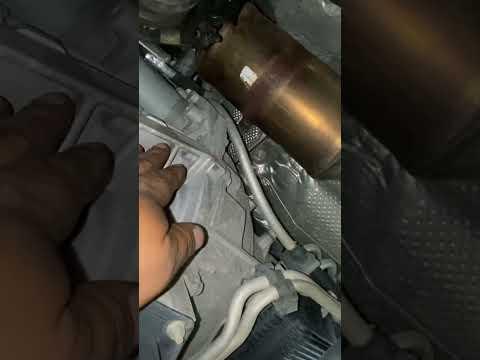







How to Replace Engine & Transmission Mounts on a 2016 Dodge Durango (3.6L V6)
Step-by-step DIY instructions with required tools/parts, safety tips, and torque specs
How to Replace Engine & Transmission Mounts on a 2016 Dodge Durango (3.6L V6)
Step-by-step DIY instructions with required tools/parts, safety tips, and torque specs


🔧 Durango - Engine Mount Replacement
Engine mounts hold your A4—sorry, your Durango’s engine in place and absorb vibration. When they wear out, you may feel clunks on takeoff, extra vibration in the cabin, or see the engine “rock” more than normal.
Difficulty Level: Advanced | Estimated Time: 3-6 hours
Assumption: This covers the common right, left, and transmission mounts on the 3.6L; exact fastener torques can vary by mount revision—verify with factory service info if available.
⚠️ Safety & Precautions
- ⚠️ Support the engine before loosening mounts; an unsupported engine can drop and damage wiring, exhaust, or radiator.
- ⚠️ Never get under a vehicle supported only by a jack—use jack stands.
- ⚠️ Keep hands clear while raising/lowering the engine; it can shift suddenly.
- ⚠️ If you remove the battery or work near the starter cable, disconnect the negative battery terminal using a 10mm socket.
- ⚠️ Use a wood block between jack and oil pan; direct jack contact can crack the pan.
🔧 Required Tools
You'll need the following tools for this repair:
- Floor jack (rated 3-ton minimum)
- Jack stands (rated 3-ton minimum)
- Wheel chocks
- Safety glasses
- Mechanic gloves
- Engine support bar (specialty)
- Wood block (2x6 in, 12-18 in long)
- 10mm socket
- 13mm socket
- 15mm socket
- 18mm socket
- 21mm socket
- 3/8 in drive ratchet
- 1/2 in drive breaker bar
- 3/8 in drive extension set (3 in, 6 in)
- 1/2 in drive extension set (3 in, 6 in)
- Torque wrench (10-150 ft-lbs)
- Trim clip remover
- Flat-blade screwdriver
🔩 Required Parts
HowToo sells all the parts you need for this repair:
- Right engine mount - Qty: 1
- Left engine mount - Qty: 1
- Transmission mount - Qty: 1
- Engine mount fastener set - Qty: 1
📋 Before You Begin
- Park on level ground, set the parking brake, and chock the rear wheels.
- Open the hood and remove loose items from the engine bay.
- If you’ll be working near the battery cable, disconnect the negative terminal using a 10mm socket.
- Set up your engine support bar (specialty): it spans the fenders and holds the engine from above so the mounts can be removed safely. (It’s basically a “top-side jack” for the engine.)
🔨 Step-by-Step Instructions
Follow these steps in order:
Step 1: Lift and secure the Durango
- Place wheel chocks behind the rear tires.
- Lift the front with a floor jack (rated 3-ton minimum) at the correct front jacking point.
- Set the vehicle onto jack stands (rated 3-ton minimum).
Step 2: Support the engine
- Install the engine support bar (specialty) across the fenders per the tool instructions.
- Tension the support bar just enough to “take the weight” of the engine (do not lift aggressively).
- As a backup, place a floor jack (rated 3-ton minimum) under the oil pan with a wood block (2x6 in, 12-18 in long) between the jack and pan, and apply light support.
Step 3: Remove the lower splash shield (if equipped)
- Use a trim clip remover and flat-blade screwdriver to remove clips/screws.
- Set the shield aside so you can access the mounts and crossmember area.
Step 4: Replace the right (passenger-side) engine mount
- From above and/or below, locate the right mount at the passenger-side frame rail.
- Use a 15mm socket or 18mm socket (varies by fastener) with a ratchet and extensions to loosen (but do not fully remove) the mount-to-bracket bolts.
- Use a 18mm socket or 21mm socket to loosen the mount-to-body/frame fasteners.
- Raise or lower the engine slightly using the engine support bar (specialty) (or the floor jack lightly) until the bolts come out without binding.
- Remove the mount fasteners and lift the mount out.
- Install the new right mount in the same orientation.
- Start all bolts by hand first to avoid cross-threading.
- Tighten fasteners evenly, then final torque: Torque to 75 Nm (55 ft-lbs) for mount-to-frame fasteners and Torque to 61 Nm (45 ft-lbs) for mount-to-bracket fasteners.
Step 5: Replace the left (driver-side) engine mount
- Locate the left mount near the driver-side frame rail/transmission area.
- If access is tight, remove any small brackets or covers in the way using a 10mm socket or 13mm socket.
- Use a 15mm socket or 18mm socket with a ratchet and extensions to loosen the mount-to-bracket fasteners.
- Use a 18mm socket or 21mm socket to loosen the mount-to-frame fasteners.
- Adjust engine height slightly with the engine support bar (specialty) until the mount slides out without forcing it.
- Install the new left mount, hand-start all bolts, then tighten.
- Final torque: Torque to 75 Nm (55 ft-lbs) for mount-to-frame fasteners and Torque to 61 Nm (45 ft-lbs) for mount-to-bracket fasteners.
- If bolts fight you, adjust engine height 1-2 mm.
Step 6: Replace the transmission mount (rear crossmember area)
- From underneath, locate the transmission mount at the transmission support/crossmember.
- Support the transmission lightly with the floor jack (rated 3-ton minimum) and wood block (2x6 in, 12-18 in long).
- Use an 18mm socket and breaker bar to loosen crossmember-to-body bolts.
- Use a 15mm socket or 18mm socket to remove mount-to-transmission fasteners.
- Lower the crossmember slightly (only as needed) and remove the old transmission mount.
- Install the new transmission mount and hand-start all bolts.
- Final torque: Torque to 88 Nm (65 ft-lbs) for crossmember bolts and Torque to 61 Nm (45 ft-lbs) for mount fasteners.
Step 7: Reinstall shields and lower the vehicle
- Reinstall the splash shield using a trim clip remover and flat-blade screwdriver.
- Remove the engine support bar (specialty) carefully.
- Raise the vehicle slightly with the floor jack (rated 3-ton minimum), remove jack stands, and lower to the ground.
✅ After Repair
- Start the engine and let it idle in Park for 1-2 minutes; listen for clunks or metal-to-metal contact.
- With your foot on the brake, shift P → R → D and watch for excessive engine movement.
- Take a short test drive and re-check for new vibrations or thuds on acceleration.
- Recheck any fasteners you removed for access after the first drive.
💰 DIY vs Shop Cost
Shop Cost: $800-$1,600 (parts + labor)
DIY Cost: $220-$650 (parts only)
You Save: $580-$950 by doing it yourself!
Shop labor rates vary but typically run $100-$150/hour. This repair takes a shop approximately 3-6 hours.
🎯 Ready to get started?
HowToo makes it easy: same-day/2-day shipping on every part, plus all the tools and specialty tools you need! Check out the parts and tools sections below to add everything to your cart.