









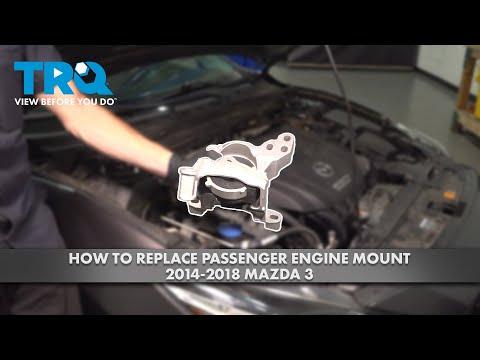







How to Replace Engine Mounts on a 2018 Mazda 3 (Right, Left & Rear Mounts)
Step-by-step DIY instructions with required tools/parts, safety tips, and mount alignment & torque guidance for 2014, 2015, 2016
How to Replace Engine Mounts on a 2018 Mazda 3 (Right, Left & Rear Mounts)
Step-by-step DIY instructions with required tools/parts, safety tips, and mount alignment & torque guidance for 2014, 2015, 2016


🔧 3 - Engine Mount Replacement
On your 3, “engine mounts” can mean the right-side (passenger) engine mount, the left-side transmission mount, and the rear mount (torque mount). The steps and torque specs are different for each mount, and using the wrong procedure can crack an aluminum bracket or strip threads.
Difficulty Level: Advanced | Estimated Time: 2-5 hours
⚠️ Safety & Precautions
- ⚠️ Support the engine before removing any mount; the engine can drop suddenly.
- ⚠️ Never lift the engine by the oil pan without a wood block; the pan can dent and cause oil pickup issues.
- ⚠️ Keep hands clear of pinch points while jacking the engine.
- ⚠️ If you remove any brackets near the serpentine belt, keep keys away and engine OFF.
- ⚠️ Battery disconnect is recommended if you’ll remove the air box or work near the main harness.
🔧 Required Tools
You'll need the following tools for this repair:
- Floor jack (rated 3-ton minimum)
- Jack stands (rated 3-ton minimum)
- Wheel chocks
- Safety glasses
- Mechanic gloves
- Wood block (2x6 in. minimum)
- Socket set (8mm-21mm)
- Deep socket set (10mm-19mm)
- Ratchet (3/8 in.)
- Ratchet (1/2 in.)
- Breaker bar (1/2 in.)
- Torque wrench (10-200 Nm range)
- Extensions (3 in., 6 in., 12 in.)
- Universal joint adapter (3/8 in.)
- Trim clip removal tool
- Flathead screwdriver
- Pliers
🔩 Required Parts
HowToo sells all the parts you need for this repair:
- Right-side engine mount - Qty: 1
- Left-side transmission mount - Qty: 1
- Rear engine mount - Qty: 1
- Engine mount hardware kit - Qty: 1
📋 Before You Begin
- Park on level ground, set the parking brake, and chock the rear wheels.
- Let the engine cool fully; mounts sit near hot components.
- Place a floor jack under the engine with a wood block; this spreads the load and protects the oil pan.
- Two quick questions so I give you the exact correct steps + torque specs:
- Which mount(s) are you replacing: right (passenger) engine mount, left transmission mount, rear mount, or all three?
- Are you hearing clunking mainly on takeoff/shift (rear mount symptom) or feeling vibration at idle (side mount symptom)?
🔨 Step-by-Step Instructions
Follow these steps in order:
Step 1: Support your 3’s engine safely
- Use wheel chocks and set the parking brake.
- Lift the front with a floor jack (rated 3-ton minimum) and support with jack stands (rated 3-ton minimum).
- Position the floor jack (rated 3-ton minimum) under the engine with the wood block (2x6 in. minimum) between jack and engine.
- Jack up just until you see the engine “take weight.” Do not lift the car by the engine.
Step 2: Identify which mount you’re doing first
- Right (passenger) mount is typically at the top passenger side, under/near the coolant reservoir/air ducting.
- Left (driver) mount supports the transmission on the driver side.
- Rear mount is lower, usually accessed from underneath near the subframe.
- Use a flashlight if needed (if you don’t have one, grab one before starting).
Step 3: Remove access parts (varies by mount)
- If the right mount is being replaced, you typically remove intake duct/air box area using flathead screwdriver, pliers, and 10mm socket.
- If the rear mount is being replaced, you typically remove the lower splash shield using a trim clip removal tool and 8mm socket.
Step 4: Remove the mount without stressing brackets
- With the engine supported, loosen mount-to-body bolts using a breaker bar (1/2 in.) and correct size socket set (8mm-21mm).
- Loosen mount-to-engine (or mount-to-transmission) bolts using a ratchet (1/2 in.), extensions (3 in., 6 in., 12 in.), and universal joint adapter (3/8 in.) as needed.
- Raise/lower the engine slightly with the floor jack (rated 3-ton minimum) to relieve tension so bolts come out straight. If it binds, change engine height.
Step 5: Install the new mount and hand-start all bolts
- Set the new mount in place by hand.
- Thread every bolt by hand first to prevent cross-threading.
- If holes don’t line up, adjust engine height with the floor jack (rated 3-ton minimum).
Step 6: Torque bolts in the correct order
- Use a torque wrench (10-200 Nm range) to tighten fasteners.
- Stop here before final torque: torque specs and tightening order are different for the right, left, and rear mounts on your 3, and I don’t want you to strip threads or crack a bracket.
- Reply with which mount(s) you’re doing (right/left/rear/all three), and I’ll give you the exact bolt list, order, and Torque to XX Nm (YY ft-lbs) for each fastener.
Step 7: Reinstall access parts
- Reinstall air ducting/air box using a 10mm socket, pliers, and flathead screwdriver (if removed).
- Reinstall splash shields using trim clip removal tool and 8mm socket (if removed).
✅ After Repair
- Start the engine and let it idle; listen for new knocking or harsh vibration.
- With your foot on the brake, shift from Park to Reverse to Drive; watch for excessive engine movement.
- Test drive slowly and re-check for clunks on takeoff and during shifts.
- Re-check mount bolts for tightness after a short drive (only if specs allow re-checking).
💰 DIY vs Shop Cost
Shop Cost: $600-$1,500 (parts + labor)
DIY Cost: $150-$600 (parts only)
You Save: $450-$900 by doing it yourself!
Shop labor rates vary but typically run $100-$150/hour. This repair takes a shop approximately 2-5 hours.
🎯 Ready to get started?
HowToo makes it easy: same-day/2-day shipping on every part, plus all the tools and specialty tools you need! Check out the parts and tools sections below to add everything to your cart.