









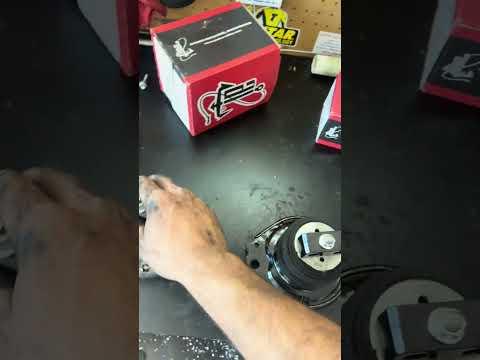







How to Replace Engine Mounts on a 2018 Dodge Challenger (Left & Right)
Step-by-step DIY instructions with required tools, parts list, safety tips, and torque specs
How to Replace Engine Mounts on a 2018 Dodge Challenger (Left & Right)
Step-by-step DIY instructions with required tools, parts list, safety tips, and torque specs


🔧 Challenger - Engine Mount Replacement
On your Challenger, the engine mounts (also called “engine insulators”) support the engine and control vibration. Replacing them requires safely supporting the engine, unbolting each mount from the K-member (front subframe) and engine bracket, then installing the new mounts and torquing everything correctly.
Difficulty Level: Advanced | Estimated Time: 4-6 hours
⚠️ Safety & Precautions
- ⚠️ Support the engine before loosening mounts; it can drop suddenly.
- ⚠️ Work on a level surface and support the car on jack stands; never rely on a floor jack.
- ⚠️ Keep hands clear between engine and subframe while lifting/lowering.
- ⚠️ Let the exhaust cool fully; the mount area can be hot.
- ⚠️ Battery disconnect is recommended to prevent accidental cranking while hands are near moving parts.
🔧 Required Tools
You'll need the following tools for this repair:
- Safety glasses
- Mechanic gloves
- Floor jack (rated 3-ton minimum)
- Jack stands (rated 3-ton minimum)
- Wheel chocks
- Block of wood (2x6 wood block)
- Socket set: 10mm, 13mm, 15mm, 18mm, 21mm
- Wrench set: 15mm, 18mm
- Breaker bar (1/2-inch drive)
- Torque wrench (10-200 ft-lbs range)
- Trim clip removal tool
- Flathead screwdriver
- Work light
- Paint marker
🔩 Required Parts
HowToo sells all the parts you need for this repair:
- Left engine mount (engine insulator) - Qty: 1
- Right engine mount (engine insulator) - Qty: 1
- Engine mount fastener kit - Qty: 1
📋 Before You Begin
- Park on level ground, set the parking brake, and chock the rear wheels.
- Open the hood and remove the key from the car.
- Disconnect the negative battery cable using a 10mm socket.
- Plan how you’ll support the engine: you can use a floor jack with a wood block under the oil pan. The wood spreads the load so you don’t dent the pan.
🔨 Step-by-Step Instructions
Follow these steps in order:
Step 1: Raise and support the car
- Use a floor jack (rated 3-ton minimum) to lift the front of the car at the approved front lift point.
- Place jack stands (rated 3-ton minimum) under the left and right front support points and lower the car onto them.
- Shake the car lightly to confirm it’s stable before going underneath.
Step 2: Remove the lower splash shield (belly pan)
- Use a 10mm socket and trim clip removal tool to remove the fasteners and take off the belly pan.
- Keep bolts grouped by area.
Step 3: Support the engine
- Position the floor jack (rated 3-ton minimum) under the engine oil pan.
- Place the 2x6 wood block between the jack pad and the oil pan.
- Pump the jack until it just contacts and slightly supports the engine (do not lift the car off the stands).
Step 4: Loosen mount fasteners (one side at a time)
- Pick one side to start (left or right). Use a paint marker to mark the mount position and visible bolt orientation.
- Locate the mount “through-bolt” (the long bolt that ties the mount to the engine bracket).
- Use an 18mm socket and breaker bar (1/2-inch drive) to loosen the through-bolt nut/bolt.
- Do not fully remove it yet—just break it loose.
Step 5: Remove the mount-to-K-member bolts
- From underneath, locate the mount base where it bolts to the K-member.
- Use an 18mm socket to remove the mount-to-K-member bolts.
- If the bolts bind, slightly raise/lower the engine using the floor jack to remove stress from the mount.
Step 6: Remove the through-bolt and mount
- Use an 18mm socket and 18mm wrench to fully remove the through-bolt.
- Carefully raise the engine a small amount with the floor jack to create clearance.
- Work the mount out. Use a flathead screwdriver only gently if needed to guide it free (avoid tearing boots/wiring).
Step 7: Install the new mount
- Set the new mount into position by hand.
- Start the mount-to-K-member bolts by hand using an 18mm socket (do not tighten yet).
- Align the engine bracket and slide the through-bolt in. You may need tiny height changes with the floor jack.
- Start the through-bolt nut/bolt by hand.
Step 8: Torque the fasteners (first side)
- Tighten the mount-to-K-member bolts using a torque wrench (10-200 ft-lbs range): Torque to 95 Nm (70 ft-lbs).
- Tighten the through-bolt using a torque wrench (10-200 ft-lbs range): Torque to 115 Nm (85 ft-lbs).
- Torque with the engine supported, not hanging.
Step 9: Repeat on the other side
- Repeat Steps 4 through 8 for the remaining mount using the same tools.
- Keep the engine supported with the floor jack the entire time.
Step 10: Reinstall the belly pan and lower the car
- Reinstall the belly pan using a 10mm socket and trim clip removal tool.
- Raise the car slightly with the floor jack, remove the jack stands, and lower the car to the ground.
Step 11: Reconnect the battery
- Reconnect the negative battery cable using a 10mm socket.
✅ After Repair
- Start the engine and let it idle. Listen for clunks and watch for excessive engine movement.
- With the clutch in, lightly rev the engine and confirm the engine doesn’t “jump” abnormally.
- Test drive and check for new vibration or knocking over bumps.
- Recheck the mount area for any contact with heat shields or wiring after the test drive.
💰 DIY vs Shop Cost
Shop Cost: $800-$1,400 (parts + labor)
DIY Cost: $250-$650 (parts only)
You Save: $550-$750 by doing it yourself!
Shop labor rates vary but typically run $100-$150/hour. This repair takes a shop approximately 4-6 hours.
🎯 Ready to get started?
HowToo makes it easy: same-day/2-day shipping on every part, plus all the tools and specialty tools you need! Check out the parts and tools sections below to add everything to your cart.