









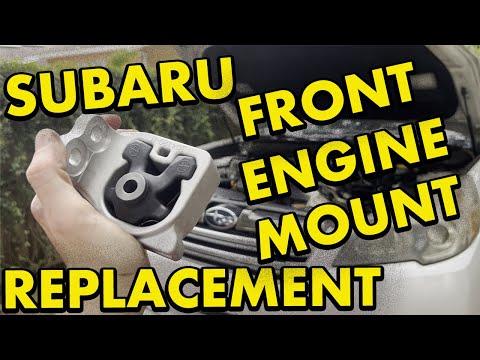







How to Replace Engine Mounts on a 2016 Subaru Crosstrek (Step-by-Step DIY Guide)
Tools, parts list, safety tips, and engine support/jacking steps to eliminate vibration and clunking for 2016, 2017, 2018, 2019, 2020, 2021, 2022, 2023
How to Replace Engine Mounts on a 2016 Subaru Crosstrek (Step-by-Step DIY Guide)
Tools, parts list, safety tips, and engine support/jacking steps to eliminate vibration and clunking for 2016, 2017, 2018, 2019, 2020, 2021, 2022, 2023


🔧 Crosstrek - Engine Mount Replacement
Replacing the engine mounts means supporting the engine, removing the old rubber mounts, and installing new ones so the engine sits correctly and doesn’t shake or clunk under load. Worn mounts can cause vibration at idle, thunking on acceleration, and extra stress on exhaust/CV axles.
Difficulty Level: Advanced | Estimated Time: 3-6 hours
Assumption: Stock intake/undertrays; replacing both left and right mounts.
⚠️ Safety & Precautions
- ⚠️ Support the engine before removing any mount hardware.
- ⚠️ Never get under the vehicle supported only by a jack; use jack stands.
- ⚠️ Do not jack directly on the oil pan; use a wood block to spread the load.
- ⚠️ Keep hands clear when raising/lowering the engine; pinch hazard.
- ⚠️ Let the exhaust cool fully before working near it.
🔧 Required Tools
You'll need the following tools for this repair:
- Floor jack (rated 3-ton minimum)
- Jack stands (rated 3-ton minimum)
- Wheel chocks
- Safety glasses
- Mechanic gloves
- Engine support bar (specialty)
- Floor jack wood block (2x6 wood piece)
- Metric socket set (10mm, 12mm, 14mm, 17mm, 19mm)
- Metric wrench set (12mm, 14mm, 17mm, 19mm)
- Ratchet (3/8" drive)
- Breaker bar (1/2" drive)
- Torque wrench (10-200 Nm range)
- Socket extensions (3", 6", 12")
- Universal joint adapter (3/8" drive)
- Trim clip removal tool
- Flathead screwdriver
- Pry bar (12"-18")
- Paint marker
- Work light
🔩 Required Parts
HowToo sells all the parts you need for this repair:
- Engine mount (left) - Qty: 1
- Engine mount (right) - Qty: 1
- Engine mount self-locking nuts (as required) - Qty: 4-6
📋 Before You Begin
- Park on level ground, set the parking brake, and chock the rear wheels.
- Open the hood and remove loose items from the engine bay.
- Plan how you’ll support the engine: an engine support bar holds the engine from above using the strut towers (safer and gives more room).
- If using a floor jack to support the engine, place a wood block between jack pad and engine to spread force.
🔨 Step-by-Step Instructions
Follow these steps in order:
Step 1: Raise and secure the vehicle
- Use wheel chocks at the rear wheels.
- Lift the front with a floor jack at the front center jacking point.
- Place jack stands under the front pinch welds/subframe points and lower onto them.
- Give the vehicle a firm shake to confirm it is stable.
Step 2: Remove the lower splash shield/undertray
- Remove clips with a trim clip removal tool.
- Remove bolts with a 10mm socket and ratchet.
- Set hardware aside in a tray so nothing gets lost.
Step 3: Create top-side access (as needed)
- Remove the air intake duct/air box pieces as needed using a flathead screwdriver for clamps and a 10mm socket for bolts.
- This helps you see the mount brackets and keeps you from fighting tight angles.
Step 4: Support the engine
- Best method: Install the engine support bar (specialty) across the strut towers and attach its hook/chain to a solid engine lift point.
- Alternate method: Position a floor jack with a wood block under a strong, flat part of the engine’s lower area (not the thin oil pan).
- Apply light support tension—just enough to take the engine’s weight off the mounts.
- Only lift a little at a time.
Step 5: Loosen (do not remove) mount-to-engine bracket fasteners
- Use a 14mm socket and ratchet (or breaker bar if tight) to crack the fasteners loose.
- Leave them threaded a few turns so the engine can’t shift suddenly.
- Mark bracket positions with a paint marker if anything is slotted/adjustable.
Step 6: Remove the mount-to-subframe nuts (one side at a time)
- From underneath, locate the mount studs going through the subframe crossmember.
- Remove the nuts using a 14mm socket with extensions and a ratchet.
- If access is tight, use a universal joint adapter.
Step 7: Raise the engine slightly to unload the mount
- Slowly raise the engine with the engine support bar or floor jack just enough to create a small gap.
- Watch hoses, wiring, and the exhaust flex area as you lift.
- Stop if anything looks stretched.
Step 8: Remove the mount from the vehicle
- Finish removing the mount-to-engine bracket fasteners using a 14mm socket and ratchet.
- Work the mount out through the opening using a pry bar gently if needed.
- Do not pry on aluminum sealing surfaces or thin covers.
Step 9: Install the new mount (match orientation)
- Compare old vs new mount and match the locating tabs/studs.
- Position the new mount by hand first.
- Start all fasteners by hand to avoid cross-threading.
Step 10: Lower/align the engine onto the mount
- Slowly lower the engine with the engine support bar or floor jack until studs drop cleanly into the subframe holes.
- If it doesn’t line up, use a pry bar to shift the mount slightly while keeping fingers clear.
Step 11: Tighten mount hardware in a safe order
- Thread the mount-to-subframe nuts on by hand first.
- Tighten fasteners using a ratchet, then final-tighten with a torque wrench.
- Torque to Subaru service manual specification for:
- Mount-to-subframe nuts and mount-to-engine bracket fasteners.
- Repeat Steps 6–11 for the other side mount.
Step 12: Reinstall intake pieces and undertray
- Reinstall intake ducting/air box using a 10mm socket and flathead screwdriver.
- Reinstall the undertray using a 10mm socket and trim clip removal tool (to seat clips).
Step 13: Lower the vehicle
- Lift slightly with the floor jack, remove jack stands, then lower the vehicle fully.
- Remove wheel chocks.
✅ After Repair
- Start the engine and let it idle; verify the engine sits calmly (no harsh shake).
- With your foot on the brake, shift from Park to Reverse to Drive and listen for clunks (normal shift feel; no banging).
- Road test at low speed; recheck for new vibration and any rattles from the undertray/intake.
- After the test drive, do a quick visual check underneath for any loose hardware.
💰 DIY vs Shop Cost
Shop Cost: $600-$1,200 (parts + labor)
DIY Cost: $180-$450 (parts only)
You Save: $420-$750 by doing it yourself!
Shop labor rates vary but typically run $100-$150/hour. This repair takes a shop approximately 3-5 hours.
🎯 Ready to get started?
HowToo makes it easy: same-day/2-day shipping on every part, plus all the tools and specialty tools you need! Check out the parts and tools sections below to add everything to your cart.