









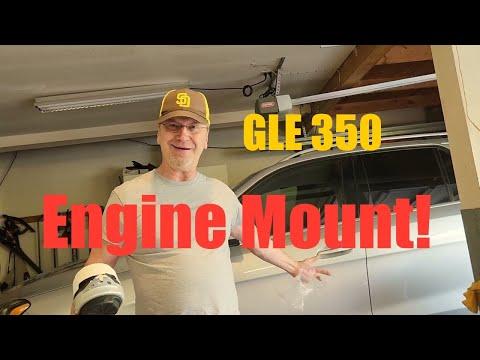






How to Replace Engine Mounts on a 2016-2018 Mercedes-Benz GLE350 (Fix Vibration & Clunking) (Engine: V6 3.5L)
Step-by-step DIY guide with required tools, parts list, safety tips, and Mercedes torque spec notes
How to Replace Engine Mounts on a 2016-2018 Mercedes-Benz GLE350 (Fix Vibration & Clunking) (Engine: V6 3.5L)
Step-by-step DIY guide with required tools, parts list, safety tips, and Mercedes torque spec notes


🔧 GLE - Engine Mount Replacement
Worn engine mounts can cause vibration at idle, clunks when shifting from Park to Drive/Reverse, and extra movement when accelerating. On your GLE, the mounts sit low on each side of the engine and must be swapped while the engine is safely supported.
Difficulty Level: Advanced | Estimated Time: 3-6 hours
⚠️ Safety & Precautions
- ⚠️ Support the engine before removing any mount bolts; the engine can drop and damage wiring, exhaust, or the radiator.
- ⚠️ Never work under a vehicle supported only by a jack; use properly rated jack stands.
- ⚠️ Let the exhaust cool completely; the mounts are near hot components.
- ⚠️ If using a floor jack under the oil pan, always use a wood block; never jack directly on the oil pan.
- ⚠️ Battery disconnect is recommended if you’ll be near the starter/positive cables: disconnect the negative terminal first.
🔧 Required Tools
You'll need the following tools for this repair:
- Floor jack (rated 3-ton minimum)
- Jack stands (rated 3-ton minimum)
- Wheel chocks
- Engine support bar (specialty)
- Wood block (2x6 in. minimum)
- Socket set (8mm–18mm)
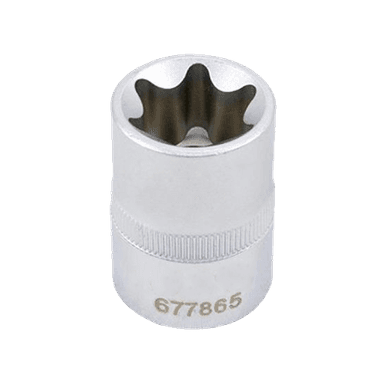
- E-Torx socket set (E10–E14)
- Torx bit set (T25–T40)
- Ratchet (3/8 in.)
- Breaker bar (1/2 in.)
- Extensions (3 in., 6 in., 12 in.)
- Universal joint adapter (3/8 in.)
- Torque wrench (10–200 Nm)
- Trim clip removal tool
- Flathead screwdriver
- Work light
- Nitrile gloves
- Safety glasses
🔩 Required Parts
HowToo sells all the parts you need for this repair:
- Left engine mount - Qty: 1
- Right engine mount - Qty: 1
- Engine mount bolts (single-use stretch bolts, kit) - Qty: 1
- Front underbody shield fastener clips (as needed) - Qty: 1
📋 Before You Begin
- Park on level ground, set the parking brake, and chock the rear wheels.
- Open the hood and remove any loose items around the engine bay.
- If disconnecting the battery: use a socket to remove the negative terminal first and isolate it so it can’t spring back.
- Plan how you will support the engine:
- Use an engine support bar (specialty) across the fenders (best option).
- If you must use a floor jack, place a wood block between the jack pad and the engine’s safe lifting area; never lift directly on the oil pan.
🔨 Step-by-Step Instructions
Follow these steps in order:
Step 1: Raise and secure the vehicle
- Use a floor jack (rated 3-ton minimum) to lift the front of your GLE at the proper front jacking point.
- Set it down onto jack stands (rated 3-ton minimum) at the factory support points.
- Give the vehicle a firm shake to confirm it’s stable before going under.
Step 2: Remove the front underbody shields
- Use a Torx bit set (T25–T40) and socket set (8mm–18mm) to remove the fasteners holding the undertray(s).
- Use a trim clip removal tool for plastic clips to avoid breaking them.
- Set the shields and fasteners aside in a tray in the order removed.
Step 3: Support the engine
- Install the engine support bar (specialty) across the fender rails and attach the support hook/chain to a solid engine lifting point.
- Tighten the support bar until it just takes the weight of the engine.
- Only “take the load,” don’t lift yet.
- Tool definition: An engine support bar holds the engine from above while mounts are removed.
Step 4: Locate the left and right engine mounts
- Use a work light to look up from underneath on each side of the engine.
- The mounts sit between the engine bracket and the subframe.
- Identify each mount’s top fastener(s) (engine side) and bottom fastener(s) (subframe side).
Step 5: Loosen (do not remove) both mounts’ fasteners first
- Use an E-Torx socket set (E10–E14), ratchet (3/8 in.), and extensions (3 in., 6 in., 12 in.) to break the top fasteners loose.
- Use a socket set (8mm–18mm) and breaker bar (1/2 in.) as needed to loosen the bottom fasteners.
- Leave all bolts threaded a few turns so nothing shifts unexpectedly.
Step 6: Lift the engine slightly to unload the mounts
- Use the adjuster on the engine support bar (specialty) to lift the engine just enough to create a small gap at the mounts.
- Watch hoses, wiring, and the fan/shroud area as you lift.
- Lift slowly—millimeters matter here.
Step 7: Remove the right engine mount
- Use an E-Torx socket set (E10–E14) to remove the top fastener(s) from the mount.
- Use a socket set (8mm–18mm) to remove the bottom fastener(s) at the subframe.
- Remove the mount by working it out carefully; use a universal joint adapter (3/8 in.) if access is tight.
Step 8: Install the new right engine mount
- Position the new mount in the same orientation as the old one.
- Start all fasteners by hand first to prevent cross-threading.
- Snug the fasteners using a ratchet (3/8 in.) but do not final-torque yet.
- Torque to Mercedes-Benz specification using a torque wrench (10–200 Nm).
Step 9: Remove and replace the left engine mount
- Repeat the same process on the left side using the E-Torx socket set (E10–E14), socket set (8mm–18mm), extensions (3 in., 6 in., 12 in.), and universal joint adapter (3/8 in.).
- Install the new mount and hand-start all bolts.
- Torque to Mercedes-Benz specification using a torque wrench (10–200 Nm).
Step 10: Set the engine back onto the new mounts
- Slowly lower the engine using the engine support bar (specialty) until it fully rests on the mounts.
- Re-check that the mounts sit squarely in their pockets and that no wiring or hoses are pinched.
- Re-check final torque on all mount fasteners using a torque wrench (10–200 Nm) and ratchet (3/8 in.).
Step 11: Reinstall underbody shields
- Reinstall the undertray(s) using the Torx bit set (T25–T40) and socket set (8mm–18mm).
- Replace any broken clips using your trim clip removal tool and new fasteners.
Step 12: Lower the vehicle
- Use the floor jack (rated 3-ton minimum) to lift slightly, remove the jack stands (rated 3-ton minimum), then lower the vehicle gently.
✅ After Repair
- Start the engine and let it idle; vibrations should be noticeably reduced.
- With your foot on the brake, shift slowly through Park > Reverse > Drive; listen for clunks.
- Test drive and check for new noises on acceleration and bumps.
- Re-check underneath for any disturbed wiring, heat shields, or fluid leaks.
- If the battery was disconnected, reset the clock and auto-up/down window function (hold window switch up for a few seconds after fully closed).
💰 DIY vs Shop Cost
Shop Cost: $900-$1,800 (parts + labor)
DIY Cost: $250-$600 (parts only)
You Save: $650-$1,200 by doing it yourself!
Shop labor rates vary but typically run $100-$150/hour. This repair takes a shop approximately 3-6 hours.
🎯 Ready to get started?
HowToo makes it easy: same-day/2-day shipping on every part, plus all the tools and specialty tools you need! Check out the parts and tools sections below to add everything to your cart.
Assumption: Standard factory engine mounts and undertrays (no aftermarket skid plates).