









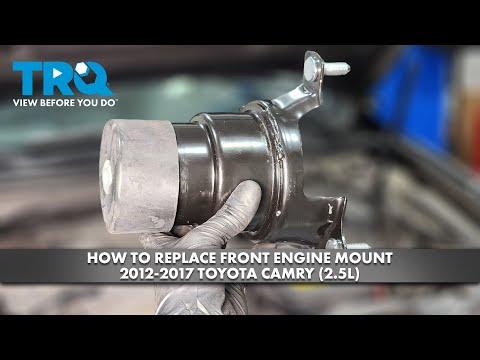







How to Replace Engine Mounts on a 2015 Toyota Camry (All Mounts)
Step-by-step DIY guide with tools, parts list, safety tips, and torque specs for smooth idle and shift clunks
How to Replace Engine Mounts on a 2015 Toyota Camry (All Mounts)
Step-by-step DIY guide with tools, parts list, safety tips, and torque specs for smooth idle and shift clunks


🔧 Camry - Engine Mount Replacement
Your Camry uses multiple mounts to hold the engine/transaxle in place and absorb vibration. Worn mounts can cause clunks on shifts, shaking at idle, and excessive engine movement. The job is very doable at home, but you must support the engine safely while the mounts are removed.
Difficulty Level: Advanced | Estimated Time: 3-6 hours
Assumption: Replacing all primary mounts (right, left, front, rear).
⚠️ Safety & Precautions
- ⚠️ Hybrid safety: Keep clear of orange high-voltage cables; do not unplug HV connectors.
- ⚠️ Prevent auto-start: Turn ignition OFF, keep the key fob 15+ feet away, and disconnect the 12V battery negative terminal before working.
- ⚠️ Support the engine: Use a floor jack with a wood block under the oil pan area; do not jack directly on the pan without a block.
- ⚠️ Never work under a car supported only by a jack; use jack stands on solid points.
- ⚠️ Let the exhaust cool fully; the rear mount area is near hot components.
🔧 Required Tools
You'll need the following tools for this repair:
- Floor jack (rated 3-ton minimum)
- Jack stands (rated 3-ton minimum)
- Wheel chocks
- Safety glasses
- Mechanic gloves
- Wood block (2x6 in. or similar)
- Metric socket set 10mm-19mm
- Metric wrench set 10mm-19mm
- 3/8" drive ratchet
- 1/2" drive breaker bar
- Torque wrench 10-200 Nm
- Extensions set (3", 6", 12")
- Universal joint adapter
- Trim clip removal tool
- Flathead screwdriver
- Pry bar (12"-18")
- Fender cover
- Paint marker
- Penetrating oil
🔩 Required Parts
HowToo sells all the parts you need for this repair:
- Right engine mount (passenger-side) - Qty: 1
- Left transaxle mount (driver-side) - Qty: 1
- Front torque strut mount - Qty: 1
- Rear torque strut mount - Qty: 1
- Engine mount hardware kit (nuts/bolts) - Qty: 1
📋 Before You Begin
- Park on level ground, set the parking brake, and place wheel chocks behind the rear wheels.
- Shut the car OFF and keep the key fob away so the hybrid system cannot wake up.
- Disconnect the 12V battery negative terminal using a 10mm socket.
- Raise the front of the car with a floor jack and support it on jack stands.
- Remove the lower engine splash shield using a 10mm socket and trim clip removal tool.
- Tip: Spray mount bolts with penetrating oil first.
🔨 Step-by-Step Instructions
Follow these steps in order:
Step 1: Support the engine safely
- Place a wood block on the floor jack pad.
- Position the jack under the engine (under the oil pan area) and raise it just until it contacts and lightly supports the engine weight.
- Avoid lifting the car off the stands; you only want to “hold” the engine.
Step 2: Remove the upper access parts (right-side mount area)
- Remove the plastic engine cover by lifting it off (hands).
- Loosen the intake hose clamp using a flathead screwdriver.
- Remove the air cleaner box fasteners using a 10mm socket, then lift the air cleaner assembly out.
- Use a paint marker to mark any brackets you remove so they go back the same way.
Step 3: Replace the right engine mount (passenger-side)
- Locate the mount at the passenger-side frame rail.
- Remove the mount-to-body fasteners using a 14mm socket.
- Remove the mount center through-bolt using a 17mm socket and breaker bar.
- Remove the mount-to-engine bracket bolts using a 14mm socket and extensions.
- Adjust engine height slightly with the floor jack so bolts slide out without binding.
- Install the new mount and hand-thread all fasteners first.
- Torque to 64 Nm (47 ft-lbs) for typical bracket-to-engine bolts.
- Torque to 52 Nm (38 ft-lbs) for typical mount-to-body nuts/bolts.
- Torque to 100 Nm (74 ft-lbs) for typical center through-bolt.
- Tip: If a bolt won’t start, re-level the engine.
Step 4: Replace the front torque strut mount (lower front)
- From underneath, locate the front mount connecting the engine/transaxle to the subframe.
- Support the engine height with the floor jack so the mount isn’t under tension.
- Remove the mount bolts using a 17mm socket and breaker bar.
- Install the new mount and start bolts by hand.
- Torque to 80 Nm (59 ft-lbs) (common spec for this platform’s torque mount bolts).
Step 5: Replace the rear torque strut mount (lower rear)
- From underneath, locate the rear mount near the rear of the subframe.
- Use a pry bar to gently align the mount if holes don’t line up (do not pry on orange cables).
- Remove the mount bolts using a 17mm socket with a universal joint adapter as needed.
- Install the new mount and hand-thread all bolts.
- Torque to 80 Nm (59 ft-lbs) (common spec for this platform’s torque mount bolts).
Step 6: Replace the left transaxle mount (driver-side)
- From above, locate the driver-side mount at the transaxle side.
- Move any small brackets/wire looms out of the way using a 10mm socket and trim clip removal tool (do not strain wiring).
- Remove mount-to-body fasteners using a 14mm socket.
- Remove the center bolt(s) using a 17mm socket.
- Remove mount-to-transaxle bracket bolts using a 14mm socket and extensions.
- Install the new mount, then torque fasteners.
- Torque to 64 Nm (47 ft-lbs) for typical bracket bolts.
- Torque to 52 Nm (38 ft-lbs) for typical mount-to-body fasteners.
- Torque to 100 Nm (74 ft-lbs) for typical main through-bolt.
Step 7: Reinstall intake and shields
- Reinstall the air cleaner assembly using a 10mm socket.
- Tighten the intake clamp using a flathead screwdriver.
- Reinstall the lower splash shield using a 10mm socket and trim clip removal tool.
Step 8: Reconnect power and lower the car
- Reconnect the 12V battery negative terminal using a 10mm socket.
- Remove tools from the engine bay, then lower the car using the floor jack and remove jack stands.
✅ After Repair
- Start the car and let it idle; confirm the engine sits smoothly with less vibration.
- With your foot on the brake, shift through R and D; listen for clunks.
- Test drive at low speed over small bumps; re-check for any new noises.
- Recheck mount fasteners after a short drive if you replaced multiple mounts.
- Tip: A mild new “feel” is normal for new mounts.
💰 DIY vs Shop Cost
Shop Cost: $700-$1,600 (parts + labor)
DIY Cost: $250-$750 (parts only)
You Save: $450-$850 by doing it yourself!
Shop labor rates vary but typically run $100-$150/hour. This repair takes a shop approximately 3-6 hours.
🎯 Ready to get started?
HowToo makes it easy: same-day/2-day shipping on every part, plus all the tools and specialty tools you need! Check out the parts and tools sections below to add everything to your cart.