









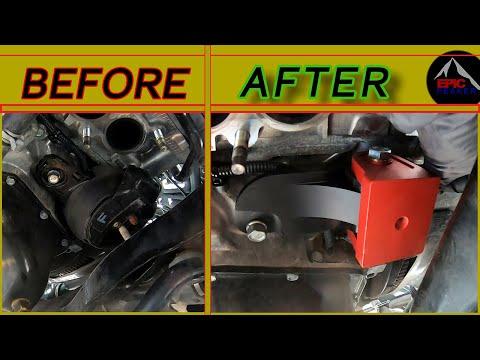







How to Replace Engine Mounts on a 2015-2021 Subaru WRX (Step-by-Step DIY Guide) (Engine: Flat 4 2.0L)
Tools, parts list, safety tips, and torque specs to fix clunks, vibration, and engine movement
How to Replace Engine Mounts on a 2015-2021 Subaru WRX (Step-by-Step DIY Guide) (Engine: Flat 4 2.0L)
Tools, parts list, safety tips, and torque specs to fix clunks, vibration, and engine movement for 2015, 2016, 2017, 2018, 2019, 2020, 2021


🔧 WRX - Engine Mount Replacement
The engine mounts are the rubber-and-metal supports that hold your engine to the front subframe and reduce vibration. Replacing worn mounts can fix clunks on throttle changes, excess vibration, and shifting/launch “jerkiness.”
Difficulty Level: Advanced | Estimated Time: 4-7 hours
⚠️ Safety & Precautions
- ⚠️ Never get under the car supported only by a jack—use jack stands on solid points.
- ⚠️ The engine must be supported before removing mount hardware. If it drops, it can damage hoses/wiring and injure you.
- ⚠️ Keep hands clear while raising/lowering the engine; pinch points are severe around the subframe and mounts.
- ⚠️ Let the exhaust cool completely; the turbo/exhaust area can stay hot a long time.
- ⚠️ Disconnecting the battery is recommended to avoid accidental shorting near the starter/ground cables.
🔧 Required Tools
You'll need the following tools for this repair:
- Floor jack (rated 3-ton minimum)
- Jack stands (rated 3-ton minimum)
- Wheel chocks
- Safety glasses
- Mechanic gloves
- Socket set (8mm-19mm)
- 10mm socket
- 12mm socket
- 14mm socket
- 17mm socket
- 19mm socket
- 3/8" drive ratchet
- 1/2" drive breaker bar
- Torque wrench (10-200 Nm range)
- Extensions (3" and 6")
- Universal swivel joint
- Trim clip remover
- Flathead screwdriver
- Engine support bar (specialty)
- Floor jack rubber pad
- Wood block (2x6, 12"-18" long)
- Penetrating oil
- Paint marker
- Work light
🔩 Required Parts
HowToo sells all the parts you need for this repair:
- Engine mount (left) - Qty: 1
- Engine mount (right) - Qty: 1
- Engine mount hardware kit (nuts/bolts) - Qty: 1
- Pitch stop mount (optional but recommended if cracked) - Qty: 1
📋 Before You Begin
- Park on level ground, set the parking brake, and place wheel chocks behind the rear wheels.
- Open the hood and remove the key from the car.
- Use a 10mm socket to disconnect the negative battery terminal and set it aside.
- Plan how you’ll support the engine: an engine support bar holds the engine from above (safer). If you use a floor jack, use a wood block between the jack and the oil pan to spread the load.
- Soak mount fasteners with penetrating oil first.
🔨 Step-by-Step Instructions
Follow these steps in order:
Step 1: Raise and support the WRX
- Use a floor jack to lift the front of the car at the front center jacking point.
- Set the car down securely on jack stands placed at the approved front support points.
- Give the car a firm shake to confirm it’s stable before going underneath.
Step 2: Remove the undertray / splash shield
- Use a trim clip remover and flathead screwdriver to remove clips.
- Use a 10mm socket to remove any bolts holding the undertray.
- Set the tray and hardware aside in a neat pile.
Step 3: Loosen the pitch stop mount (top of engine)
- The pitch stop is the small “dogbone” bracket between the engine and firewall that limits engine rocking.
- From the top, use a 14mm socket to loosen (or remove) the pitch stop bolts.
- Torque to 50 Nm (37 ft-lbs) during reassembly.
Step 4: Support the engine
- Preferred method: Install an engine support bar (specialty) across the strut towers and attach the hook/chain to a solid lift point. Take up slack until the engine just starts to “float.”
- Alternate method: Place a wood block on a floor jack and gently contact the oil pan. Lift only enough to support the engine—do not dent the pan.
- Support first, then remove mount bolts.
Step 5: Remove the engine mount-to-crossmember nuts (bottom)
- From underneath, locate the bottom of each engine mount on the crossmember.
- Use a 14mm socket with extensions as needed to remove the nuts (one per side).
- Torque to 70 Nm (52 ft-lbs) during reassembly.
Step 6: Remove the engine mount through-bolts (if equipped)
- Depending on the mount/bracket setup, you may have a bolt that passes through the mount into the bracket.
- Use a 17mm socket and breaker bar (and a universal swivel joint if needed) to remove the bolt(s).
- Torque to 80 Nm (59 ft-lbs) during reassembly.
Step 7: Lift the engine slightly to free the mounts
- Use the engine support bar adjuster or the floor jack to raise the engine slowly in small increments.
- Watch the radiator hoses, intercooler/turbo plumbing, wiring, and exhaust clearance while lifting.
- Lift only enough so the mount studs clear the crossmember.
Step 8: Remove and replace the mounts
- Use a work light to confirm which mount is left vs right.
- Remove the mount(s) and compare to the new parts (stud locations and heat shields must match).
- Install the new mounts in the same orientation.
- Use a paint marker for alignment marks.
Step 9: Lower the engine onto the new mounts and start all fasteners by hand
- Lower the engine slowly until the studs drop cleanly into the crossmember holes.
- Start the crossmember nuts by hand using your fingers first, then snug with a 14mm socket.
- Reinstall any through-bolts by hand first, then snug with a 17mm socket.
Step 10: Torque fasteners and reassemble
- Use a torque wrench to torque the mount-to-crossmember nuts: Torque to 70 Nm (52 ft-lbs).
- Use a torque wrench to torque mount through-bolts (if equipped): Torque to 80 Nm (59 ft-lbs).
- Use a torque wrench to torque the pitch stop bolts: Torque to 50 Nm (37 ft-lbs).
- Reinstall the undertray using a 10mm socket and trim clip remover.
- Reconnect the battery negative terminal using a 10mm socket.
✅ After Repair
- Start the engine and let it idle while you listen for new knocks, rubbing, or exhaust contact.
- With the clutch in, gently blip the throttle and watch for excessive engine movement.
- Test drive slowly first; check for clunks during on/off throttle and during shifts.
- Recheck all mount fasteners after 1-2 heat cycles (a couple short drives) for peace of mind.
💰 DIY vs Shop Cost
Shop Cost: $700-$1,300 (parts + labor)
DIY Cost: $180-$500 (parts only)
You Save: $520-$800 by doing it yourself!
Shop labor rates vary but typically run $100-$150/hour. This repair takes a shop approximately 4-7 hours.
🎯 Ready to get started?
HowToo makes it easy: same-day/2-day shipping on every part, plus all the tools and specialty tools you need! Check out the parts and tools sections below to add everything to your cart.