









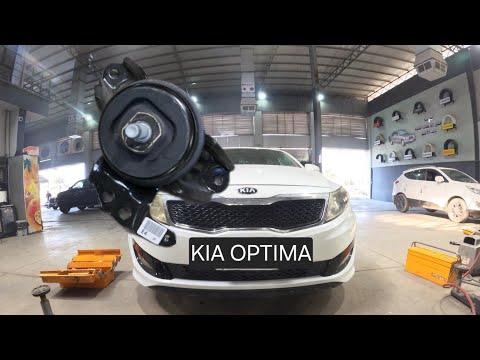







How to Replace Engine Mounts on a 2011-2016 Kia Optima (All Mount Locations) (Engine: Inline 4 2.0L)
Step-by-step DIY instructions with required tools, parts list, safety tips, and torque spec guidance
How to Replace Engine Mounts on a 2011-2016 Kia Optima (All Mount Locations) (Engine: Inline 4 2.0L)
Step-by-step DIY instructions with required tools, parts list, safety tips, and torque spec guidance for 2011, 2012, 2013, 2014, 2015, 2016


🔧 Optima - Engine Mount Replacement
Engine mounts hold the engine/transmission in place and absorb vibration. Replacing a worn mount can fix clunks on takeoff, vibration at idle, or excessive engine movement.
Difficulty Level: Intermediate | Estimated Time: 1.5-4.0 hours (depends on which mount)
⚠️ Safety & Precautions
- 🛑 Never get under the car supported only by a jack; use jack stands.
- 🛑 Support the engine before unbolting any mount; use a floor jack with a wood block to spread the load.
- 🛑 Do not lift the engine by the oil pan without a wood block; you can crack the pan.
- 🛑 Keep hands clear when lowering/raising the engine; mounts can “shift” suddenly.
- 🛑 If working near the radiator fans, keep the key away; fans can turn on unexpectedly.
🔧 Required Tools
You'll need the following tools for this repair:
- Floor jack (rated 3-ton minimum)
- Jack stands (rated 3-ton minimum)
- Wheel chocks
- Wood block (2x4)
- Safety glasses
- Mechanic gloves
- Metric socket set 10mm-19mm
- Metric wrench set 10mm-19mm
- 3/8" ratchet
- 1/2" breaker bar
- Socket extensions (3" and 6")
- Torque wrench (10-200 ft-lbs range)
- Flat trim tool
- Pry bar
- Flashlight
🔩 Required Parts
HowToo sells all the parts you need for this repair:
- Right (passenger-side) upper engine mount - Qty: 1 (if replacing)
- Left (driver-side) transmission mount - Qty: 1 (if replacing)
- Rear lower torque mount (roll stopper) - Qty: 1 (if replacing)
- Front lower torque mount (roll stopper) - Qty: 1 (if replacing)
- Mounting hardware kit - Qty: 1 (only if required for the mount you’re doing)
📋 Before You Begin
- Park your Optima on level ground, set the parking brake, and place wheel chocks behind the rear tires.
- Raise the front and support it securely on jack stands at the pinch welds or approved lift points.
- Position a floor jack with a wood block (2x4) under the engine (wood against the pan) and apply light upward pressure—just enough to “hold” the engine.
- To give you the correct OEM torque specs and the exact steps, answer these two quick questions:
- Which mount(s) are you replacing: right upper, left trans, front lower, rear lower?
- Is your 2.0L the 2.0T (turbo)?
🔨 Step-by-Step Instructions
Follow these steps in order:
Step 1: Identify the failed mount
- Use a flashlight to look for torn rubber, leaking hydraulic fluid (on hydraulic mounts), or metal-to-metal contact.
- Use a pry bar gently to check for excessive movement. Pry lightly—don’t bend brackets.
Step 2: Support the engine safely
- Place the wood block (2x4) on the floor jack pad.
- Jack up until the wood just contacts the engine oil pan and slightly supports engine weight (do not lift high).
Step 3: Remove surrounding components (varies by mount)
- Use a flat trim tool and 10mm socket to remove any splash shields or air ducting that blocks access.
- Use a metric socket set 10mm-19mm and socket extensions (3" and 6") to access mount fasteners as needed.
Step 4: Remove the mount fasteners
- Use a breaker bar and appropriate metric socket to loosen the mount-to-body bolts and mount-to-bracket nuts/bolts.
- Adjust engine height slightly with the floor jack to remove bolt tension if a bolt feels “bound up.”
Step 5: Swap the mount
- Remove the mount and compare it to the new one (same shape, bolt holes, and orientation).
- Install the new mount by hand-starting all fasteners first to avoid cross-threading.
Step 6: Tighten in the correct order
- Use a torque wrench (10-200 ft-lbs range) to torque fasteners.
- Torque to OEM spec for your exact mount and engine variant (I’ll provide the exact numbers once you answer the two questions above).
Step 7: Reinstall removed parts and lower the engine
- Use the metric socket set 10mm-19mm to reinstall brackets, ducting, and shields.
- Slowly lower the floor jack and remove it from under the engine.
✅ After Repair
- Start the engine and let it idle; confirm vibration is improved and no warning lights appear.
- With the brake firmly held, shift through P-R-N-D and listen for clunks.
- Test drive at low speed and do a few gentle takeoffs; recheck for any new noises.
- Recheck visible mount fasteners after the test drive for anything obviously loose.
💰 DIY vs Shop Cost
Shop Cost: $350-$1,100 (parts + labor, depends on how many mounts)
DIY Cost: $60-$450 (parts only, depends on which mounts)
You Save: $290-$650+ by doing it yourself!
Shop labor rates vary but typically run $100-$150/hour. This repair takes a shop approximately 1.5-4.0 hours.
🎯 Ready to get started?
HowToo makes it easy: same-day/2-day shipping on every part, plus all the tools and specialty tools you need! Check out the parts and tools sections below to add everything to your cart.
Guide for Engine Mount replace for these Kia vehicles
| Year Make Model | Sub Model | Engine | Body Style |
|---|---|---|---|
| 2016 Kia Optima | - | Inline 4 2.0L | - |
| 2016 Kia Optima | - | Inline 4 2.4L | - |
| 2015 Kia Optima | - | Inline 4 2.0L | - |
| 2015 Kia Optima | - | Inline 4 2.4L | - |
| 2014 Kia Optima | - | Inline 4 2.0L | - |
| 2014 Kia Optima | - | Inline 4 2.4L | - |
| 2013 Kia Optima | - | Inline 4 2.0L | - |
| 2013 Kia Optima | - | Inline 4 2.4L | - |
| 2012 Kia Optima | - | Inline 4 2.0L | - |
| 2012 Kia Optima | - | Inline 4 2.4L | - |
| 2011 Kia Optima | - | Inline 4 2.0L | - |
| 2011 Kia Optima | - | Inline 4 2.4L | - |