














How to Replace and Register the Battery on a 2016 BMW X3 (AGM, F25)
Step-by-step cargo-area battery swap with tools, safety tips, torque specs, and OBD2 battery registration/coding guidance
How to Replace and Register the Battery on a 2016 BMW X3 (AGM, F25)
Step-by-step cargo-area battery swap with tools, safety tips, torque specs, and OBD2 battery registration/coding guidance


🔧 X3 - Battery Replacement
On your X3, the battery is in the rear cargo area. The job is mostly trim removal and safe disconnection/reconnection, but the critical final step is battery registration (telling the car a new battery is installed) so charging works correctly and the battery lasts.
Difficulty Level: Intermediate | Estimated Time: 0.75-1.5 hours
Assumption: Common F25 X3 setup with AGM battery in cargo area.
⚠️ Safety & Precautions
- ⚠️ Wear eye protection and gloves; batteries can vent acid and explosive gas.
- ⚠️ Keep metal tools off the positive terminal; a short can cause burns/fire.
- ⚠️ Always disconnect negative (-) first and reconnect it last.
- ⚠️ Do not pull or pry on the IBS (Intelligent Battery Sensor) on the negative cable; it’s a sensor the car uses to manage charging.
- ⚠️ Battery registration is required after replacement; skipping it can cause warning lights and shorten battery life.
🔧 Required Tools
You'll need the following tools for this repair:
- 10mm socket
- 13mm socket
- 3/8" ratchet
- 6" socket extension
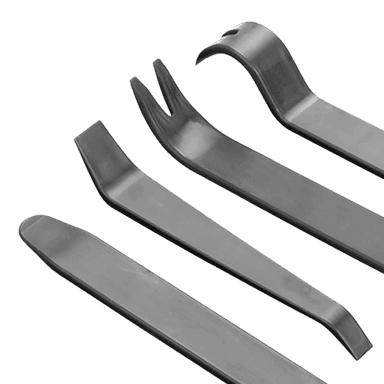
- Trim removal tool set
- Torque wrench (5–30 Nm range)
- Battery terminal puller (specialty)
- OBD2 scan tool with BMW battery registration (specialty)
- Gloves (chemical-resistant)
- Safety glasses
- Shop towels
🔩 Required Parts
HowToo sells all the parts you need for this repair:
- AGM car battery (same group size and Ah rating as original) - Qty: 1
- Battery vent tube elbow/grommet (if brittle or damaged) - Qty: 1
- Battery hold-down bolt(s) (optional if corroded) - Qty: 1
📋 Before You Begin
- Park on level ground, shift to Park, and remove the key/fob from the vehicle.
- Open the rear hatch and keep it open while you work.
- Wait 5–10 minutes with the car off so control modules go to “sleep.” Prevents electrical glitches.
- If you want to preserve radio presets, use an OBD memory saver; otherwise expect to reset clock and one-touch windows.
🔨 Step-by-Step Instructions
Follow these steps in order:
Step 1: Access the battery in the cargo area
- Lift the rear cargo floor panel by hand.
- Use a trim removal tool set to remove the right-side cargo trim cover/panel that hides the battery.
- Set clips/panels aside so they don’t get stepped on.
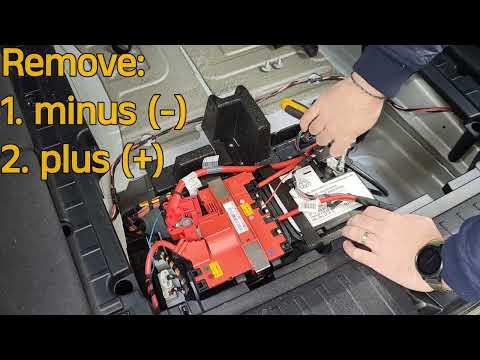
Step 2: Disconnect the negative (-) terminal first
- Locate the negative cable (usually black) and the IBS (a small sensor block on the negative cable).
- Use a 10mm socket with 3/8" ratchet to loosen the negative terminal clamp nut.
- Lift the negative clamp straight up off the battery post. If it’s stuck, use a battery terminal puller (specialty) (it gently presses the clamp off without prying).
- Move the negative cable aside so it cannot spring back and touch the battery.
Step 3: Disconnect the positive (+) terminal
- Open the red protective cover over the positive terminal.
- Use a 10mm socket to loosen the positive terminal clamp nut.
- Remove the positive clamp and position it safely away from the battery.
Step 4: Remove the battery vent tube
- On AGM batteries, a small vent tube connects to the side of the battery to route gas outside the vehicle.
- Pull the vent tube straight out by hand. Use shop towels to keep dirt out of the tube.
Step 5: Remove the battery hold-down bracket
- At the base of the battery, locate the hold-down bracket.
- Use a 13mm socket with 6" socket extension and 3/8" ratchet to remove the hold-down bolt.
- Remove the bracket and keep it with the bolt.
Step 6: Remove the old battery
- Batteries are heavy. Get a solid grip and lift straight up and out.
- Set the old battery upright on the ground. Don’t tip it.
Step 7: Install the new battery
- Place the new AGM battery into the tray in the same orientation as the old one.
- Reinstall the hold-down bracket using a 13mm socket and snug it down evenly.
- Torque to 24 Nm (18 ft-lbs) for the battery hold-down bolt.
- Reconnect the vent tube by pushing it fully into the battery vent port.
Step 8: Reconnect terminals (positive first, negative last)
- Install the positive (+) terminal first and tighten using a 10mm socket.
- Torque to 5 Nm (44 in-lbs) for the terminal clamp nut.
- Close the red protective cover.
- Install the negative (-) terminal last and tighten using a 10mm socket.
- Torque to 5 Nm (44 in-lbs) for the terminal clamp nut.
Step 9: Reinstall cargo trim and floor
- Reinstall the right-side trim cover using the trim removal tool set to line up clips without breaking them.
- Reinstall the cargo floor panel.
Step 10: Register the new battery (required)
- Plug in your OBD2 scan tool with BMW battery registration (specialty) to the OBD port (driver footwell).
- Follow the tool prompts for Battery Registration (sometimes listed as “Register battery replacement”).
- If the new battery is a different type (AGM vs non-AGM) or different Ah capacity, the car may need battery coding (a settings update), not just registration.
✅ After Repair
- Start the engine and confirm no battery/charging warnings appear.
- Check that the rear hatch closes smoothly and no trim is loose.
- Reset one-touch windows if needed: hold the window switch up for ~5 seconds after fully closed.
- If any warning lights remain, use the OBD2 scan tool to read/clear faults after registration.
💰 DIY vs Shop Cost
Shop Cost: $450-$900 (parts + labor)
DIY Cost: $220-$450 (parts only)
You Save: $230-$450 by doing it yourself!
Shop labor rates vary but typically run $100-$150/hour. This repair takes a shop approximately 0.8-1.2 hours.
🎯 Ready to get started?
HowToo makes it easy: same-day/2-day shipping on every part, plus all the tools and specialty tools you need! Check out the parts and tools sections below to add everything to your cart.