














How to Replace and Register the 12V AGM Battery on a 2009-2022 BMW X5 (Engine: Inline 6 3.0L)
Step-by-step cargo-area battery swap with required tools, torque specs, safety tips, and BMW battery registration via OBD-II
How to Replace and Register the 12V AGM Battery on a 2009-2022 BMW X5 (Engine: Inline 6 3.0L)
Step-by-step cargo-area battery swap with required tools, torque specs, safety tips, and BMW battery registration via OBD-II for 2009, 2010, 2011, 2012, 2013, 2014, 2015, 2016, 2017, 2018, 2019, 2020, 2021, 2022


🔧 X5 - 12V Battery Replacement
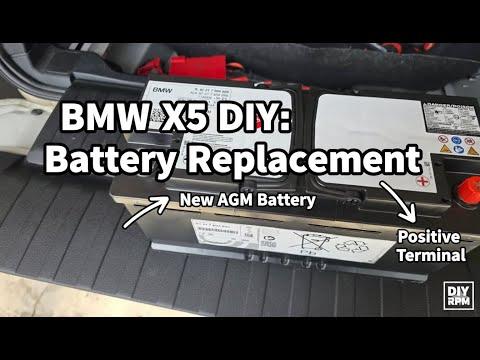
Replacing the 12V battery restores reliable starts and prevents low-voltage faults. On your X5, the battery sits in the rear cargo area and it must be “registered” to the car after installation so the charging system knows a new battery is installed.
Difficulty Level: Intermediate | Estimated Time: 1.0-2.0 hours
Assumption: Your X5 uses an AGM battery in the right-rear cargo compartment.
⚠️ Safety & Precautions
- ⚠️ Keep the key fob 15+ feet away so modules go to sleep.
- ⚠️ Wear eye protection and gloves; batteries can vent acid and hydrogen gas.
- ⚠️ Do not short the battery terminals with a tool.
- ⚠️ Disconnect the negative terminal first and reconnect it last.
- ⚠️ Wait 5–10 minutes after shutting the car off before disconnecting to reduce electrical spikes.
- ⚠️ If your X5 has a power tailgate, keep it open and supported while you work.
🔧 Required Tools
You'll need the following tools for this repair:
- 10mm socket
- 13mm socket
- 3/8" ratchet
- 6" extension for 3/8" ratchet
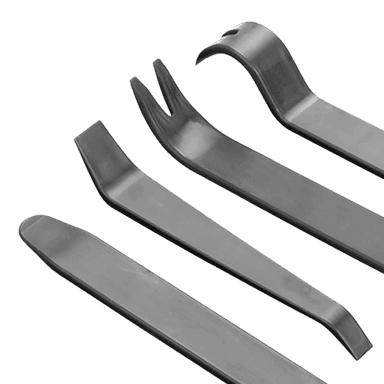
- Trim panel removal tool
- Torque wrench (5–60 Nm range)
- Battery terminal puller (specialty)
- OBD-II scan tool that supports BMW battery registration (specialty)
- Memory saver (OBD-II) (specialty)
- Nitrile gloves
- Safety glasses
🔩 Required Parts
HowToo sells all the parts you need for this repair:
- 12V AGM battery (H8 / Group 49 equivalent, correct Ah rating) - Qty: 1
- Battery vent tube elbow/adapter (if damaged or missing) - Qty: 1
- Battery terminal protectant spray - Qty: 1
📋 Before You Begin
- Park on level ground, shift to Park, and set the parking brake.
- Open the tailgate and keep it open so you can access the battery area.
- If using a memory saver (OBD-II) (specialty), plug it into the OBD-II port before disconnecting the battery to help retain settings.
- Turn everything off (lights, HVAC, radio) and wait 5–10 minutes for the vehicle to “sleep” (modules power down).
🔨 Step-by-Step Instructions
Follow these steps in order:
Step 1: Access the battery compartment
- Open the rear cargo area and lift the floor panel.
- Use a trim panel removal tool to carefully remove any plastic covers/retainers over the battery area on the right-rear side.
- Work slowly to avoid breaking clips.
Step 2: Disconnect the negative terminal (first)
- Locate the negative terminal (marked “-” and typically has a black cable).
- Use a 10mm socket with a 3/8" ratchet to loosen the negative terminal clamp.
- Lift the clamp off the battery post; if it’s stuck, use a battery terminal puller (specialty) (a small tool that presses the clamp off without prying).
- Tuck the negative cable aside so it cannot spring back and touch the battery post.
Step 3: Disconnect the positive terminal (second)
- Locate the positive terminal (marked “+” and usually under a red cover).
- Flip up/remove the red cover by hand.
- Use a 10mm socket to loosen the positive terminal clamp and remove it from the battery post.
- Cover the end with the red cap or keep it safely away from metal.
Step 4: Remove the battery hold-down clamp
- At the base of the battery, locate the hold-down bracket.
- Use a 13mm socket with a 6" extension for 3/8" ratchet to remove the hold-down bolt and bracket.
- Set the bracket and bolt aside where they won’t get lost.
Step 5: Disconnect the battery vent tube
- Find the small vent tube connected to the side of the battery.
- Pull it off gently by hand (no yanking).
- This tube vents battery gases outside the cabin.
Step 6: Remove the old battery
- Batteries are heavy—use proper lifting technique (back straight, lift with legs).
- Lift the battery straight up and out of the compartment.
- Set it upright on the ground.
Step 7: Install the new battery
- Place the new AGM battery into the tray in the same orientation as the old one.
- Reconnect the vent tube to the battery vent port by hand.
- Reinstall the hold-down bracket and bolt using a 13mm socket.
- Tighten with a torque wrench (5–60 Nm range): Torque to 24 Nm (18 ft-lbs).
Step 8: Reconnect terminals (positive first, negative last)
- Install the positive clamp onto the battery post and tighten using a 10mm socket.
- Tighten the clamp with a torque wrench (5–60 Nm range): Torque to 6 Nm (53 in-lbs).
- Close the red positive cover.
- Install the negative clamp onto the battery post and tighten using a 10mm socket.
- Tighten the clamp with a torque wrench (5–60 Nm range): Torque to 6 Nm (53 in-lbs).
- Optional: apply battery terminal protectant spray to help reduce corrosion.
Step 9: Reassemble cargo trim
- Reinstall any covers and clips using the trim panel removal tool (press clips in by hand).
- Lower the cargo floor panel back into place.
Step 10: Register the new battery (required)
- Plug in your OBD-II scan tool that supports BMW battery registration (specialty) to the OBD-II port (driver footwell area).
- Turn ignition on (engine off) and follow the scan tool prompts for “Battery Registration.”
- If the tool asks, select the correct battery type (AGM) and capacity (Ah) to match what you installed.
- Registration prevents charging problems and early battery failure.
✅ After Repair
- Start the engine and confirm there are no warning messages related to charging or battery.
- Check that the clock, one-touch windows, and tailgate operate normally.
- If any battery/charging faults remain, clear codes using the OBD-II scan tool that supports BMW battery registration (specialty) and recheck.
- Drive 15–20 minutes to let the vehicle stabilize charging and re-learn idle.
💰 DIY vs Shop Cost
Shop Cost: $450-$900 (parts + labor + registration)
DIY Cost: $200-$450 (parts only)
You Save: $250-$450 by doing it yourself!
Shop labor rates vary but typically run $100-$150/hour. This repair takes a shop approximately 1.0-1.5 hours.
🎯 Ready to get started?
HowToo makes it easy: same-day/2-day shipping on every part, plus all the tools and specialty tools you need! Check out the parts and tools sections below to add everything to your cart.
Guide for Vehicle Battery replace for these BMW vehicles
| Year Make Model | Sub Model | Engine | Body Style |
|---|---|---|---|
| 2022 BMW X5 | - | Inline 6 3.0L | - |
| 2022 BMW X5 | - | V8 4.4L | - |
| 2021 BMW X5 | - | Inline 6 3.0L | - |
| 2021 BMW X5 | - | V8 4.4L | - |
| 2020 BMW X5 | - | Inline 6 3.0L | - |
| 2020 BMW X5 | - | V8 4.4L | - |
| 2019 BMW X5 | - | Inline 6 3.0L | - |
| 2019 BMW X5 | - | V8 4.4L | - |
| 2018 BMW X5 | - | Inline 6 3.0L | - |
| 2018 BMW X5 | - | V8 4.4L | - |
| 2018 BMW X5 | - | Inline 4 2.0L | - |
| 2017 BMW X5 | - | Inline 6 3.0L | - |
| 2017 BMW X5 | - | V8 4.4L | - |
| 2017 BMW X5 | - | Inline 4 2.0L | - |
| 2016 BMW X5 | - | Inline 6 3.0L | - |
| 2016 BMW X5 | - | V8 4.4L | - |
| 2016 BMW X5 | - | Inline 4 2.0L | - |
| 2015 BMW X5 | - | Inline 6 3.0L | - |
| 2015 BMW X5 | - | V8 4.4L | - |
| 2014 BMW X5 | - | Inline 6 3.0L | - |
| 2014 BMW X5 | - | V8 4.4L | - |
| 2013 BMW X5 | - | Inline 6 3.0L | - |
| 2013 BMW X5 | - | V8 4.4L | - |
| 2012 BMW X5 | - | Inline 6 3.0L | - |
| 2012 BMW X5 | - | V8 4.4L | - |
| 2011 BMW X5 | - | Inline 6 3.0L | - |
| 2011 BMW X5 | - | V8 4.4L | - |
| 2010 BMW X5 | - | Inline 6 3.0L | - |
| 2010 BMW X5 | - | V8 4.4L | - |
| 2009 BMW X5 | - | Inline 6 3.0L | - |