









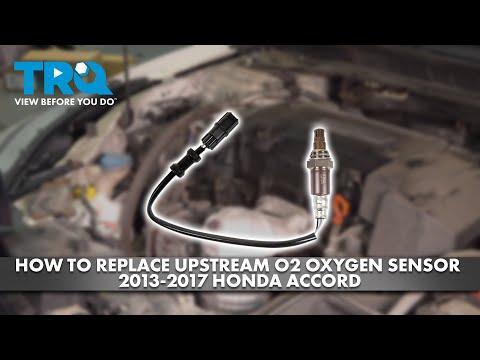







How to Replace an Oxygen Sensor on a 2013 Honda Accord (Upstream & Downstream)
Step-by-step DIY instructions with required tools, parts list, safety tips, and 33 ft-lbs torque spec
How to Replace an Oxygen Sensor on a 2013 Honda Accord (Upstream & Downstream)
Step-by-step DIY instructions with required tools, parts list, safety tips, and 33 ft-lbs torque spec


🔧 Accord - Oxygen Sensor Replacement
Your Accord has more than one oxygen sensor: an upstream sensor (also called an air/fuel ratio sensor) before the catalytic converter, and a downstream sensor after the catalytic converter. The replacement steps are similar, but the sensor location and access are different.
Difficulty Level: Intermediate | Estimated Time: 0.7-1.5 hours
⚠️ Safety & Precautions
- ⚠️ Work on a cold exhaust—hot parts can burn you.
- ⚠️ Support the car with jack stands; never rely on a jack alone.
- ⚠️ Keep the sensor wires away from the exhaust when reinstalling.
- 🔋 Battery disconnect is not required, but it’s safer to unplug sensors with the key OFF.
🔧 Required Tools
You'll need the following tools for this repair:
- Floor jack (rated 2-ton minimum)
- Jack stands (rated 2-ton minimum)
- Wheel chocks
- Safety glasses
- Mechanic gloves
- 3/8" drive ratchet
- 3/8" drive extension set
- 22mm oxygen sensor socket (specialty)
- 22mm box-end wrench
- Torque wrench (10–80 ft-lbs range)
- Trim clip tool
- Penetrating oil
🔩 Required Parts
HowToo sells all the parts you need for this repair:
- Upstream air/fuel ratio sensor (Sensor 1) - Qty: 1
- Downstream oxygen sensor (Sensor 2) - Qty: 1
- Replacement exhaust heat shield clips - Qty: 2-6
📋 Before You Begin
- Park on level ground, set the parking brake, and place wheel chocks behind the rear tires.
- Let the engine and exhaust cool fully (at least 1 hour).
- Spray penetrating oil on the sensor threads and let it soak 10–15 minutes.
🔨 Step-by-Step Instructions
Follow these steps in order:
Step 1: Confirm which oxygen sensor you’re replacing
- Tell me which one: Upstream (Sensor 1, before the catalytic converter) or Downstream (Sensor 2, after the catalytic converter).
- If you have a code, share it (example: P0134, P0420). This helps ensure you replace the correct sensor.
Step 2: Safely raise and support the car (for best access)
- Use a floor jack to lift the front of the car at the front center jack point.
- Set the car onto jack stands at the left and right pinch welds.
- Give the car a gentle push to confirm it’s stable before going underneath.
Step 3: Locate the sensor and unplug the connector
- Use safety glasses and a light source so you can see the harness routing clearly.
- Follow the sensor wire to its electrical connector.
- Release the connector lock and unplug it by hand; use a trim clip tool if the harness is clipped to a bracket.
- Tip: Don’t pull on the wires.
Step 4: Remove the oxygen sensor
- Fit a 22mm oxygen sensor socket (specialty) over the sensor (the slot allows the wire to pass through).
- Use a 3/8" drive ratchet and 3/8" drive extension to break it loose and unthread it.
- If space is tight, use a 22mm box-end wrench to crack it loose first.
Step 5: Install the new sensor
- Thread the new sensor in by hand first to avoid cross-threading (damaging threads).
- Tighten using the 22mm oxygen sensor socket (specialty) and torque wrench.
- Torque to 44 Nm (33 ft-lbs).
- Route the harness the same way as the original so it can’t touch the exhaust.
Step 6: Reconnect and secure the wiring
- Plug the connector in until it clicks.
- Reinstall any harness clips using the trim clip tool to guide them in without breaking them.
Step 7: Lower the car
- Use the floor jack to lift slightly, remove the jack stands, and set the car back down.
✅ After Repair
- Start the engine and listen for exhaust leaks (a “ticking” sound near the sensor area).
- If the check engine light was on, clear codes with a scan tool and verify they don’t return after a short drive.
- Recheck that the sensor wire is not near any hot exhaust surfaces.
💰 DIY vs Shop Cost
Shop Cost: $220-$450 (parts + labor)
DIY Cost: $70-$220 (parts only)
You Save: $150-$230 by doing it yourself!
Shop labor rates vary but typically run $100-$150/hour. This repair takes a shop approximately 0.7-1.5 hours.
🎯 Ready to get started?
HowToo makes it easy: same-day/2-day shipping on every part, plus all the tools and specialty tools you need! Check out the parts and tools sections below to add everything to your cart.