









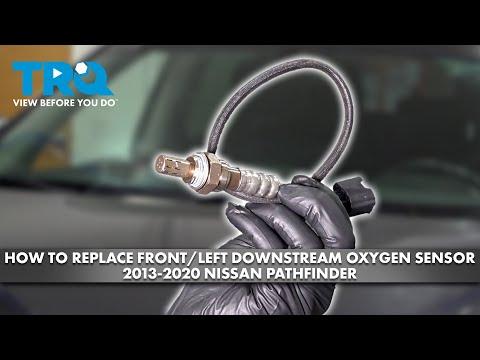







How to Replace All Oxygen Sensors on a 2018 Nissan Armada (Bank 1 & 2, Sensor 1 & 2)
Step-by-step DIY instructions with required tools/parts, sensor locations, and torque specs (32 ft-lb) for 2017, 2018, 2019
How to Replace All Oxygen Sensors on a 2018 Nissan Armada (Bank 1 & 2, Sensor 1 & 2)
Step-by-step DIY instructions with required tools/parts, sensor locations, and torque specs (32 ft-lb) for 2017, 2018, 2019


🔧 Armada - Oxygen Sensor Replacement (All Sensors)
Your Armada uses four exhaust sensors total: two upstream (Sensor 1, one per bank) and two downstream (Sensor 2, one per bank). Replacing all of them means working both from the top of the engine bay (upstream) and from underneath (downstream), then clearing codes and confirming the sensors switch normally.
An oxygen-sensor socket is a 22mm slotted socket that slips over the sensor wire so you can remove/install the sensor without damaging the harness.
Difficulty Level: Intermediate | Estimated Time: 2.0-4.0 hours
⚠️ Safety & Precautions
- 🧯 Let the exhaust cool fully before touching sensors or pipes (serious burn risk).
- 🧰 Support the truck with jack stands on solid ground—never rely on a jack alone.
- ⚡ If you’ll be unplugging connectors near the battery/alternator area, disconnect the negative battery cable to prevent accidental shorts.
- 👀 Wear eye protection—rust/scale falls when you work underneath.
🔧 Required Tools
You'll need the following tools for this repair:
- Wheel chocks
- Floor jack (rated 3-ton minimum)
- Jack stands (rated 3-ton minimum)
- Safety glasses
- Mechanic gloves
- 10mm socket
- 12mm socket
- 3/8" drive ratchet
- 3/8" drive extension set
- 3/8" drive universal joint
- Trim clip remover tool
- 22mm oxygen sensor socket
- Torque wrench (10–100 ft-lb range)
- Penetrating oil
- OBD2 scan tool
🔩 Required Parts
HowToo sells all the parts you need for this repair:
- Upstream air-fuel ratio sensor (Sensor 1) - Qty: 2
- Downstream oxygen sensor (Sensor 2) - Qty: 2
- Anti-seize compound (sensor-safe) - Qty: 1
- Replacement splash-shield clips - Qty: 1 set
📋 Before You Begin
- Park on level ground, shift to P, and set the parking brake.
- Chock the rear wheels with wheel chocks.
- Spray penetrating oil at the base of each sensor (where it threads into the exhaust) and let it soak 10–15 minutes.
- If you choose to disconnect the battery: use a 10mm socket to remove the negative terminal and isolate it so it can’t touch.
- Know the naming: Bank 1 = the bank with cylinder #1, Bank 2 = the opposite side; Sensor 1 is before the catalytic converter, Sensor 2 is after it.
🔨 Step-by-Step Instructions
Follow these steps in order:
Step 1: Raise and support the front of the truck
- Use a floor jack (rated 3-ton minimum) to lift the front at the approved front jacking point.
- Place jack stands (rated 3-ton minimum) under the frame support points and lower the truck onto them.
- Give the truck a firm shake to confirm it’s stable.
Step 2: Remove the front under covers (to access downstream sensors)
- Use a trim clip remover tool to pop plastic clips loose.
- Use a 10mm socket and 12mm socket with a 3/8" drive ratchet to remove splash shield bolts.
- Set hardware aside in a tray so you don’t lose it.
Step 3: Replace Bank 1 Sensor 2 (downstream) oxygen sensor
- Locate the downstream sensor after the catalytic converter on Bank 1, and follow its wire to the connector.
- Unclip the harness from any brackets, then unplug the connector by hand (don’t pull on the wires).
- Install the 22mm oxygen sensor socket on the sensor and use a 3/8" drive ratchet with a 3/8" drive extension set (and 3/8" drive universal joint if needed) to loosen and remove it.
- Compare old/new sensor length and connector shape before installing.
- If your new sensor threads are not pre-coated, apply a tiny amount of anti-seize compound (sensor-safe) to the threads only (keep it off the tip).
- Thread the new sensor in by hand first to avoid cross-threading.
- Use the torque wrench with the 22mm oxygen sensor socket: Torque to 44 Nm (32 ft-lb).
- Reconnect the electrical connector and re-clip the harness to its brackets so it can’t touch the exhaust.
Step 4: Replace Bank 2 Sensor 2 (downstream) oxygen sensor
- Repeat Step 3 on the opposite exhaust bank’s downstream sensor (after the catalytic converter).
- Use the 22mm oxygen sensor socket and torque wrench: Torque to 44 Nm (32 ft-lb).
- Keep wires away from hot pipes.
Step 5: Replace Bank 1 Sensor 1 (upstream) air-fuel ratio sensor
- From the engine bay, locate the upstream sensor on Bank 1 (before the catalytic converter). You’ll see the sensor screwed into the exhaust manifold/front pipe area with a harness running to a connector on the engine.
- Unplug the connector and free any harness clips by hand.
- Use a 22mm oxygen sensor socket with a 3/8" drive ratchet, plus a 3/8" drive extension set and 3/8" drive universal joint as needed for clearance, to remove the sensor.
- Install the new upstream sensor by threading it in by hand first.
- Use the torque wrench with the 22mm oxygen sensor socket: Torque to 44 Nm (32 ft-lb).
- Reconnect the connector and secure the harness in the original clips/routing.
Step 6: Replace Bank 2 Sensor 1 (upstream) air-fuel ratio sensor
- Repeat Step 5 for the upstream sensor on the opposite bank.
- Use the 22mm oxygen sensor socket and torque wrench: Torque to 44 Nm (32 ft-lb).
Step 7: Reinstall under covers and lower the truck
- Reinstall splash shields using the 10mm socket and 12mm socket.
- Replace any broken clips using the trim clip remover tool.
- Use the floor jack (rated 3-ton minimum) to lift slightly, remove jack stands, and lower the truck.
Step 8: Restore power (if disconnected) and clear codes
- If you disconnected the battery, reconnect the negative terminal using a 10mm socket.
- Plug in your OBD2 scan tool and clear stored/pendings codes related to O2/A/F sensors.
✅ After Repair
- Start the engine and let it idle 2–3 minutes while you listen for exhaust leaks (ticking/hissing) near any sensor you touched.
- Verify no warning lights return after a short drive.
- Use the OBD2 scan tool to check live data: upstream sensors should respond quickly to throttle changes; downstream sensors should be steadier.
- Recheck harness routing after the test drive.
💰 DIY vs Shop Cost
Shop Cost: $700-$1,400 (parts + labor)
DIY Cost: $280-$900 (parts only)
You Save: $420-$500+ by doing it yourself!
Shop labor rates vary but typically run $100-$150/hour. This repair takes a shop approximately 2.0-4.0 hours.
🎯 Ready to get started?
HowToo makes it easy: same-day/2-day shipping on every part, plus all the tools and specialty tools you need! Check out the parts and tools sections below to add everything to your cart.