









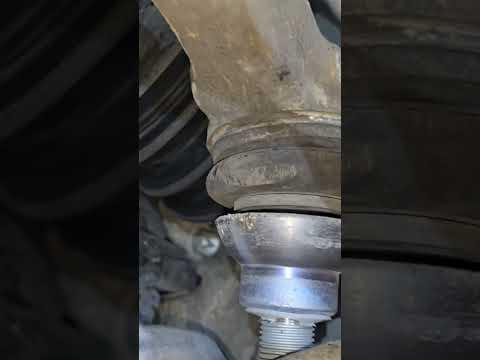







How to Replace All Control Arms on a 2016-2023 Mercedes-Benz GLC300 (Front & Rear) (Trim: 4Matic | Engine: Inline 4 2.0L | Body: Sport Utility)
Step-by-step suspension guide with required tools, parts list, ride-height torquing tips, and alignment notes
How to Replace All Control Arms on a 2016-2023 Mercedes-Benz GLC300 (Front & Rear) (Trim: 4Matic | Engine: Inline 4 2.0L | Body: Sport Utility)
Step-by-step suspension guide with required tools, parts list, ride-height torquing tips, and alignment notes for 2016, 2017, 2018, 2019, 2020, 2021, 2022, 2023


🔧 GLC300 - Control Arm Replacement (All Arms)
Replacing all control arms means you’ll be removing multiple suspension links at the front and rear, then reinstalling them with the correct tightening method. On your GLC300, many control-arm bushings must be tightened at “normal ride height” so the rubber isn’t pre-twisted and torn early.
Difficulty Level: Advanced | Estimated Time: 8-14 hours
⚠️ Safety & Precautions
- ⚠️ Support the vehicle on jack stands on solid, level ground; never work under a jack.
- ⚠️ Keep hands clear when separating ball joints; parts can release suddenly.
- ⚠️ Do not tighten control-arm bushing bolts with the suspension hanging; tighten at normal ride height to avoid tearing bushings.
- ⚠️ If equipped with air suspension (some GLC variants): do not allow the suspension to hang without proper support; avoid turning ignition on while arms are disconnected.
- ⚠️ Plan for an alignment immediately after; driving without it can cause unsafe handling and rapid tire wear.
🔧 Required Tools
You'll need the following tools for this repair:
- Floor jack (rated 3-ton minimum)
- Jack stands (rated 3-ton minimum) x4
- Wheel chocks
- Safety glasses
- Mechanic gloves
- Torque wrench (20–200 Nm range)
- Breaker bar (1/2")
- Socket set (8mm–24mm, 1/2")
- Ratchet (1/2")
- Ratchet (3/8")
- Wrench set (8mm–24mm)
- E-Torx socket set (E10–E18)
- Torx bit set (T25–T55)
- Ball joint separator (specialty)
- Pry bar (24")
- Hammer (2 lb)
- Punch set
- Trim clip removal tool
- Penetrating oil
- Paint marker
- Wire brush
- Bungee cords
- Second floor jack or screw jack
🔩 Required Parts
HowToo sells all the parts you need for this repair:
- Front lower control arm set (left + right) - Qty: 1 set
- Front upper control arm set (left + right) - Qty: 1 set
- Rear control arm/link kit (all rear arms/links, left + right) - Qty: 1 kit
- New control arm hardware kit (stretch bolts/nuts as required) - Qty: 1
- Anti-seize compound - Qty: 1
📋 Before You Begin
- Park on level ground, set the parking brake, and place wheel chocks at the wheels staying on the ground.
- Use a paint marker to mark the position of any alignment-related bolts you disturb (helps get you to the shop safely).
- Spray all control-arm bolts/nuts with penetrating oil and let it soak 10–20 minutes.
- Normal ride height means the suspension is loaded like the vehicle is sitting on its wheels; you’ll simulate this with a jack under the knuckle or control arm before final tightening.
🔨 Step-by-Step Instructions
Follow these steps in order:
Step 1: Lift and secure the vehicle
- Use a floor jack (rated 3-ton minimum) to lift one end at a time, then set it on jack stands (rated 3-ton minimum) x4.
- Remove all wheels using a socket set (8mm–24mm, 1/2") and breaker bar (1/2").
Step 2: Remove front underbody panels (as needed)
- Remove fasteners using a Torx bit set (T25–T55) and socket set (8mm–24mm, 1/2").
- Use a trim clip removal tool for plastic clips to avoid breaking them.
Step 3: Front side — support the steering knuckle
- Place a second floor jack or screw jack under the lower control arm or the knuckle to hold it up.
- Tip: Support prevents CV/ABS wire strain.
- A “steering knuckle” is the heavy part the wheel hub bolts to.
Step 4: Separate the front upper ball joint(s)
- Remove the ball joint nut using a socket set (8mm–24mm, 1/2") and wrench set (8mm–24mm).
- Use a ball joint separator (specialty) to pop the joint free without hammering the knuckle.
Step 5: Remove the front upper control arm(s)
- Remove inner mounting bolts using E-Torx socket set (E10–E18) and socket set (8mm–24mm, 1/2").
- Remove the arm from the vehicle; use a pry bar (24") gently if it’s stuck.
- Assumption: Your A4 uses E-Torx style hardware on suspension mounts; match sizes by test-fitting.
Step 6: Separate the front lower ball joint(s) and remove lower arm(s)
- Remove the lower ball joint nut/bolts using a socket set (8mm–24mm, 1/2") and breaker bar (1/2").
- Use a ball joint separator (specialty) to separate the joint.
- Remove inner pivot bolts using E-Torx socket set (E10–E18) and wrench set (8mm–24mm).
Step 7: Install the new front control arms (leave bushing bolts snug only)
- Position the new arms and start all bolts by hand.
- Use a ratchet (1/2") and socket set (8mm–24mm, 1/2") to snug hardware, but do not final-torque inner bushing bolts yet.
- Apply a light coat of anti-seize compound to non-stretch bolt threads only.
Step 8: Repeat Steps 3–7 on the other front side
- Use the same tools and method on the other side.
- Tip: Replace arms in pairs per axle.
Step 9: Rear side — remove underbody covers and support the rear hub
- Remove covers using a Torx bit set (T25–T55) and trim clip removal tool.
- Support the rear hub/knuckle with a second floor jack or screw jack.
Step 10: Remove rear control arms/links one at a time
- Work one arm at a time to keep the knuckle located.
- Remove bolts using a socket set (8mm–24mm, 1/2") and wrench set (8mm–24mm).
- If a joint is tapered, separate it using a ball joint separator (specialty).
- Use bungee cords to support components so brake hoses and ABS wires aren’t pulled tight.
Step 11: Install rear arms/links (snug only at bushings)
- Install new links in the same orientation; start bolts by hand.
- Snug hardware using a ratchet (1/2") and socket set (8mm–24mm, 1/2").
- Do not final-torque bushing bolts until ride height is simulated.
Step 12: Set suspension to normal ride height and final-torque
- Reinstall wheels using a socket set (8mm–24mm, 1/2") and snug lug bolts.
- Lower the vehicle onto ramps or blocks, or keep it on stands and use a second floor jack or screw jack under each knuckle to raise it until the vehicle looks like it’s sitting normally.
- With the suspension loaded, use a torque wrench (20–200 Nm range) to tighten all inner bushing bolts.
- Torque to manufacturer spec for each fastener location (front/rear arms vary by bolt type).
Step 13: Final wheel torque and recheck
- Torque wheel lug bolts using a torque wrench (20–200 Nm range).
- Torque to 150 Nm (111 ft-lbs).
- Recheck that all ball joint nuts, pinch bolts, and link bolts are fully seated and secured.
✅ After Repair
- Road test at low speed first; listen for clunks and verify straight braking.
- Get a 4-wheel alignment immediately after replacing control arms.
- After 50–100 miles, recheck for any loose hardware and look for shifted alignment marks.
💰 DIY vs Shop Cost
Shop Cost: $2,000-$4,500 (parts + labor)
DIY Cost: $700-$2,200 (parts only)
You Save: $1,300-$2,300 by doing it yourself!
Shop labor rates vary but typically run $100-$150/hour. This repair takes a shop approximately 8-14 hours.
🎯 Ready to get started?
HowToo makes it easy: same-day/2-day shipping on every part, plus all the tools and specialty tools you need! Check out the parts and tools sections below to add everything to your cart.