









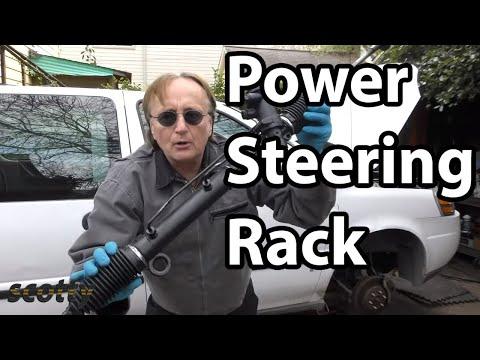







How to Fix Power Steering Issues on a 2015 Nissan Sentra (EPS Rack Replacement Guide)
Step-by-step EPS steering rack replacement with required tools, parts, safety tips, and post-repair alignment notes for 2013, 2014, 2015, 2016, 2017, 2018, 2019
How to Fix Power Steering Issues on a 2015 Nissan Sentra (EPS Rack Replacement Guide)
Step-by-step EPS steering rack replacement with required tools, parts, safety tips, and post-repair alignment notes for 2013, 2014, 2015, 2016, 2017, 2018, 2019


🔧 Sentra - Power Steering “Pump” Replacement (EPS System)
Your Sentra uses Electric Power Steering (EPS), so it does not have a hydraulic power steering pump or power steering fluid. If you’re having heavy steering or EPS warning lights, the repair is usually replacing the EPS steering gear (rack) assembly (or diagnosing wiring/grounds first).
Difficulty Level: Advanced | Estimated Time: 4-7 hours
Assumption: your Sentra is stock EPS (no hydraulic conversion).
⚠️ Safety & Precautions
- ⚠️ Disconnect the negative battery cable and wait 3 minutes before working near the steering column/airbag system.
- ⚠️ Keep the steering wheel centered and locked. Do not let it spin with the rack disconnected (can damage the clock spring, the ribbon cable for the airbag).
- ⚠️ Support the car on jack stands on a level surface—never rely on a floor jack alone.
- ⚠️ You’ll need a front-end alignment after this job.
🔧 Required Tools
You'll need the following tools for this repair:
- Safety glasses
- Mechanic gloves
- Wheel chocks
- Floor jack (rated 3-ton minimum)
- Jack stands (rated 3-ton minimum)
- Breaker bar 1/2"
- Torque wrench 3/8"
- Torque wrench 1/2"
- Socket set 8mm–22mm
- Wrench set 10mm–22mm
- Ratchet extensions 3" and 6"
- Pry bar
- Flat trim clip tool
- Needle-nose pliers
- Tie-rod end puller (specialty)
- Punch and hammer
- Paint marker
- Bungee cord
🔩 Required Parts
HowToo sells all the parts you need for this repair:
- EPS steering gear (steering rack) assembly - Qty: 1
- New cotter pins for tie-rod ends - Qty: 2
- Outer tie-rod end nuts - Qty: 2
- Steering intermediate shaft pinch bolt - Qty: 1
- Subframe fasteners (as required) - Qty: 1 set
📋 Before You Begin
- Park on level ground, point the front wheels straight, and set the parking brake.
- Use a paint marker to mark the steering wheel “center” position on the wheel and column trim.
- Disconnect the negative battery cable using a 10mm wrench, isolate it so it can’t spring back.
- Wait 3 minutes for the airbag system capacitors to discharge.
- Loosen the front wheel lug nuts with a 21mm socket before lifting the car.
🔨 Step-by-Step Instructions
Follow these steps in order:
Step 1: Lift and secure the front of the car
- Chock the rear wheels using wheel chocks.
- Lift the front with a floor jack and support with jack stands at the proper lift points.
- Remove both front wheels using a 21mm socket.
Step 2: Remove lower covers (if equipped)
- Remove the engine splash shield/undertray fasteners using a flat trim clip tool and 10mm socket.
- Set the clips/bolts aside in a tray so you don’t lose them.
Step 3: Disconnect the outer tie-rod ends from the steering knuckles
- Remove the cotter pin using needle-nose pliers.
- Remove the tie-rod end nut using the correct-size socket/wrench (typically 17mm–19mm).
- Separate the tie-rod end from the knuckle using a tie-rod end puller (specialty). (A puller presses the joint apart without damaging the boot.)
- Tip: Don’t hammer the stud threads.
Step 4: Disconnect the steering intermediate shaft from the rack
- From the driver footwell or at the rack input (depending on access), locate the intermediate shaft pinch joint.
- Use a paint marker to mark the shaft-to-joint alignment so it goes back the same way.
- Remove the pinch bolt using the correct-size socket/wrench (commonly 12mm–14mm).
- Slide the shaft/joint off the rack input. Use a pry bar gently if it’s stuck.
- Important: Secure the steering wheel with a bungee cord so it cannot rotate.
Step 5: Unplug EPS electrical connectors
- Locate the EPS motor/gear electrical connectors on the rack.
- Release the connector locks and unplug them by hand (use a small flat tool only if needed).
- Inspect for corrosion or pulled pins before reassembly.
Step 6: Remove rack mounting hardware
- Support the rack so it doesn’t drop suddenly.
- Remove the steering rack mounting bolts using a breaker bar and correct-size socket (commonly in the 17mm–19mm range).
- Torque note: Reinstall rack mount fasteners to OEM specification using a torque wrench.
Step 7: Create clearance (subframe may need to be lowered)
- On many Sentra setups, the rack removal requires lowering the front subframe for clearance.
- Support the subframe area securely, then loosen/remove the needed subframe bolts using a breaker bar and correct-size socket.
- Lower only as much as needed to slide the rack out.
- Torque note: Subframe bolts are critical—tighten to OEM specification using a torque wrench.
Step 8: Remove the rack from the vehicle
- Carefully slide the rack out through the wheel well/opening.
- Use a pry bar only for light positioning—avoid damaging boots and wiring.
Step 9: Install the new EPS steering rack
- Compare the new rack to the old one (mount points, connectors, tie-rod length) before installing.
- Slide the rack into position and start the mounting bolts by hand.
- Tighten mounting bolts with a ratchet, then final-tighten with a torque wrench to OEM specification.
Step 10: Reconnect the intermediate shaft
- Make sure your alignment marks line up.
- Install a new pinch bolt if provided and tighten using the correct-size socket/wrench.
- Torque to OEM specification using a torque wrench.
Step 11: Reconnect EPS electrical connectors
- Plug in connectors until they click and locks fully seat.
- Secure wiring in the original routing to prevent rubbing.
Step 12: Reinstall tie-rod ends and wheels
- Install the tie-rod studs into the knuckles.
- Install new nuts and tighten using a socket, then install new cotter pins using needle-nose pliers.
- Reinstall undertray using a 10mm socket and trim clip tool.
- Reinstall wheels and snug lug nuts using a 21mm socket.
- Lower the car, then tighten lug nuts in a star pattern to OEM specification using a torque wrench.
✅ After Repair
- Reconnect the negative battery cable using a 10mm wrench.
- Start the car and confirm the steering wheel stays centered and the EPS warning light is off.
- With the car idling, turn the wheel slowly lock-to-lock a couple times to confirm smooth assist.
- Get a 4-wheel alignment as soon as possible (same day is best).
- If the EPS light stays on, the system may need diagnostic scanning and calibration checks.
💰 DIY vs Shop Cost
Shop Cost: $1,200-$2,200 (parts + labor)
DIY Cost: $450-$1,100 (parts only)
You Save: $750-$1,100 by doing it yourself!
Shop labor rates vary but typically run $100-$150/hour. This repair takes a shop approximately 4-7 hours.
🎯 Ready to get started?
HowToo makes it easy: same-day/2-day shipping on every part, plus all the tools and specialty tools you need! Check out the parts and tools sections below to add everything to your cart.