









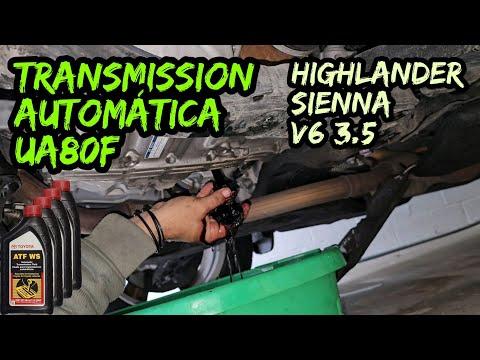






How to Change Transmission Fluid on a 2022 Toyota Highlander
Step-by-step sealed transmission drain-and-fill guide with tools, parts, fluid type, torque specs, and safety tips for 2006, 2007, 2008, 2009, 2010
How to Change Transmission Fluid on a 2022 Toyota Highlander
Step-by-step sealed transmission drain-and-fill guide with tools, parts, fluid type, torque specs, and safety tips for 2006, 2007, 2008, 2009, 2010


🔧 Highlander - Transmission Fluid Drain & Fill
You’ll be doing a drain-and-fill on the automatic transmission, not a full flush. This replaces a good portion of the old fluid and restores shift quality while being safe for your transmission.
This transmission is “sealed,” so you’ll set the fluid level through a check/overflow plug at a specific temperature, not with a dipstick.
Difficulty Level: Advanced (for a beginner) | Estimated Time: 2–3 hours
⚠️ Safety & Precautions
- ⚠️ Work only on a solid, level surface. The fluid level procedure requires the SUV to be perfectly level.
- ⚠️ Use a floor jack and jack stands correctly. Never rely on the jack alone to support the vehicle.
- ⚠️ Transmission fluid and the exhaust can get very hot. Let the vehicle cool enough so you won’t burn your hands.
- ⚠️ Keep the engine area clear when the engine is running in gear-check mode. Feet and tools away from the wheels and belts.
- ⚠️ Automatic transmission fluid is slippery. Immediately wipe spills from the floor and from the underside of the SUV.
- ⚠️ Avoid skin contact with used fluid. It’s harmful; use gloves and wash up afterward.
- ⚠️ This is a late-model SUV still likely under warranty. Using correct Toyota WS fluid and proper procedure is important to avoid warranty issues.
- ⚠️ Battery disconnect is not required for this job.
🔧 Required Tools
You'll need the following tools for this repair:
- 🧰 Floor jack (rated 3-ton minimum)
- 🧰 Jack stands (rated 3-ton, set of 4)
- 🧰 Wheel chocks
- 🧰 Metric socket set (8mm–19mm)
- 🧰 10mm socket
- 🧰 14mm socket
- 🧰 3/8" drive ratchet
- 🧰 3/8" drive torque wrench (5–80 ft-lb range)
- 🧰 Hex/Allen bit set (4mm–8mm)
- 🧰 6mm hex bit socket
- 🧰 Trim clip removal tool
- 🧰 Flathead screwdriver (medium size)
- 🧰 Oil drain pan (at least 10-liter capacity)
- 🧰 Fluid transfer pump or hand pump (for ATF)
- 🧰 Long plastic hose (to fit pump outlet)
- 🧰 OBD2 scan tool with live data and transmission fluid temperature (specialty)
- 🧰 Shop rags
- 🧰 Parts cleaning brush
- 🧰 Safety glasses
- 🧰 Nitrile or mechanic’s gloves
- 🧰 Funnel (for ATF, if you choose to gravity-feed)
- 🧰 Small torque bit set for underbody shield fasteners (if equipped)
🔩 Required Parts
HowToo sells all the parts you need for this repair:
- 🔩 Toyota WS automatic transmission fluid - Qty: 6–7 liters (for one drain-and-fill)
- 🔩 Transmission drain plug crush washer - Qty: 1
- 🔩 Transmission overflow tube plug crush washer - Qty: 1
- 🔩 Transmission refill plug crush washer - Qty: 1
- 🔩 Brake cleaner spray - Qty: 1–2 cans
- 🔩 Disposable shop towels - Qty: 1 pack
- 🔩 Replacement underbody splash shield clips - Qty: 4–6 (optional, in case some break)
📋 Before You Begin
- Park the Highlander on a perfectly level surface. Engage the parking brake and place wheel chocks behind the rear wheels.
- Gather all tools and parts before lifting the vehicle. Prepping saves frustration later.
- Check that your scan tool can read Transmission Fluid Temperature (TFT). This is needed to set the final fluid level accurately.
- Plan disposal for old ATF. Use a sealed container and take it to a recycling center or shop that accepts used oil/ATF.
- Do this job with the transmission initially at room temperature, not fully hot. It’s safer and reduces burn risk.
🔨 Step-by-Step Instructions
Follow these steps in order:
Step 1: Lift and Support the Highlander
- Use the floor jack to lift the front of the Highlander at the front central jack point (behind the front bumper, on the subframe area).
- Place jack stands under the left and right front pinch welds or frame points and lower the vehicle onto them.
- Lift the rear slightly and support with jack stands so the SUV sits level front-to-back.
- Verify stability by gently rocking the vehicle; it must not move.
Step 2: Remove the Underbody Splash Shield
- Identify the plastic splash shield under the engine and transmission.
- Use a 10mm socket and/or trim clip removal tool to remove bolts and plastic clips holding the shield.
- Lower the shield and set it aside.
- Keep bolts and clips in a tray so you don’t lose them.
Step 3: Locate Drain, Overflow, and Refill Plugs
- The drain plug is on the bottom of the transmission pan (center area).
- The overflow/level plug is a smaller plug (often inside or near the drain assembly) that uses a 6mm hex bit socket.
- The refill plug is on the side/front of the transmission case, higher up, usually using a regular hex head (commonly 14mm).
- Confirm each before loosening anything. Wrong plug can cause big problems.
Step 4: Loosen the Refill Plug First
- Position the drain pan under the transmission area just in case.
- Use a 14mm socket and ratchet to crack loose the refill plug on the side of the case, but do not remove it yet.
- This ensures you can refill after draining. If it’s stuck or damaged, you must not proceed with draining.
Step 5: Remove the Drain Plug and Let Fluid Drain
- Place the drain pan directly under the transmission drain plug.
- Use the correct socket (typically 14mm) to remove the main drain plug slowly.
- Allow fluid to drain completely. This may take 10–15 minutes.
- Measure how much drains into a marked container; this gives you a refill ballpark.
Step 6: Remove the Overflow Tube Plug
- With the main drain plug area open and most fluid out, use a 6mm hex bit socket to remove the smaller overflow/level plug (inside the drain assembly or adjacent, depending on exact design).
- Some additional fluid will drain when this tube is removed—let it finish.
- Inspect the overflow plug and its crush washer for damage or deformation.
Step 7: Reinstall Overflow Tube and Drain Plug
- Install a new crush washer on the overflow plug.
- Use the 6mm hex bit socket to reinstall the overflow/level plug and tighten to 20 Nm (15 ft-lb).
- Install a new crush washer on the main drain plug.
- Use the appropriate socket and torque wrench to tighten the drain plug to 49 Nm (36 ft-lb).
- Clean the area with brake cleaner and shop rags so any future leaks are easy to spot.
Step 8: Initial Refill of New Fluid
- Remove the refill plug fully using a 14mm socket.
- Connect the fluid transfer pump hose snugly into the refill opening.
- Pump in fresh Toyota WS ATF. Start by adding approximately the same amount that drained out (usually around 3.5–4.5 liters).
- Do not reinstall the refill plug yet; you will temporarily reinstall it loosely in the next steps.
Step 9: Temporary Reinstall Refill Plug and Start Engine
- Install a new crush washer on the refill plug.
- Use the 14mm socket to snug the refill plug (doesn’t need final torque yet).
- Lower the Highlander just enough so it’s still level but safe to run (you can leave it on stands if it’s rock-solid and level).
- Start the engine with the transmission in P (Park) and foot on the brake.
Step 10: Warm Transmission and Cycle Through Gears
- Connect your OBD2 scan tool to the diagnostic port under the dash.
- On the scan tool, view live data for Transmission Fluid Temperature.
- With your foot on the brake, move the gear selector slowly through R, N, D, S and back to P, pausing 2–3 seconds in each position. Repeat this 2–3 times.
- This fills all the internal passages with new fluid and equalizes levels.
Step 11: Set Correct Fluid Level at Specific Temperature
- Allow the vehicle to idle until the transmission fluid reaches about 40°C–45°C (104°F–113°F) on your scan tool. This is the Toyota level-check range.
- With engine idling in Park, carefully raise the vehicle back up safely on jack stands if needed, making sure it is perfectly level.
- With the engine still idling, place the drain pan under the transmission.
- Use the 6mm hex bit socket to remove the overflow/level plug again.
- Watch the fluid behavior from the overflow port:
- If a steady stream comes out and then slows to a thin drip, let it drip until it’s just a slow drip, then go to Step 12.
- If no fluid comes out, immediately reinstall the overflow plug loosely and go to Step 12 to add more fluid.
Step 12: Fine-Tune Fluid Level
- If no fluid came out at 40–45°C:
- Reinstall the overflow plug loosely with the 6mm hex bit socket.
- Stop the engine.
- Remove the refill plug with the 14mm socket and pump in about 0.5 liter of ATF.
- Reinstall refill plug snugly, restart the engine, and re-check at 40–45°C by opening the overflow plug again.
- Once you achieve a small, steady drip from the overflow port at 40–45°C with engine idling in Park, the fluid level is correct.
- Use the 6mm hex bit socket and torque wrench to tighten the overflow plug to 20 Nm (15 ft-lb) while the engine is still running.
Step 13: Final Tightening of Refill Plug
- Shut off the engine once the overflow plug is torqued.
- Use the 14mm socket to torque the refill plug to 39 Nm (29 ft-lb).
- Clean the entire area around drain, overflow, and refill plugs using brake cleaner and shop rags.
Step 14: Reinstall Underbody Shield
- Lift the splash shield back into place.
- Install all bolts with the 10mm socket and any clips using the trim clip removal tool to press them in if needed.
- Ensure the shield is secure on all sides.
Step 15: Lower Vehicle and Road-Test
- Use the floor jack to raise the SUV slightly and remove all jack stands, then lower it to the ground.
- Start the engine, shift through all gears briefly, then drive gently for 10–15 minutes.
- Check for any warning lights and listen for abnormal noises.
Step 16: Final Leak Check
- After the test drive, park on a level surface, set the parking brake, and let things cool slightly.
- Look under the Highlander for any drips around the transmission area.
- Inspect the drain, overflow, and refill plug areas again with a light to confirm everything is dry.
✅ After Repair
- Check for transmission warning lights or messages on the dash over the next few drives.
- Pay attention to shift quality. It should feel smooth and consistent; any harsh shifts or slipping should be checked immediately.
- After a few days, look under the Highlander again for any signs of leaks.
- Keep a note of the mileage and date of this service for your maintenance records.
- Dispose of used ATF at a proper recycling facility or service station that accepts waste oil.
💰 DIY vs Shop Cost
Shop Cost: $250–$450 (parts + labor)
DIY Cost: $80–$150 (fluid, washers, cleaner, small supplies)
You Save: $170–$300 by doing it yourself!
Shop labor rates vary but typically run $100–$150/hour. This repair takes a shop approximately 1.5–2.0 hours.
🎯 Ready to get started?
HowToo makes it easy: same-day/2-day shipping on every part, plus all the tools and specialty tools you need! Check out the parts and tools sections above to add everything to your cart.