














How to Change Transmission Fluid on a 2019 GMC Sierra 1500 (8 & 10-Speed)
Step-by-step DIY drain, pan drop, filter replacement, refill, and fluid level set with tools, parts, torque specs, and safety tips
How to Change Transmission Fluid on a 2019 GMC Sierra 1500 (8 & 10-Speed)
Step-by-step DIY drain, pan drop, filter replacement, refill, and fluid level set with tools, parts, torque specs, and safety tips


🔧 Sierra 1500 - Automatic Transmission Fluid Change
This guide covers a drain-and-fill (with pan drop and filter) on your automatic transmission. This refreshes a large portion of the fluid and the filter, improving shift quality and transmission life.
Difficulty Level: Advanced beginner | Estimated Time: 3–4 hours (working carefully)
⚠️ Safety & Precautions
- ⚠️ Always support the truck with jack stands; never rely only on a floor jack.
- ⚠️ Transmission fluid and exhaust parts can be very hot; let the truck cool until parts are just warm to the touch.
- ⚠️ Wear safety glasses and nitrile gloves; ATF (automatic transmission fluid) is slippery and irritating to skin.
- ⚠️ Keep the truck in Park, parking brake on, and wheels chocked whenever it’s raised.
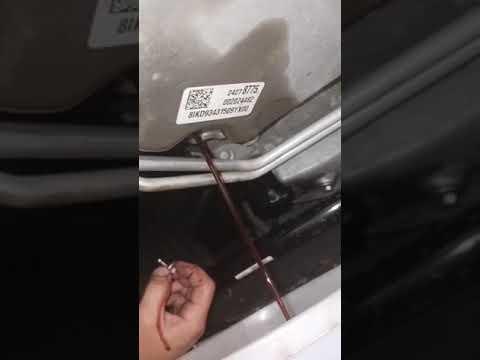
- ⚠️ This transmission has no dipstick; fluid level is set at a specific temperature through a check plug. Running with low or overfilled fluid can damage the transmission.
- ⚠️ Dispose of used ATF at a proper recycling facility; never pour it on the ground or in drains.
- ⚠️ Do not run the engine with the truck lifted unless it is stable, all stands are solidly placed, and no one is under the truck.
🔧 Required Tools
You'll need the following tools for this repair:
- 🛠️ Floor jack (rated 3-ton minimum)
- 🛠️ Jack stands (rated 3-ton or higher, Qty: 4)
- 🛠️ Wheel chocks
- 🛠️ Metric socket set (8mm–19mm)
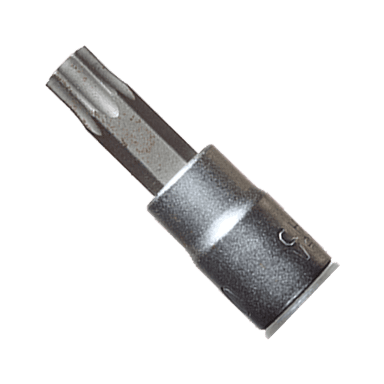
- 🛠️ Torx bit set (including T40 and T50)
- 🛠️ 3/8" drive ratchet
- 🛠️ 1/2" drive ratchet
- 🛠️ 1/2" drive torque wrench (10–150 ft-lbs range)
- 🛠️ 3/8" drive torque wrench (5–80 ft-lbs range)
- 🛠️ Plastic trim tool set
- 🛠️ Drain pan (capacity 10 liters / 3 gallons minimum)
- 🛠️ Fluid transfer pump (hand or drill style)
- 🛠️ Long funnel (ATF-compatible)
- 🛠️ Infrared thermometer
- 🛠️ OBD2 scan tool with live data (transmission temp) (specialty)
- 🛠️ Pick set or small flathead screwdriver set
- 🛠️ Brake cleaner spray
- 🛠️ Shop rags or paper towels
- 🛠️ Rubber mallet
- 🛠️ Nitrile gloves
- 🛠️ Safety glasses
🔩 Required Parts
HowToo sells all the parts you need for this repair:
- 🔩 Automatic transmission fluid – 8-speed (Dexron HP spec) - Qty: 8–10 quarts
- 🔩 Automatic transmission fluid – 10-speed (Dexron ULV spec) - Qty: 8–10 quarts
- 🔩 Transmission pan gasket - Qty: 1
- 🔩 Transmission filter (internal) - Qty: 1
- 🔩 Transmission pan bolts (replacement set, if one-time-use style) - Qty: 1 set
- 🔩 Drain plug sealing washer / O-ring - Qty: 1
- 🔩 Brake cleaner (aerosol) - Qty: 1–2 cans
- 🔩 Shop towels - Qty: 1 pack
📋 Before You Begin
- 📝 Park the Sierra 1500 on a level surface, set the parking brake, and place wheel chocks behind the rear wheels.
- 📝 Let the transmission cool to warm (you can touch the pan without burning your hand).
- 📝 You do not need to disconnect the battery for this job.
- 📝 Connect your OBD2 scan tool and confirm you can read transmission fluid temperature live data.
- 📝 Identify your transmission type:
- 8-speed: Larger, more rectangular pan, more bolts, often used with column shifter PRNDL and “L” manual mode.
- 10-speed: Slightly different-shaped pan, often used with GM/Ford co-developed 10-speed units.
- 📝 Plan to do a single drain-and-fill with pan drop; a complete “flush” requires special equipment.
🔨 Step-by-Step Instructions
Follow these steps in order:
Step 1: Raise and Support the Truck
- Use the floor jack to lift the front of the Sierra 1500 at the front frame jacking points.
- Place jack stands under the frame rails on both sides and slowly lower the truck onto them using the floor jack.
- Repeat for the rear if needed so the truck sits level on four stands.
- Shake the truck gently to confirm it is stable. If it moves, reposition stands.
Step 2: Remove Any Skid Plates or Shields
- Use the 15mm socket and ratchet to remove bolts holding any transmission skid plate or splash shield, if equipped.
- Use the plastic trim tool to pop out plastic clips if there are aero panels.
- Set all bolts and clips aside in a safe place.
Step 3: Locate Drain Plug, Fill Plug, and Level/Check Plug
- On the transmission, identify:
- The drain plug at the lowest point of the pan (often Torx or hex).
- The fill plug on the side of the transmission case or upper pan area.
- The level/check plug in the side of the pan or case, usually near the bottom.
- Use the Torx bit set or appropriate socket to lightly crack each plug loose to confirm they are not seized. Do not remove yet.
- Always confirm you can open the fill plug before draining.
Step 4: Drain the Old Fluid
- Place the drain pan under the transmission drain plug.
- Use the correct Torx bit (often T40 or T50) with ratchet to remove the drain plug slowly.
- Let the fluid drain completely into the drain pan; this can take several minutes.
- Inspect the fluid: dark or burnt smell means it was overdue. Some darkening is normal.
- Once drained, clean the drain plug with brake cleaner and a rag.
Step 5: Remove the Transmission Pan
- Move the drain pan slightly if needed under the transmission pan.
- Use the 10mm socket with ratchet to remove all pan bolts, leaving two bolts loosely threaded on opposite corners.
- Support the pan with one hand and remove the last bolts using the 10mm socket.
- If the pan is stuck, tap gently with a rubber mallet to break the seal. Do not pry hard on the aluminum case.
- Lower the pan carefully; more fluid will likely spill into the drain pan.
Step 6: Clean the Pan and Magnets
- Pour remaining fluid from the pan into the drain pan.
- Remove any magnets from inside the pan, note their location, and clean them with brake cleaner and a rag.
- Clean the inside of the pan thoroughly with brake cleaner; remove all sludge and metal particles.
- Reinstall the magnets in their original locations.
- Remove the old pan gasket from the pan and wipe the sealing surface clean.
Step 7: Replace the Transmission Filter
- Locate the filter on the exposed transmission valve body.
- Some filters are held by bolts; use the 8mm or 10mm socket and ratchet to remove them.
- Pull the old filter straight down; a little fluid may drip.
- Clean the filter sealing area on the transmission with a lint-free rag.
- Install the new filter: push it firmly into place and reinstall any bolts using the 8mm or 10mm socket.
- Torque to 8–10 Nm (6–7 ft-lbs) if a torque spec is given; snug but not overtight.
Step 8: Reinstall the Pan with New Gasket
- Place the new gasket on the cleaned pan, aligning all bolt holes.
- Hold the pan up to the transmission and start several bolts by hand to avoid cross-threading.
- Install all bolts finger-tight first using the 10mm socket.
- Using a crisscross pattern, snug each bolt lightly with the 10mm socket.
- Then torque all pan bolts evenly: Torque to 12–14 Nm (9–10 ft-lbs). Use the 3/8" drive torque wrench.
Step 9: Reinstall the Drain Plug
- Install a new sealing washer or O-ring on the drain plug if required.
- Thread the drain plug in by hand, then tighten with the correct Torx bit and ratchet.
- Torque to 25–30 Nm (18–22 ft-lbs) unless otherwise specified for your exact unit.
Step 10: Pre-Fill the Transmission
- Remove the fill plug using the correct Torx bit or socket.
- Attach your fluid transfer pump to the new ATF bottles.
- For 8-speed: pump in approximately 5–6 quarts of Dexron HP-spec ATF through the fill port.
- For 10-speed: pump in approximately 5–6 quarts of Dexron ULV-spec ATF through the fill port.
- Reinstall the fill plug lightly for now so fluid does not spill while you lower the truck.
Step 11: Lower the Truck and Warm the Fluid
- Use the floor jack to lift the truck off the stands one end at a time, remove stands, and lower to level ground.
- Start the engine with your foot on the brake.
- With the engine idling, move the shifter slowly through all gears (P-R-N-D-L) and pause 3–4 seconds in each position. This fills the circuits with fluid.
- Leave the engine idling in Park.
- Use your OBD2 scan tool to monitor transmission fluid temperature.
Step 12: Set Fluid Level at Correct Temperature
- Raise the truck again so it is level and safely supported on jack stands. The engine must stay running in Park while checking the level.
- With the fluid between 35–45°C (95–113°F), remove the level/check plug using the correct Torx bit or socket.
- If no fluid drips out:
- Remove the fill plug again.
- Use the fluid transfer pump to add ATF until it begins to just drip steadily from the level/check port.
- If a steady stream pours out, let it slow to a small drip; that is the correct level.
- Once it’s just dripping, reinstall the level/check plug.
- Torque both level/check and fill plugs to 25–30 Nm (18–22 ft-lbs) using the 3/8" drive torque wrench.
Step 13: Reinstall Skid Plates and Lower the Truck
- Turn the engine off once plugs are torqued.
- Reinstall any skid plates or shields using the 15mm socket. Torque to 25–30 Nm (18–22 ft-lbs) if specified, otherwise snug plus a little more.
- Lower the truck from the jack stands for the final time using the floor jack.
Step 14: Clean Up and Check for Leaks
- Spray the transmission pan area and plugs with brake cleaner and wipe clean so new leaks are easy to see.
- Pour used ATF from the drain pan into sealed containers for recycling.
✅ After Repair
- ✅ Start the engine and let it idle for a few minutes; check under the truck for any leaks at the pan, drain plug, fill plug, and level/check plug.
- ✅ Take a short, gentle test drive: drive at city speeds, then light highway speeds. Pay attention to shift smoothness and any unusual noises.
- ✅ After the drive, with the truck still warm and level, recheck underneath for any fresh leaks.
- ✅ If shifts feel harsh or delayed, recheck fluid level using the same temperature and level/check plug procedure.
- ✅ Record the date and mileage of the service for your maintenance records.
💰 DIY vs Shop Cost
Shop Cost: $350–$600 (parts + labor)
DIY Cost: $120–$220 (fluid, filter, gasket, cleaner)
You Save: $230–$380 by doing it yourself!
Shop labor rates typically run $100–$150/hour. This repair takes a shop about 1.5–2 hours.
🎯 Ready to get started?
HowToo makes it easy: same-day/2-day shipping on every part, plus all the tools and specialty tools you need! Check out the parts and tools sections above to add everything to your cart.
Guide for Automatic Transmission Fluid replace for these GMC vehicles
| Year Make Model | Sub Model | Engine | Body Style |
|---|