















How to Change Transmission Fluid on a 2019 Ford Explorer (Step-by-Step DIY)
Complete DIY drain-and-fill guide with tools, parts, torque specs, safety tips, and cost savings for your 2019 Explorer ATF service
How to Change Transmission Fluid on a 2019 Ford Explorer (Step-by-Step DIY)
Complete DIY drain-and-fill guide with tools, parts, torque specs, safety tips, and cost savings for your 2019 Explorer ATF service


🔧 Explorer - Automatic Transmission Fluid Change
You’ll be doing a drain-and-fill on the transmission fluid. This refreshes a good portion of the old fluid without using a machine and is safe for a DIY beginner if you work slowly and carefully.
Difficulty Level: Intermediate (for a beginner) | Estimated Time: 2–3 hours
⚠️ Safety & Precautions
- ⚠️ Only work on a completely cool engine and exhaust to avoid burns.
- ⚠️ Support the Explorer on four jack stands; never rely only on a floor jack.
- ⚠️ Transmission fluid (ATF) can be hot and slippery—wear gloves and safety glasses.
- ⚠️ Keep the vehicle level front-to-back and side-to-side; fluid level depends on this.
- ⚠️ Park in a well-ventilated area; you’ll be running the engine for level check.
- ⚠️ Do not overtighten aluminum case bolts; you can crack the transmission.
- ⚠️ Clean up any spills immediately to avoid slipping.
- ⚠️ Battery disconnect is not required for this job.
🔧 Required Tools
You'll need the following tools for this repair:
- 🛠️ Floor jack (rated 3-ton minimum)
- 🛠️ Jack stands (rated 3-ton, set of 4)
- 🛠️ Wheel chocks
- 🛠️ Metric socket set (8mm–19mm)
- 🛠️ 3/8" drive ratchet
- 🛠️ 3/8" drive torque wrench (5–80 ft-lbs range)
- 🛠️ Hex/Allen socket set (metric)
- 🛠️ Flathead screwdriver (medium)
- 🛠️ Drain pan (at least 10-quart capacity)
- 🛠️ Funnel with long flexible hose
- 🛠️ Clean measuring container with quart markings
- 🛠️ Infrared thermometer
- 🛠️ Shop rags or paper towels
- 🛠️ Brake cleaner spray
- 🛠️ Plastic scraper
- 🛠️ Safety glasses
- 🛠️ Nitrile or mechanic’s gloves
🔩 Required Parts
HowToo sells all the parts you need for this repair:
- 🔩 Automatic transmission fluid (Mercon LV) - Qty: 6–8 quarts
- 🔩 Transmission pan gasket - Qty: 1
- 🔩 Transmission drain plug gasket or sealing washer - Qty: 1
- 🔩 Brake cleaner (aerosol) - Qty: 1–2 cans
- 🔩 Shop towels - Qty: 1 pack
📋 Before You Begin
- Park the Explorer on a flat, solid surface with plenty of room.
- Engage the parking brake and place the shifter in P (Park).
- Chock the rear wheels with wheel chocks so the vehicle cannot roll.
- Gather all tools and parts before lifting the vehicle.
- Plan to keep the vehicle level when raised; use four jack stands.
- Transmission fluid type is Mercon LV. Do not mix with other types.
🔨 Step-by-Step Instructions
Follow these steps in order:
Step 1: Lift and Support the Explorer
- Use the floor jack to lift the front of the Explorer at the front jacking point (behind the front crossmember).
- Place jack stands under the front pinch welds or frame points and lower the vehicle onto them.
- Repeat for the rear so the vehicle sits level on four jack stands.
- Give the vehicle a firm shake to confirm it’s stable.
Step 2: Locate the Transmission Pan, Drain Plug, and Fill Point
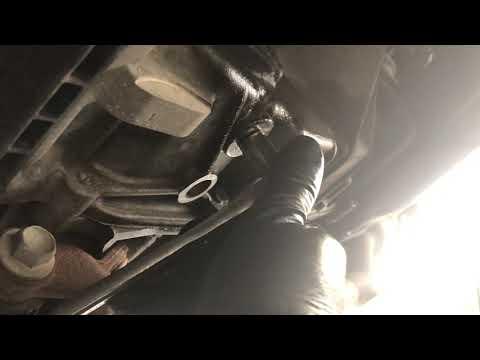
- Slide under the vehicle with a flashlight and identify the transmission pan: a flat metal pan on the driver side of the engine bay area.
- Find the drain plug on the pan bottom (center or slightly offset).
- On this transmission, fluid is usually filled through a fill plug on the side/top of the transmission case or through a fill port under the air intake tube. Use a metric socket set and hex socket set to identify which plug fits.
- Confirm fill plug can be opened before draining.
Step 3: Loosen the Fill Plug First
- Position the drain pan under the general transmission area as a precaution.
- Use the appropriate metric socket or hex socket with a 3/8" ratchet to carefully crack loose the fill plug (do not remove it fully yet).
- If fill plug won’t move, do not drain fluid.
Step 4: Drain the Old Fluid
- Move the drain pan directly under the transmission drain plug.
- Use the correct metric socket or hex socket with the 3/8" ratchet to slowly remove the drain plug.
- Allow fluid to drain completely. This may take 10–15 minutes.
- Once flow slows to drips, pour the used fluid from the drain pan into a clean measuring container to see exactly how much came out.
- You’ll refill with the same amount you removed.
Step 5: Inspect and Reinstall the Drain Plug
- Inspect the drain plug and its gasket or sealing washer. Replace the washer with a new one.
- Clean the plug with a shop rag and check for metal shavings; a small amount of fine dust is normal.
- Reinstall the drain plug by hand to avoid cross-threading.
- Use a 3/8" ratchet and then a torque wrench with the correct socket to tighten the plug to 26 Nm (19 ft-lbs).
Step 6: (Optional but Recommended) Remove and Clean the Pan
- If you are comfortable, you can remove the entire pan to clean it and replace the gasket.
- Support the pan with one hand and use the metric socket set and 3/8" ratchet to remove the pan bolts around the perimeter.
- Keep a drain pan under the pan, as more fluid will spill when the seal breaks.
- Lower the pan carefully; it may still have some fluid inside.
- Clean the pan thoroughly with brake cleaner and a shop rag. Remove any sludge and wipe the magnet clean.
- Use a plastic scraper to gently remove the old gasket from the pan and transmission mating surface.
- Install the new pan gasket onto the pan.
- Reinstall the pan and start all bolts by hand.
- Use the 3/8" ratchet with the correct socket to snug the bolts in a crisscross pattern.
- Finish with the torque wrench, tightening pan bolts to 12 Nm (106 in-lbs).
Step 7: Add New Transmission Fluid (Engine Off)
- Remove the fill plug completely using the socket or hex socket and 3/8" ratchet.
- Insert the funnel with long hose into the fill hole.
- Slowly pour in Mercon LV ATF, using your measuring container reading to match the amount drained.
- Pour slowly to avoid air pockets or overflow.
- Reinstall the fill plug by hand, then snug lightly with the ratchet (you will recheck level shortly).
Step 8: Warm Up the Transmission for Level Check
- Lower the Explorer by raising each corner with the floor jack and removing the jack stands, then set it back on the ground.
- Start the engine with your foot on the brake.
- With the engine idling, move the shifter slowly through all gears (P–R–N–D–S and back to P), pausing 2–3 seconds in each position.
- This fills all the internal passages with fluid.
- Let the vehicle idle until the transmission reaches around 30–40°C (86–104°F). Use the infrared thermometer on the transmission pan to estimate temperature.
Step 9: Final Fluid Level Check and Adjustment
- With the engine idling and the vehicle on level ground in P, carefully get under the car again.
- Remove the fill/level plug using the socket or hex socket and 3/8" ratchet.
- If fluid begins to dribble out in a thin stream, the level is correct. Allow it to drip until it becomes a slow drip.
- If no fluid comes out, use the funnel with hose to add a small amount of ATF (about 200 ml at a time) until a thin stream starts to flow from the level hole.
- Reinstall the fill/level plug and tighten with the torque wrench to 14 Nm (10 ft-lbs).
- Shut off the engine.
Step 10: Clean Up and Lower the Vehicle
- Spray any spilled ATF off the pan and surrounding areas with brake cleaner and wipe with shop rags.
- Double-check that the drain plug and fill plug are both tight and clean.
- Ensure all tools are removed from under the vehicle.
- Dispose of old ATF at a proper recycling location; do not pour it on the ground or into drains.
Step 11: Optional Second Drain-and-Fill
- Because you only changed the fluid in the pan, some old fluid remains in the torque converter and cooler.
- After driving 200–500 km, you can repeat the drain-and-fill process (Steps 4–10) again for a higher percentage of new fluid.
✅ After Repair
- Start the engine and check that it shifts smoothly through all gears while driving gently.
- After a short 10–15 minute drive, park on a level surface and check underneath for any leaks around the pan, drain plug, and fill plug.
- If you feel any slipping, harsh shifts, or see warning lights, stop driving and recheck fluid level or have a professional inspect it.
- Keep an eye on the parking spot for a few days for any new fluid drips.
💰 DIY vs Shop Cost
Shop Cost: $250–$400 (parts + labor)
DIY Cost: $80–$150 (parts only)
You Save: $170–$250 by doing it yourself!
Shop labor rates vary but typically run $100–$150/hour. This repair takes a shop approximately 1.5–2.0 hours.
🎯 Ready to get started?
HowToo makes it easy: same-day/2-day shipping on every part, plus all the tools and specialty tools you need! Check out the parts and tools sections above to add everything to your cart.
Guide for replace for these Ford vehicles
| Year Make Model | Sub Model | Engine | Body Style |
|---|