









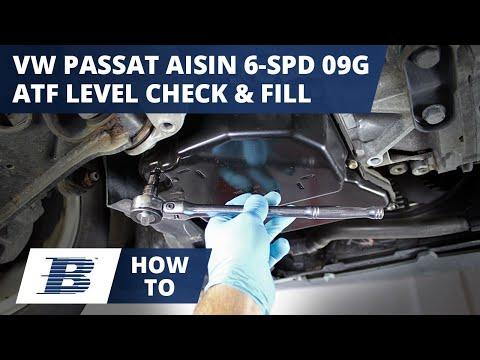







How to Change Transmission Fluid on a 2018 Volkswagen Passat (DSG or Automatic)
Step-by-step drain, filter service, and temperature-based fill/level check with tools, parts, and torque specs for 2006, 2007, 2008, 2009, 2010, 2012, 2013, 2014, 2015, 2018
How to Change Transmission Fluid on a 2018 Volkswagen Passat (DSG or Automatic)
Step-by-step drain, filter service, and temperature-based fill/level check with tools, parts, and torque specs for 2006, 2007, 2008, 2009, 2010, 2012, 2013, 2014, 2015, 2018


🔧 Passat - Transmission Fluid Change
This service replaces old transmission fluid to protect the clutches/gears and keep shifting smooth. On your Passat, the exact steps depend on whether it has a VW-style wet dual-clutch (DSG/DCT) or a conventional automatic—both use a temperature-based fill/level check.
Difficulty Level: Advanced | Estimated Time: 2.0-4.0 hours
⚠️ Safety & Precautions
- ⚠️ Work on a level surface; the car must be level to set fluid level correctly.
- ⚠️ Use jack stands; never rely on a jack alone.
- ⚠️ Transmission fluid can be hot; wear gloves and safety glasses.
- ⚠️ Keep the engine running only in Park/Neutral as required; keep hands/clothes away from fans and belts.
- ⚠️ Do not overfill; incorrect level can cause harsh shifting or damage.
🔧 Required Tools
You'll need the following tools for this repair:
- Floor jack (rated 3-ton minimum)
- Jack stands (rated 3-ton minimum)
- Wheel chocks
- Safety glasses
- Nitrile gloves
- Drain pan (10-liter minimum)
- Socket set (8mm–18mm)
- Ratchet
- Torque wrench (10–100 Nm range)
- Torx bit set (T25–T45)
- Triple-square bit set (M10–M14)
- Allen hex bit set (5mm–10mm)
- Trim clip tool
- Fluid transfer pump
- VW/VAG transmission fill adapter
- Scan tool with live data for transmission fluid temperature (specialty)
- Infrared thermometer
- Shop rags
- Brake cleaner
🔩 Required Parts
HowToo sells all the parts you need for this repair:
- Transmission fluid (VW-spec for your transmission) - Qty: 5–7 liters
- Transmission drain/fill plug sealing washers - Qty: 1–2
- Transmission filter kit - Qty: 1
📋 Before You Begin
- Park on level ground, apply the parking brake, and chock the rear wheels.
- Raise the front and rear enough to keep the car level, then support with jack stands.
- Make sure your scan tool can display transmission fluid temperature (this is required to set the level correctly).
- Tip: Clean around plugs before opening.
🔨 Step-by-Step Instructions
Follow these steps in order:
Step 1: Confirm which procedure matches your transmission
- Use your scan tool to read the transmission type/ID in the transmission module.
- If it shows a DSG/DCT-style unit, follow the Procedure A (DSG/DCT) steps below.
- If it shows a conventional automatic, follow Procedure B (Conventional Automatic) below.
Step 2: Remove the lower engine cover
- Use a Torx T25 bit and ratchet to remove the fasteners.
- Use a trim clip tool for any plastic clips.
Step 3: Locate the transmission drain and fill points
- Use a flashlight to find the drain plug at the lowest point of the transmission.
- Find the fill port (often higher up on the case or at the pan/standpipe area depending on design).
- Clean the area using brake cleaner and shop rags.
Step 4: Procedure A (DSG/DCT) — Drain the fluid
- Place a drain pan under the transmission.
- Use the correct Allen hex bit or triple-square bit (varies by unit) with a ratchet to remove the drain plug.
- If your DSG uses an internal “standpipe,” remove it using the correct Allen hex bit so the unit drains fully.
- Tip: Expect a strong initial flow.
Step 5: Procedure A (DSG/DCT) — Replace the filter (if equipped)
- Locate the DSG filter housing (often a cartridge-style housing).
- Use the correct socket to remove the filter cap/housing.
- Replace the filter and O-ring from the filter kit.
- Reinstall the cap and Torque to 20 Nm (15 ft-lbs).
- Tip: Lightly oil the new O-ring first.
Step 6: Procedure A (DSG/DCT) — Reinstall standpipe and drain plug
- Reinstall the standpipe (if removed) using the correct Allen hex bit.
- Install the drain plug with a new sealing washer using the correct bit and torque wrench.
- Torque to 45 Nm (33 ft-lbs).
Step 7: Procedure A (DSG/DCT) — Fill the transmission
- Install the VW/VAG transmission fill adapter into the fill port.
- Use a fluid transfer pump to pump in the correct VW-spec transmission fluid until it begins to run back out (or until you reach the typical service quantity).
- Reinstall the fill plug loosely for now using the correct bit.
Step 8: Procedure A (DSG/DCT) — Set the fluid level by temperature
- Connect your scan tool and monitor transmission fluid temperature.
- Start the engine and, holding the brake, move the shifter slowly through each gear for 2–3 seconds per position, then return to Park.
- With the car still level, remove the level/check plug (or open the fill/overflow setup) using the correct bit.
- At 35–45°C (95–113°F), the level is correct when fluid dribbles out in a steady thin stream.
- If no fluid comes out, add fluid using the fluid transfer pump until it dribbles, then close it.
- Reinstall plugs and Torque to 45 Nm (33 ft-lbs).
Step 9: Procedure B (Conventional Automatic) — Drain the fluid
- Place a drain pan under the transmission pan area.
- Use the correct Allen hex bit with a ratchet to remove the drain plug.
- If the unit uses a plastic/metal overflow tube (standpipe), remove it using the correct Allen hex bit to fully drain.
Step 10: Procedure B (Conventional Automatic) — Replace the filter (if pan is removed)
- If your service requires pan removal, use a Torx bit and ratchet to remove pan bolts.
- Replace the filter and pan gasket (or sealing O-ring) from the filter kit.
- Reinstall the pan and Torque to 10 Nm (7 ft-lbs) unless your kit specifies otherwise.
Step 11: Procedure B (Conventional Automatic) — Fill and set the level by temperature
- Install the VW/VAG transmission fill adapter at the fill port.
- Use a fluid transfer pump to pump in the correct VW-spec transmission fluid until it begins to overflow.
- Start the engine, cycle through gears as in Step 8, and monitor temperature with the scan tool.
- At 35–45°C (95–113°F), set level so fluid dribbles out, then reinstall plug(s).
- Torque to 30 Nm (22 ft-lbs) for typical drain/fill plugs unless your plug is marked otherwise.
Step 12: Reinstall the lower engine cover
- Reinstall the cover using a Torx T25 bit and ratchet.
- Make sure all fasteners and clips are fully seated.
✅ After Repair
- Start the engine and check underneath for leaks with a flashlight.
- Take a short 10–15 minute road test and verify smooth shifts.
- Recheck for leaks after the test drive.
- If you have a scan tool, clear any stored transmission service/temperature-related faults if present.
💰 DIY vs Shop Cost
Shop Cost: ₹18,000–₹45,000 (parts + labor)
DIY Cost: ₹7,000–₹22,000 (parts only)
You Save: ₹11,000–₹23,000 by doing it yourself!
Shop labor rates vary but typically run ₹1,000–₹2,500/hour. This repair takes a shop approximately 2–4 hours.
🎯 Ready to get started?
HowToo makes it easy: same-day/2-day shipping on every part, plus all the tools and specialty tools you need! Check out the parts and tools sections below to add everything to your cart.