









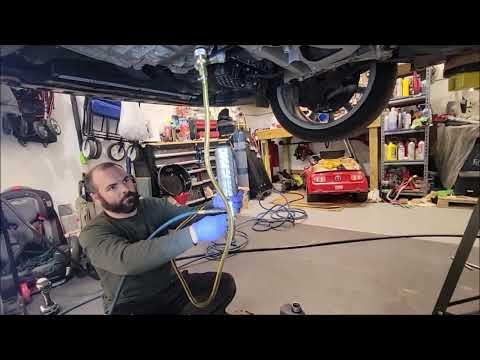







How to Change Transmission Fluid on a 2016 Audi A3 (DSG S tronic or Tiptronic)
Step-by-step drain, filter, refill, and temperature-based level setting with tools, parts, and torque specs
How to Change Transmission Fluid on a 2016 Audi A3 (DSG S tronic or Tiptronic)
Step-by-step drain, filter, refill, and temperature-based level setting with tools, parts, and torque specs


🔧 A3 - Transmission Fluid Change
Your A3 may have either an S tronic (DSG) or a Tiptronic automatic. Both are “sealed” style units: you drain, then refill, then set the fluid level at a specific temperature while the engine is running.
Assumption: I’m providing both factory-style methods (DSG and Tiptronic) since the exact unit isn’t shown.
Difficulty Level: Advanced | Estimated Time: 2-4 hours
⚠️ Safety & Precautions
- ⚠️ Work on a level surface; the level check is very sensitive to vehicle angle.
- ⚠️ Transmission fluid can burn you; wear gloves and safety glasses.
- ⚠️ Never get under a car supported only by a jack; always use jack stands.
- ⚠️ You will check/finalize fluid level with the engine running—keep hands/clothes clear of fans and belts.
- ⚠️ No battery disconnect is required for a fluid service.
🔧 Required Tools
You'll need the following tools for this repair:
- Floor jack (rated 3-ton minimum)
- Jack stands (rated 3-ton minimum)
- Wheel chocks
- Safety glasses
- Nitrile gloves
- Torque wrench (10-60 Nm range)
- Metric socket set (8mm-18mm)
- 3/8" ratchet
- 1/4" ratchet
- Torx bit set (T25, T30, T45)
- Triple-square bit set (M10)
- Allen/hex bit set (5mm, 8mm)
- Trim clip remover
- Drain pan (10-liter minimum)
- Fluid transfer pump (hand pump) (specialty)
- VCDS, OBD11, or scan tool with transmission temperature data (specialty)
- Shop towels
- Brake cleaner spray
🔩 Required Parts
HowToo sells all the parts you need for this repair:
- Audi-approved transmission fluid - Qty: 5-7 liters
- Transmission filter kit - Qty: 1
- Transmission pan gasket - Qty: 1
- Drain plug seal/washer - Qty: 1
- Fill plug seal/washer - Qty: 1
📋 Before You Begin
- Park on level ground, apply the parking brake, and chock the rear wheels.
- Lift the front and support the car on jack stands, then lift the rear so the car sits level.
- Connect your scan tool and be ready to view Transmission Fluid Temperature (this is how you set the final level).
- Tip: Warm fluid drains faster.
🔨 Step-by-Step Instructions
Follow these steps in order:
Step 1: Remove the belly pan (undertray)
- Use a Torx T25/T30 bit with a 1/4" ratchet to remove the undertray screws.
- Use a trim clip remover for any plastic push-clips.
Step 2: Identify your transmission type (quick visual check)
- If you see a serviceable external filter housing (often top/side accessible) and DSG-style drain/level setup, follow the DSG path below.
- If you have a more traditional AT pan with a level plug/standpipe arrangement typical of Aisin units, follow the Tiptronic path below.
- Tip: Don’t force plugs—wrong tool size strips them.
Step 3A: DSG path — Drain the fluid
- Place a drain pan under the transmission.
- Use the correct Allen/hex bit (usually 8mm) with a 3/8" ratchet to remove the drain plug.
- Allow fluid to drain completely.
Step 4A: DSG path — Replace the filter
- Locate the transmission filter housing.
- Use a metric socket or the appropriate Torx bit to remove the filter cap/fasteners (varies by DSG setup).
- Swap in the new filter and new O-ring from the filter kit.
- Clean any spilled fluid with brake cleaner spray and shop towels.
Step 5A: DSG path — Reinstall drain plug
- Install a new drain plug seal/washer.
- Thread the drain plug in by hand first, then tighten with a torque wrench.
- Torque to 45 Nm (33 ft-lbs) unless your replacement plug specifies otherwise.
Step 6A: DSG path — Fill the transmission
- Remove the fill plug using the correct Allen/hex bit (often 5mm or 8mm) and a 3/8" ratchet.
- Use a fluid transfer pump (specialty) to pump in Audi-approved DSG fluid until it begins to run back out of the fill/level opening.
- Install the fill plug finger-tight for now.
Step 7A: DSG path — Set the final level at temperature
- Start the engine with the car still level on stands.
- With your foot on the brake, slowly shift through P-R-N-D and back, pausing 2-3 seconds in each gear.
- Use the scan tool (specialty) to monitor fluid temperature.
- When the transmission fluid reaches 35°C to 45°C (95°F to 113°F), remove the fill/level plug using the correct Allen/hex bit.
- The level is correct when fluid dribbles out in a thin stream. If nothing comes out, use the fluid transfer pump (specialty) to add fluid until it dribbles out.
- Install a new fill plug seal/washer and tighten the fill plug.
- Torque to 45 Nm (33 ft-lbs) unless your plug/spec differs.
Step 3B: Tiptronic path — Drain the fluid
- Place a drain pan under the transmission.
- Use the correct Allen/hex bit with a 3/8" ratchet to remove the drain plug (some versions also have an internal standpipe).
- Allow fluid to drain fully.
Step 4B: Tiptronic path — Remove pan and replace filter
- Use a Torx bit (often T30) with a 1/4" ratchet to remove the pan bolts.
- Lower the pan carefully; more fluid will spill.
- Remove the filter using the appropriate Torx bit or metric socket.
- Install the new filter and pan gasket, and reinstall the pan.
- Torque to 10 Nm (7 ft-lbs) for pan bolts unless your gasket/kit specifies otherwise.
Step 5B: Tiptronic path — Fill and set the final level
- Use the fluid transfer pump (specialty) to fill through the fill port until fluid begins to run out.
- Start the engine, hold the brake, and slowly shift through all gears.
- Monitor temperature with the scan tool (specialty).
- At 35°C to 45°C (95°F to 113°F), open the level plug and top off until it dribbles out.
- Install new sealing washers and tighten plugs.
- Torque to 45 Nm (33 ft-lbs) for drain/fill plugs unless your plug/spec differs.
Step 8: Reinstall the undertray
- Use the Torx T25/T30 bit and 1/4" ratchet to reinstall all screws.
- Snug fasteners evenly; do not overtighten plastic-mounted screws.
✅ After Repair
- Check for leaks around the drain/fill plugs and pan perimeter with the engine running.
- Take a short 10-15 minute test drive, then recheck for leaks again.
- If you have a scan tool, check for transmission-related fault codes and clear any that were set during the service.
- Tip: A slight initial odor is normal.
💰 DIY vs Shop Cost
Shop Cost: ₹18,000-₹40,000 (parts + labor)
DIY Cost: ₹7,000-₹18,000 (parts only)
You Save: ₹11,000-₹22,000 by doing it yourself!
Shop labor rates vary but typically run ₹1,500-₹3,000/hour. This repair takes a shop approximately 2-4 hours.
🎯 Ready to get started?
HowToo makes it easy: same-day/2-day shipping on every part, plus all the tools and specialty tools you need! Check out the parts and tools sections below to add everything to your cart.