
















How to Change Transmission Fluid on a 2014 Ford Fusion (Drain & Fill Guide)
Step-by-step MERCON LV service with tools list, safety tips, fluid level-by-temp method, and torque specs
How to Change Transmission Fluid on a 2014 Ford Fusion (Drain & Fill Guide)
Step-by-step MERCON LV service with tools list, safety tips, fluid level-by-temp method, and torque specs


🔧 Fusion Energi - Transmission Fluid Drain & Fill
On your Fusion Energi, the “transmission” is a hybrid eCVT transaxle. The fluid lubricates and cools the gears and electric drive components, and a drain-and-fill refreshes the fluid without taking the unit apart.
Difficulty Level: Intermediate | Estimated Time: 1.5-3 hours
Assumption: Hybrid eCVT (HF35-style) with drain/fill plugs that accept a 3/8" square drive. Verify plug shape before you start.
⚠️ Safety & Precautions
- ⚠️ Support the car with jack stands on a level surface; never work under a jack-only vehicle.
- ⚠️ The hybrid system can start the gas engine automatically when in “READY.” Keep hands/tools clear of belts and fans.
- ⚠️ Transmission fluid can be hot. Wear gloves and safety glasses.
- ⚠️ Do not touch or unplug any orange high-voltage cables (these carry high voltage).
- ⚠️ No battery disconnect is required for a basic drain/fill, but keep the key fob at least 15 ft away when the car is OFF.
🔧 Required Tools
You'll need the following tools for this repair:
- Floor jack (rated 2-ton minimum)
- Jack stands (rated 2-ton minimum)
- Wheel chocks
- Safety glasses
- Nitrile gloves
- Drain pan (8-quart minimum)
- 3/8" drive ratchet
- 3/8" drive extension (6")
- Torque wrench (10–100 Nm range)
- 8mm socket
- 10mm socket
- Trim clip tool
- Fluid transfer pump
- OBD2 scan tool with Transmission Fluid Temperature PID (specialty)
- Shop rags
🔩 Required Parts
HowToo sells all the parts you need for this repair:
- Automatic transmission fluid (MERCON LV) - Qty: 5 quarts
- Transmission drain/fill plug seal washers - Qty: 2
- Brake cleaner spray - Qty: 1
📋 Before You Begin
- Park on a level surface, set the parking brake, and place wheel chocks behind the rear tires.
- Plan to keep the car level on jack stands (front and rear at similar height). Fluid level checks are very sensitive to tilt.
- Install your OBD2 scan tool and confirm you can view Transmission Fluid Temperature (TFT) before you drain anything.
- Make sure the car is fully OFF before crawling underneath (no “READY” light).
🔨 Step-by-Step Instructions
Follow these steps in order:
Step 1: Raise and secure the car
- Use a floor jack to lift the front, then place jack stands under the proper front lift points.
- Lift the rear slightly (if needed) and place jack stands so the car sits level.
- Give the car a firm shake to confirm it is stable.
Step 2: Remove the lower splash shield (if equipped)
- Use an 8mm socket and 10mm socket to remove the fasteners.
- Use a trim clip tool to pop any plastic clips without breaking them.
- Set the shield and hardware aside in order.
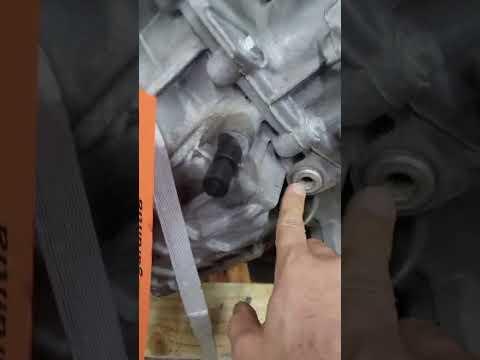
Step 3: Locate the transaxle drain and fill plugs
- Look at the transaxle case on the driver side area. Typically:
- One plug is low (drain) and one is higher (fill/level reference).
- Many Ford units use a plug that takes a 3/8" drive ratchet directly (square drive into the plug).
- If the fill plug won’t loosen, stop. Don’t drain first.
Step 4: Crack the fill plug loose first
- Place the drain pan underneath the transaxle area.
- Use a 3/8" drive ratchet and extension to loosen the fill plug.
- Leave it threaded in a few turns for now.
Step 5: Drain the old fluid
- Move the drain pan directly under the drain plug.
- Use a 3/8" drive ratchet to remove the drain plug.
- Let the fluid drain until it slows to an occasional drip (usually 10–20 minutes).
- Clean the drain plug with shop rags and spray with brake cleaner.
- Install a new seal washer if your plug uses one.
Step 6: Reinstall the drain plug
- Thread the drain plug in by hand to avoid cross-threading.
- Use a torque wrench to tighten the drain plug: Torque to 35 Nm (26 ft-lbs).
Step 7: Fill with fresh MERCON LV
- Remove the loosened fill plug using the 3/8" drive ratchet.
- Insert the hose from your fluid transfer pump into the fill port.
- Pump in MERCON LV until fluid begins to weep back out of the fill opening.
- Install the fill plug finger-tight for now (you’ll do the final level check next).
Step 8: Set the fluid level at the correct temperature
- Lower the car enough to safely start it, or keep it safely supported and clear of moving parts.
- Connect the OBD2 scan tool and monitor Transmission Fluid Temperature (TFT).
- Start the car to “READY” (foot on brake, press Start) and keep it in P.
- With foot on brake, slowly move the shifter through R → N → D → L, pausing 2–3 seconds each, then back to P.
- When TFT reaches about 40–50°C (104–122°F), remove the fill/level plug using the 3/8" drive ratchet.
- Correct level is when fluid drips out in a thin steady drip (not a heavy stream). Let excess drain until it becomes a drip.
- Install a new seal washer if required, then tighten the fill plug with a torque wrench: Torque to 35 Nm (26 ft-lbs).
- Keep the car level during this check.
Step 9: Reinstall the splash shield
- Reinstall the shield using the 8mm socket, 10mm socket, and trim clip tool.
- Snug fasteners evenly (do not over-tighten plastic).
✅ After Repair
- Start the car and let it idle in “READY” for 1–2 minutes. Check underneath for leaks.
- Take a short 10–15 minute drive. Confirm smooth operation and no new warnings.
- Park on level ground and do a quick re-check for leaks around the fill and drain plugs.
- Dispose of used ATF properly (most parts stores accept waste fluids).
💰 DIY vs Shop Cost
Shop Cost: ₹8,000-₹18,000 (parts + labor)
DIY Cost: ₹2,500-₹6,000 (parts only)
You Save: ₹5,500-₹12,000 by doing it yourself!
Shop labor rates vary but typically run ₹1,000-₹2,500/hour. This repair takes a shop approximately 1.5-2.5 hours.
🎯 Ready to get started?
HowToo makes it easy: same-day/2-day shipping on every part, plus all the tools and specialty tools you need! Check out the parts and tools sections below to add everything to your cart.