









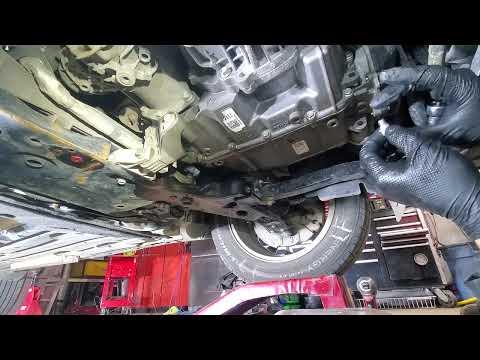







How to Change Transmission Fluid on a 2009-2019 Ford Escape (Engine: Inline 4 2.0L)
Step-by-step drain-and-fill guide with Mercon LV fluid, tools, level check, and torque specs
How to Change Transmission Fluid on a 2009-2019 Ford Escape (Engine: Inline 4 2.0L)
Step-by-step drain-and-fill guide with Mercon LV fluid, tools, level check, and torque specs for 2009, 2010, 2011, 2012, 2013, 2014, 2015, 2016, 2017, 2018, 2019


🔧 Escape - Automatic Transmission Fluid Change
This procedure replaces a portion of the automatic transmission fluid in your Escape using the drain-and-fill method. Your Escape uses a sealed-style 6-speed automatic transmission, so the fluid level is checked with a small level/check plug while the fluid is warm and the engine is running.
Difficulty Level: Intermediate | Estimated Time: 1.5-2.5 hours
⚠️ Safety & Precautions
- ⚠️ Transmission fluid gets hot. Let the vehicle cool enough to work safely, but final level checking must be done with warm fluid.
- ⚠️ Keep the vehicle level when draining, filling, and checking fluid level. An uneven vehicle can cause an incorrect fluid level.
- ⚠️ Never crawl under a vehicle supported only by a jack. Use jack stands on solid ground.
- ⚠️ Keep hands, clothing, and tools away from moving belts and fans when checking the fluid level with the engine running.
- ⚠️ Use only Ford-approved Mercon LV automatic transmission fluid. The wrong fluid can cause shifting problems or transmission damage.
- ⚠️ Battery disconnect is not required for this service.
🔧 Required Tools
You'll need the following tools for this repair:
- Floor jack rated 3-ton minimum
- Jack stands rated 3-ton minimum
- Wheel chocks
- Safety glasses
- Nitrile gloves
- Drain pan 10-quart minimum
- 3/8-inch drive ratchet
- 8mm socket
- 10mm socket
- 11mm socket
- 15mm socket
- Torx T30 bit socket
- 8mm hex bit socket
- Long-neck funnel
- Fluid transfer pump (specialty)
- OBD scan tool with transmission temperature data (specialty)
- Torque wrench 5-80 Nm
- Shop towels
🔩 Required Parts
HowToo sells all the parts you need for this repair:
- Mercon LV automatic transmission fluid - Qty: 5 quarts
- Transmission drain plug sealing washer - Qty: 1
- Transmission level/check plug sealing washer - Qty: 1
📋 Before You Begin
- Park your Escape on level ground and set the parking brake.
- Place wheel chocks behind the rear wheels before lifting the front.
- Warm the transmission by driving gently for 10-15 minutes, then let hot exhaust parts cool enough to work safely.
- Use an OBD scan tool to monitor transmission fluid temperature. This means reading the transmission temperature sensor through the diagnostic port under the dash.
- Final fluid level should be checked with the transmission fluid approximately 85°F-120°F, engine running, transmission in Park, and vehicle level.
- Do not flush the transmission with a universal flush machine. A simple drain-and-fill is safer for a DIY service.
🔨 Step-by-Step Instructions
Follow these steps in order:
Step 1: Lift and level the vehicle
- Use the floor jack rated 3-ton minimum at the correct front jacking point to lift your Escape.
- Place jack stands rated 3-ton minimum under the proper support points.
- Use wheel chocks at the rear wheels.
- Confirm your Escape sits level front-to-rear and side-to-side before draining fluid.
- Level vehicle equals correct fluid level.
Step 2: Remove the lower splash shield
- Put on safety glasses and nitrile gloves.
- Use an 8mm socket, 10mm socket, or Torx T30 bit socket as equipped to remove the lower engine splash shield fasteners.
- Set the splash shield and fasteners aside in order so they go back in the same locations.
Step 3: Locate the transmission drain plug
- Slide the drain pan 10-quart minimum under the transmission case.
- The transmission drain plug is on the lower transmission case area.
- Clean around the plug with shop towels before removal so dirt does not enter the transmission.
Step 4: Drain the old transmission fluid
- Use the correct plug tool, commonly an 11mm socket or 8mm hex bit socket, to loosen the transmission drain plug.
- Remove the plug by hand while keeping pressure inward, then quickly pull it away and let the fluid drain into the pan.
- Allow the fluid to drain until it slows to a drip.
- Measure the amount drained if your drain pan has markings. This helps you add a safe starting amount.
- Expect about 3-5 quarts.
Step 5: Reinstall the drain plug
- Install a new transmission drain plug sealing washer on the drain plug.
- Thread the drain plug in by hand first to avoid cross-threading.
- Use the same socket or hex bit used during removal with a torque wrench 5-80 Nm.
- Torque to 12 Nm (106 in-lbs).
Step 6: Access the transmission fill point
- Open the hood.
- Locate the transmission fill cap/dipstick area on top of the transmission, near the driver-side area of the engine bay.
- If access is tight, use a 10mm socket to remove any small intake duct or bracket fasteners blocking the fill area.
- Wipe the fill area clean with shop towels.
Step 7: Add new fluid
- Place a long-neck funnel into the transmission fill opening.
- Add Mercon LV automatic transmission fluid in an amount close to what drained out.
- If you did not measure the drained amount, start with 3.5 quarts.
- Add fluid slowly to avoid spills.
- Do not overfill.
Step 8: Warm and circulate the fluid
- Connect the OBD scan tool with transmission temperature data to the diagnostic port under the driver-side dash.
- Start the engine and keep your foot firmly on the brake pedal.
- Move the shifter slowly through each gear position, pausing 3 seconds in each position.
- Return the shifter to Park and leave the engine idling.
- Watch the scan tool until transmission fluid temperature is approximately 85°F-120°F.
Step 9: Check the fluid level at the level/check plug
- Keep the engine running and the transmission in Park.
- Keep your Escape level on the jack stands.
- Place the drain pan 10-quart minimum under the transmission level/check plug.
- Use the correct tool, commonly an 8mm hex bit socket or 11mm socket, to carefully remove the level/check plug.
- The level/check plug is used like an overflow. Correct level is reached when fluid just dribbles from the opening at the correct temperature.
- If no fluid comes out, add fluid through the top fill opening using the long-neck funnel or fluid transfer pump in small amounts until fluid begins to dribble from the check opening.
- If a heavy stream comes out, wait until it slows to a thin dribble.
Step 10: Reinstall the level/check plug
- Install a new transmission level/check plug sealing washer on the plug.
- Thread the plug in by hand first.
- Use the same socket or hex bit with the torque wrench 5-80 Nm.
- Torque to 12 Nm (106 in-lbs).
- Wipe the area clean with shop towels.
Step 11: Reinstall removed parts
- Reinstall any removed intake duct or bracket using the 10mm socket.
- Reinstall the lower splash shield using the 8mm socket, 10mm socket, or Torx T30 bit socket.
- Tighten splash shield fasteners snugly by hand with the ratchet. Do not overtighten plastic fasteners.
Step 12: Lower the vehicle
- Use the floor jack rated 3-ton minimum to lift slightly off the jack stands.
- Remove the jack stands rated 3-ton minimum.
- Lower your Escape slowly to the ground.
- Remove the wheel chocks.
✅ After Repair
- Start the engine and check for leaks under the transmission.
- Take a gentle 10-minute test drive. Shifts should feel smooth and normal.
- Recheck underneath for leaks after the test drive.
- Dispose of old transmission fluid at a recycling center or auto parts store that accepts used fluid.
- No battery registration, coding, or infotainment reset is required for this service.
💰 DIY vs Shop Cost
Shop Cost: $220-$380 (parts + labor)
DIY Cost: $55-$110 (parts only)
You Save: $165-$270 by doing it yourself!
Shop labor rates vary but typically run $100-$150/hour. This repair takes a shop approximately 1.0-1.5 hours.
🎯 Ready to get started?
HowToo makes it easy: same-day/2-day shipping on every part, plus all the tools and specialty tools you need! Check out the parts and tools sections below to add everything to your cart.
Guide for Automatic Transmission Fluid replace for these Ford vehicles
| Year Make Model | Sub Model | Engine | Body Style |
|---|---|---|---|
| 2019 Ford Escape | - | Inline 4 2.5L | - |
| 2019 Ford Escape | - | Inline 4 2.0L | - |
| 2019 Ford Escape | - | Inline 4 1.5L | - |
| 2018 Ford Escape | - | Inline 4 2.5L | - |
| 2018 Ford Escape | - | Inline 4 2.0L | - |
| 2018 Ford Escape | - | Inline 4 1.5L | - |
| 2017 Ford Escape | - | Inline 4 2.5L | - |
| 2017 Ford Escape | - | Inline 4 2.0L | - |
| 2017 Ford Escape | - | Inline 4 1.5L | - |
| 2016 Ford Escape | - | Inline 4 2.5L | - |
| 2016 Ford Escape | - | Inline 4 1.6L | - |
| 2016 Ford Escape | - | Inline 4 2.0L | - |
| 2015 Ford Escape | - | Inline 4 2.5L | - |
| 2015 Ford Escape | - | Inline 4 1.6L | - |
| 2015 Ford Escape | - | Inline 4 2.0L | - |
| 2014 Ford Escape | - | Inline 4 2.5L | - |
| 2014 Ford Escape | - | Inline 4 1.6L | - |
| 2014 Ford Escape | - | Inline 4 2.0L | - |
| 2013 Ford Escape | - | Inline 4 2.5L | - |
| 2013 Ford Escape | - | Inline 4 1.6L | - |
| 2013 Ford Escape | - | Inline 4 2.0L | - |
| 2012 Ford Escape | - | Inline 4 2.5L | - |
| 2012 Ford Escape | - | V6 3.0L | - |
| 2011 Ford Escape | - | Inline 4 2.5L | - |
| 2011 Ford Escape | - | V6 3.0L | - |
| 2010 Ford Escape | - | Inline 4 2.5L | - |
| 2010 Ford Escape | - | V6 3.0L | - |
| 2009 Ford Escape | - | Inline 4 2.5L | - |
| 2009 Ford Escape | - | V6 3.0L | - |