









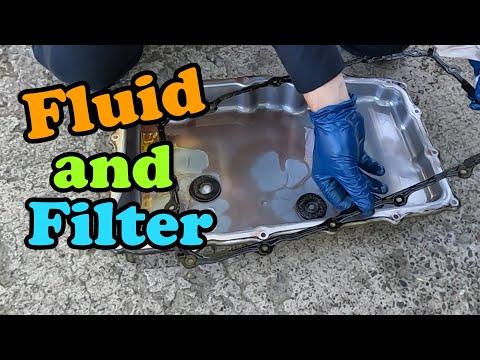







How to Change Transmission Fluid & Filter on a 2018 Chevrolet Suburban (DEXRON-VI)
Step-by-step pan-drop service with tools, parts list, 12 Nm pan bolt torque spec, and temp-based level check
How to Change Transmission Fluid & Filter on a 2018 Chevrolet Suburban (DEXRON-VI)
Step-by-step pan-drop service with tools, parts list, 12 Nm pan bolt torque spec, and temp-based level check


🔧 Suburban - Transmission Fluid & Filter Change
On your Suburban, a proper transmission service is usually a pan drop: drain what you can, remove the pan, replace the filter, then refill and set the fluid level at the correct temperature. The level-setting step matters because this transmission uses a check/overflow method—not a dipstick.
Difficulty Level: Intermediate | Estimated Time: 2-4 hours
Two quick checks before you start: (1) Does your transmission pan have a drain plug? (2) Do you have an OBD2 scanner/app that can display Transmission Fluid Temperature (TFT)?
⚠️ Safety & Precautions
- 🛑 Support the Suburban on jack stands on level ground—never rely on a jack alone.
- 🛑 Transmission fluid can be hot; let it cool and wear nitrile gloves and safety glasses.
- 🛑 The fluid level must be checked with the engine running—keep hands/clothes away from rotating parts.
- 🛑 Keep the vehicle level front-to-rear and side-to-side during filling and level check.
- 🔋 Battery disconnect is not required for this service.
🔧 Required Tools
You'll need the following tools for this repair:
- Floor jack (rated 3-ton minimum)
- Jack stands (rated 3-ton minimum)
- Wheel chocks
- Safety glasses
- Nitrile gloves
- Drain pan (10-quart minimum)
- Shop rags
- Socket set (metric)
- 13mm socket
- 3/8" drive ratchet
- 3/8" drive torque wrench (inch-pound or low Nm capable)
- Flat plastic scraper
- Brake cleaner spray
- Fluid transfer pump (specialty)
- OBD2 scan tool that reads Transmission Fluid Temperature (specialty)
🔩 Required Parts
HowToo sells all the parts you need for this repair:
- Automatic transmission filter - Qty: 1
- Transmission pan gasket - Qty: 1
- Automatic transmission fluid (DEXRON-VI) - Qty: 8 quarts
📋 Before You Begin
- Park on level ground, set the parking brake, and place wheel chocks at the rear wheels.
- Raise and support the Suburban so it sits level on jack stands.
- Make sure you can monitor transmission temperature with a scan tool (TFT). This is important for the final level check.
- Tip: Lay cardboard under the work area.
🔨 Step-by-Step Instructions
Follow these steps in order:
Step 1: Warm the transmission slightly
- Take a short 5–10 minute drive so the fluid flows easier (not fully hot).
- Park back on level ground and keep the engine off while you lift it.
Step 2: Lift and secure the Suburban
- Use a floor jack (rated 3-ton minimum) to lift the front, then support with jack stands (rated 3-ton minimum).
- Lift/support the rear as needed so the vehicle sits level on stands.
- Place wheel chocks so it cannot roll.
Step 3: Position the drain pan
- Place a drain pan (10-quart minimum) under the transmission pan.
- Have shop rags ready—this job is messy.
Step 4: Drain fluid (two possible setups)
- If your pan has a drain plug: remove it using your socket set (metric) and 3/8" drive ratchet, then let it drain fully.
- If your pan does NOT have a drain plug: you’ll “crack” the pan loose to drain.
- Use a 13mm socket and 3/8" drive ratchet to loosen the rear and side pan bolts a few turns.
- Leave a couple bolts snug at the front so the pan tilts and drains into the drain pan.
Step 5: Remove the transmission pan
- Use a 13mm socket and 3/8" drive ratchet to remove the remaining pan bolts.
- Carefully lower the pan—more fluid will spill.
- Remove and save any magnets found in the pan (you’ll reinstall them after cleaning).
Step 6: Remove and replace the filter
- Pull the filter straight down by hand. Some fluid will drop—keep the drain pan in place.
- Make sure the old filter seal (a rubber ring) is not stuck up in the transmission case.
- Install the new filter by pushing it up firmly until fully seated.
- Tip: Lightly oil the new seal with fresh ATF.
Step 7: Clean the pan and gasket surfaces
- Use brake cleaner spray and shop rags to clean the pan, magnets, and sealing surface.
- Use a flat plastic scraper to remove stuck material without gouging metal.
- Install the cleaned magnets back into their original positions.
Step 8: Reinstall the pan and gasket
- Place the new gasket on the pan.
- Start all bolts by hand to avoid cross-threading.
- Tighten pan bolts evenly in a crisscross pattern using a 13mm socket and 3/8" drive ratchet.
- Final tighten with a 3/8" drive torque wrench (inch-pound or low Nm capable): Torque to 12 Nm (106 in-lbs).
Step 9: Refill with DEXRON-VI
- Locate the transmission fill port on the transmission case.
- Use a fluid transfer pump (specialty) to pump in DEXRON-VI through the fill port.
- Add fluid until you’re in the ballpark (a pan-drop service typically takes several quarts).
Step 10: Start, cycle gears, and set the final level (overflow/check method)
- With the Suburban still level on stands, start the engine.
- Hold the brake and move the shifter slowly through each gear (P-R-N-D and back), pausing 2–3 seconds in each position.
- Connect your OBD2 scan tool that reads Transmission Fluid Temperature (specialty) and monitor TFT.
- When TFT is in the correct range for checking (your scan tool should show it clearly), remove the level/check plug and observe:
- If fluid only drips or lightly trickles, the level is close.
- If no fluid comes out, add fluid with the fluid transfer pump (specialty) until it begins to drip.
- If it pours out in a steady stream, let it drain until it becomes a drip/light trickle.
- Reinstall the check plug once the level is correct.
✅ After Repair
- With the engine running, check under the Suburban for leaks around the pan and plugs.
- Lower the vehicle using the floor jack (rated 3-ton minimum).
- Test drive 10–15 minutes, then recheck for leaks on a clean, dry surface.
- If you notice slipping, delayed engagement, or harsh shifts, recheck fluid level using the same temperature-based method.
💰 DIY vs Shop Cost
Shop Cost: $300-$550 (parts + labor)
DIY Cost: $80-$160 (parts only)
You Save: $220-$390 by doing it yourself!
Shop labor rates vary but typically run $100-$150/hour. This repair takes a shop approximately 2-4 hours.
🎯 Ready to get started?
HowToo makes it easy: same-day/2-day shipping on every part, plus all the tools and specialty tools you need! Check out the parts and tools sections below to add everything to your cart.