









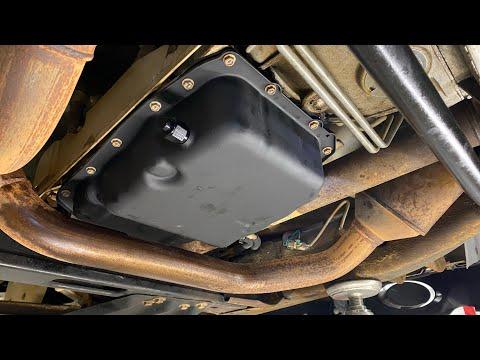







How to Change Transmission Fluid & Filter on a 2016 Chevrolet Suburban (6L80)
Step-by-step pan drop, DEXRON-VI refill, sealed level-check temps, tools, parts, and torque specs
How to Change Transmission Fluid & Filter on a 2016 Chevrolet Suburban (6L80)
Step-by-step pan drop, DEXRON-VI refill, sealed level-check temps, tools, parts, and torque specs


🔧 Suburban - Transmission Fluid & Filter Change
This service drains the old automatic transmission fluid, replaces the pan filter, and refills to the correct level. Fresh fluid helps shifting quality and protects the transmission from heat and wear.
Difficulty Level: Intermediate | Estimated Time: 2-4 hours
Assumption: Your Suburban has the GM 6-speed (6L80) sealed-check fill procedure.
⚠️ Safety & Precautions
- ⚠️ Support the truck on jack stands on level ground; never rely on a jack.
- ⚠️ Transmission fluid can be hot; wear gloves and safety glasses.
- ⚠️ Keep the vehicle level front-to-back and side-to-side for an accurate fluid level check.
- ⚠️ Engine must run during level-check; keep hands/clothes away from rotating parts.
- ⚠️ Do not overfill; it can cause foaming and shifting issues.
- ⚠️ Battery disconnect is not required for this service.
🔧 Required Tools
You'll need the following tools for this repair:
- Floor jack (rated 3-ton minimum)
- Jack stands (rated 3-ton minimum)
- Wheel chocks
- Safety glasses
- Nitrile gloves
- Drain pan (10-quart minimum)
- Shop rags
- Plastic scraper
- Brake cleaner spray
- Socket set (8mm, 10mm, 13mm)
- Ratchet (3/8" drive)
- Torque wrench (5-30 ft-lbs range)
- Fluid transfer pump (hand pump) (specialty)
- Scan tool with transmission fluid temp PID (specialty)
- Infrared thermometer (optional)
🔩 Required Parts
HowToo sells all the parts you need for this repair:
- Automatic transmission filter kit (filter + pan gasket) - Qty: 1
- Automatic transmission fluid (DEXRON-VI) - Qty: 8 quarts
📋 Before You Begin
- Park on a level surface, set the parking brake, and place wheel chocks behind the rear wheels.
- Raise the truck with a floor jack and set it securely on jack stands so it sits level.
- Gather a drain pan and lots of shop rags; a pan drop is messy.
- Have a way to read transmission fluid temperature: best is a scan tool. An infrared thermometer can be a backup (aim at the pan), but it’s less accurate.
🔨 Step-by-Step Instructions
Follow these steps in order:
Step 1: Warm the transmission fluid
- Drive 10-15 minutes so the fluid is warm (not scorching hot).
- Use your scan tool with transmission fluid temp PID (specialty) to watch temperature later during the final level set.
Step 2: Safely lift and level the truck
- Use wheel chocks at the rear wheels.
- Lift with a floor jack (rated 3-ton minimum) and support with jack stands (rated 3-ton minimum).
- Confirm it’s stable by gently rocking the vehicle before going underneath.
Step 3: Position the drain pan and remove any shields (if equipped)
- Place a drain pan (10-quart minimum) under the transmission pan.
- If a shield is in the way, remove fasteners using your socket set (10mm, 13mm) and ratchet.
Step 4: Drain the fluid (two possible setups)
- If your pan has a drain plug: remove it using your socket set, drain into the pan, then reinstall later.
- If your pan has no drain plug: loosen the pan bolts starting at the rear using an 8mm socket and ratchet, leaving a few bolts threaded at the front.
- Gently pry the pan down at the rear edge using a plastic scraper so fluid pours into the drain pan.
- Tip: Loosen slowly to control the spill.
Step 5: Remove the transmission pan
- Remove the remaining pan bolts using an 8mm socket and ratchet.
- Lower the pan carefully; it will still have fluid in it.
- Pour the pan contents into the drain pan.
Step 6: Replace the transmission filter
- Pull the old filter straight down by hand (it’s press-fit). Keep the drain pan under it; more fluid will drop.
- Make sure the old filter’s seal (O-ring) comes out with it. If it stayed in the transmission, remove it carefully with a plastic scraper.
- Push the new filter in firmly by hand until fully seated.
- Tip: A loose filter can cause pump whine.
Step 7: Clean the pan and reinstall the gasket
- Clean the pan and magnet(s) using brake cleaner spray and shop rags.
- Clean the pan rail with a plastic scraper; do not gouge aluminum surfaces.
- Install the new pan gasket (many GM gaskets are reusable-style; it sits in a groove).
Step 8: Reinstall the pan and torque bolts
- Start all pan bolts by hand to avoid cross-threading.
- Tighten evenly in a crisscross pattern using an 8mm socket and ratchet.
- Final-tighten with a torque wrench: Torque to 18 Nm (13 ft-lbs).
- If equipped with a drain plug, tighten with a torque wrench: Torque to 27 Nm (20 ft-lbs).
Step 9: Refill through the fill plug
- Locate the transmission fill plug on the passenger side of the transmission case.
- Remove the fill plug using your socket set and ratchet.
- Add DEXRON-VI using a fluid transfer pump (hand pump) (specialty).
- Add fluid until it begins to dribble back out, then reinstall the fill plug snug for now.
Step 10: Set the fluid level (sealed level-check procedure)
- Start the engine and keep the truck level on jack stands.
- With your foot on the brake, move the shifter slowly through P-R-N-D-M and back to P, pausing 2-3 seconds in each gear.
- Use the scan tool with transmission fluid temp PID (specialty) and wait until fluid temperature is 30-50°C (86-122°F).
- Locate the transmission level check plug (typically at the rear/side area of the pan) and remove it using your socket set and ratchet.
-
Correct level behavior at 30-50°C:
- If fluid drips in a steady thin stream, let it drip until it becomes a slow drip.
- If nothing comes out, add fluid through the fill plug using the fluid transfer pump until fluid starts to drip from the check hole.
- Reinstall the level check plug and tighten with a torque wrench: Torque to 12 Nm (9 ft-lbs).
- Reinstall the fill plug and tighten with a torque wrench: Torque to 27 Nm (20 ft-lbs).
- Tip: Temperature matters more than “amount.”
✅ After Repair
- Wipe everything clean with shop rags and spray any residue with brake cleaner spray.
- With the engine running, inspect for leaks around the pan rail, drain plug (if equipped), and check plug area.
- Road test 10-15 minutes, then recheck for leaks again when you return.
- No computer reset is normally required after a fluid/filter service.
💰 DIY vs Shop Cost
Shop Cost: $250-$450 (parts + labor)
DIY Cost: $70-$160 (parts only)
You Save: $90-$380 by doing it yourself!
Shop labor rates vary but typically run $100-$150/hour. This repair takes a shop approximately 1.5-2.5 hours.
🎯 Ready to get started?
HowToo makes it easy: same-day/2-day shipping on every part, plus all the tools and specialty tools you need! Check out the parts and tools sections below to add everything to your cart.