









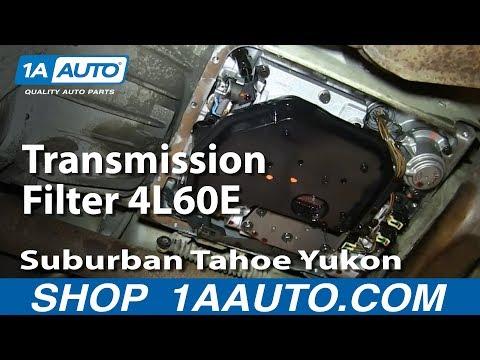







How to Change Transmission Fluid & Filter on a 2008 Chevrolet Suburban 1500
Step-by-step pan drop service with DEXRON-VI specs, tools list, safety tips, and torque values for 2000, 2004, 2005, 2006, 2007, 2008
How to Change Transmission Fluid & Filter on a 2008 Chevrolet Suburban 1500
Step-by-step pan drop service with DEXRON-VI specs, tools list, safety tips, and torque values for 2000, 2004, 2005, 2006, 2007, 2008


🔧 Suburban - Transmission Fluid & Filter Change
This service replaces the fluid in the transmission pan and installs a new filter. It’s the safest DIY method because it refreshes the fluid and helps protect the transmission without forcing fluid through it like some flush machines can.
Difficulty Level: Intermediate | Estimated Time: 2-4 hours
⚠️ Safety & Precautions
- ⚠️ Transmission fluid can be very hot; let it cool enough to work safely.
- ⚠️ Support your Suburban on jack stands; never rely on a jack alone.
- ⚠️ Keep the truck level when checking the fluid level, or the dipstick reading will be wrong.
- ⚠️ Do not crawl under the truck with the engine running unless the wheels are chocked and the area is clear.
- ⚠️ Battery disconnect is not required for this job.
🔧 Required Tools
You'll need the following tools for this repair:
- Floor jack (rated 3-ton minimum)
- Jack stands (rated 3-ton minimum)
- Wheel chocks
- Safety glasses
- Nitrile gloves
- Drain pan (10-quart minimum)
- 13mm socket
- 3/8" drive ratchet
- 3/8" drive torque wrench (inch-pound capable)
- Plastic scraper
- Brake cleaner spray
- Shop rags
- Funnel with long neck
- Measuring jug (quart marked)
🔩 Required Parts
HowToo sells all the parts you need for this repair:
- Automatic transmission filter kit (filter + pan gasket + filter seal) - Qty: 1
- Automatic transmission fluid (DEXRON-VI) - Qty: 6 quarts
📋 Before You Begin
- Park on a level surface, set the parking brake, and place wheel chocks behind the rear wheels.
- Warm the transmission slightly with a 5–10 minute drive so the fluid drains better. Warm, not scorching hot.
- Raise the front with a floor jack and support with jack stands so the truck sits level and secure.
- Place a large drain pan under the transmission pan before loosening any bolts.
🔨 Step-by-Step Instructions
Follow these steps in order:
Step 1: Loosen the transmission pan to drain fluid
- Use a 13mm socket and 3/8" drive ratchet to loosen the pan bolts a few turns all the way around.
- Leave the bolts at one end threaded in several turns (this “hinges” the pan).
- Gently pry the pan down slightly on the opposite end (use a plastic scraper) so fluid starts pouring into the drain pan.
- Let it drain until the flow slows to a drip.
Step 2: Remove the pan
- Use the 13mm socket to remove the remaining bolts while holding the pan with your free hand.
- Lower the pan carefully—there will still be fluid inside.
- Pour the remaining fluid from the pan into your measuring jug so you know roughly how much to add back.
Step 3: Remove the old filter
- Pull the filter straight down by hand. It may take a firm tug.
- Look up where the filter neck went into the transmission and make sure the old filter seal came out too.
- If the seal is stuck in the bore, remove it carefully with the plastic scraper (don’t scratch the aluminum).
- Filter seal = rubber ring that prevents leaks.
Step 4: Clean the pan and mating surfaces
- Clean the pan thoroughly using brake cleaner spray and shop rags.
- Wipe the magnet(s) in the pan clean. A gray paste is normal; chunks or heavy metal flakes are not.
- Clean the transmission case sealing surface with brake cleaner spray and a plastic scraper.
Step 5: Install the new filter and seal
- Press the new filter seal into the transmission bore by hand (from your filter kit).
- Push the new filter into place until it seats fully (firm push).
Step 6: Install the new pan gasket and reinstall the pan
- Place the new gasket on the pan (most kits are a molded/rubber gasket that does not need sealant).
- Hold the pan up and start all bolts by hand to avoid cross-threading.
- Tighten the bolts evenly in a crisscross pattern using a 13mm socket.
- Final tighten with a 3/8" drive torque wrench (inch-pound capable): Torque to 12 Nm (106 in-lb).
- Do not overtighten—pan rails bend easily.
Step 7: Refill through the dipstick tube
- Lower the truck to level ground (or keep it level on stands).
- Insert a funnel with long neck into the transmission dipstick tube.
- Add DEXRON-VI equal to what you measured coming out (typical pan drop is about 4–6 quarts).
Step 8: Set the final fluid level (hot check)
- Start the engine with your foot on the brake.
- Move the shifter slowly through all gears (P-R-N-D-3-2-1), pausing 2–3 seconds in each, then return to Park.
- Let the engine idle until the transmission is at normal operating temperature.
- With the engine idling in Park on level ground, pull the dipstick, wipe it, reinsert, then read the level.
- Add fluid in small amounts (about 1/2 quart at a time) using the funnel with long neck until it’s at the HOT/FULL mark.
✅ After Repair
- Check for leaks around the pan while the engine is idling.
- Test drive 10–15 minutes, then recheck the dipstick level (engine idling, level ground, fully warm).
- If shifting feels odd, recheck level again—being low by even 1 quart can cause problems.
- Dispose of used ATF properly (most parts stores accept it).
💰 DIY vs Shop Cost
Shop Cost: $250-$450 (parts + labor)
DIY Cost: $60-$120 (parts only)
You Save: $130-$390 by doing it yourself!
Shop labor rates vary but typically run $100-$150/hour. This repair takes a shop approximately 1.5-2.5 hours.
🎯 Ready to get started?
HowToo makes it easy: same-day/2-day shipping on every part, plus all the tools and specialty tools you need! Check out the parts and tools sections below to add everything to your cart.