









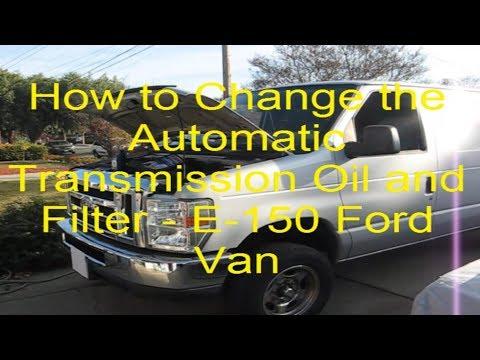







How to Change Transmission Fluid & Filter on a 2004 Ford E-150 (Pan Drop Service)
Step-by-step ATF change with tools, MERCON V fluid capacity, pan bolt torque specs, and safety tips
How to Change Transmission Fluid & Filter on a 2004 Ford E-150 (Pan Drop Service)
Step-by-step ATF change with tools, MERCON V fluid capacity, pan bolt torque specs, and safety tips


🔧 E-150 - Transmission Fluid & Filter Service (Pan Drop)
This service replaces the transmission fluid in the pan and (recommended) the transmission filter by removing the transmission pan. It’s the safest DIY method because it avoids forcing debris through the valve body like some “power flush” machines can.
Difficulty Level: Intermediate | Estimated Time: 2-4 hours
⚠️ Safety & Precautions
- ⚠️ Work on level ground and support your E-150 on jack stands—never rely on a jack alone.
- ⚠️ Transmission fluid can be very hot; let it cool enough to avoid burns.
- ⚠️ Keep the engine OFF while loosening/removing the pan.
- ⚠️ Chock the rear wheels; your E-150 is RWD and can roll.
- ⚠️ Battery disconnect is not required for this service.
🔧 Required Tools
You'll need the following tools for this repair:
- Floor jack (rated 3-ton minimum)
- Jack stands (rated 3-ton minimum)
- Wheel chocks
- Safety glasses
- Nitrile gloves
- Drain pan (at least 10-quart)
- 3/8" drive ratchet
- 3/8" drive extension set
- 10mm socket
- Inch-pound torque wrench (specialty)
- Plastic scraper
- Brake cleaner spray
- Shop towels
- Fluid transfer pump (specialty)
- Long-neck funnel
🔩 Required Parts
HowToo sells all the parts you need for this repair:
- Automatic transmission filter - Qty: 1
- Transmission pan gasket - Qty: 1
- Automatic transmission fluid (MERCON V) - Qty: 6-8 quarts
📋 Before You Begin
- Park on a level surface, set the parking brake, and place wheel chocks behind the rear tires.
- Warm the transmission with a 10–15 minute drive so the fluid drains better, then shut the engine off.
- Raise the front with a floor jack and support with jack stands under the frame; keep the van level if possible for accurate fluid checking.
- Have your new fluid ready: your E-150 typically uses MERCON V. If your dipstick/owner’s manual says MERCON, Ford service practice commonly supersedes to MERCON V.
🔨 Step-by-Step Instructions
Follow these steps in order:
Step 1: Position the drain pan
- Place a drain pan (at least 10-quart) under the transmission pan.
- Put on safety glasses and nitrile gloves.
Step 2: Loosen the pan to drain fluid
- Use a 10mm socket with a 3/8" drive ratchet to loosen the pan bolts.
- Leave two bolts loosely installed on one end of the pan so it can “hinge” down and drain in a controlled stream.
- Loosen slowly—fluid will spill fast.
Step 3: Remove the pan
- Support the pan with one hand and remove the remaining bolts using the 10mm socket and 3/8" drive ratchet.
- Carefully lower the pan into the drain pan.
Step 4: Remove the transmission filter
- Pull the filter straight down by hand. If it’s tight, gently work it loose—do not pry on the transmission case.
- Make sure the old filter seal/grommet comes out with the filter (it can stick in the case).
Step 5: Clean the pan and magnet
- Use a plastic scraper to remove old gasket material from the pan mating surface.
- Clean the pan and magnet with brake cleaner spray and shop towels.
- Light gray “mud” on the magnet is normal; large metal chunks are not.
Step 6: Install the new filter and gasket
- Push the new filter into place firmly by hand.
- Set the new transmission pan gasket on the pan.
Step 7: Reinstall the pan and torque bolts
- Start all pan bolts by hand to avoid cross-threading.
- Tighten bolts evenly in a crisscross pattern using the 10mm socket and 3/8" drive ratchet.
- Use an inch-pound torque wrench (specialty) (a torque wrench applies an exact tightening force) and Torque to 10 Nm (89 in-lbs).
Step 8: Refill the transmission
- Lower the van off the jack stands using the floor jack.
- Add fluid through the transmission dipstick tube using a long-neck funnel (or a fluid transfer pump (specialty) if access is tight).
- Start by adding 4 quarts of MERCON V.
Step 9: Set the final fluid level (critical)
- With the engine running and foot on the brake, shift slowly through P-R-N-D and back to P to fill passages.
- With the engine idling in P, check the dipstick and add fluid in small amounts.
- Bring the transmission up to operating temp (a short drive), then re-check and top off to the correct “HOT” range.
- Don’t overfill—foaming causes shifting issues.
✅ After Repair
- Test drive 10–15 minutes and verify normal shifts.
- Park on level ground, leave the engine idling, and re-check the dipstick; top off if needed.
- Inspect the pan perimeter for leaks.
- Dispose of used fluid properly (most parts stores accept waste oil/ATF).
💰 DIY vs Shop Cost
Shop Cost: ₹6,000-₹12,000 (parts + labor)
DIY Cost: ₹2,500-₹6,000 (parts only)
You Save: ₹3,500-₹6,000 by doing it yourself!
Shop labor rates vary but typically run $100-$150/hour. This repair takes a shop approximately 2-3 hours.
🎯 Ready to get started?
HowToo makes it easy: same-day/2-day shipping on every part, plus all the tools and specialty tools you need! Check out the parts and tools sections below to add everything to your cart.