
















How to Change Engine Oil & Oil Filter on a 2017 Toyota Tacoma
Step-by-step DIY Tacoma oil and filter change with tools, parts list, torque specs, safety tips, and cost savings for 2016, 2017
How to Change Engine Oil & Oil Filter on a 2017 Toyota Tacoma
Step-by-step DIY Tacoma oil and filter change with tools, parts list, torque specs, safety tips, and cost savings for 2016, 2017


🔧 Tacoma - Engine Oil & Filter Change
You’ll be draining the old engine oil, replacing the oil filter cartridge, and refilling with fresh oil. This keeps your engine protected, clean, and running smoothly.
Difficulty Level: Beginner | Estimated Time: 1–1.5 hours
⚠️ Safety & Precautions
- 🛑 Always work on a cool engine to avoid burns from hot oil and metal parts.
- 🛑 Park on solid, level ground; support the truck with jack stands, never only a jack.
- 🛑 Chock (block) the rear wheels so the truck cannot roll.
- 🛑 Wear safety glasses and gloves; engine oil is slippery and can irritate skin.
- 🛑 Keep oil off the front tires and brake components; clean any spills immediately.
- 🛑 Used oil is hazardous waste—dispose of it at a recycling center or shop that accepts waste oil.
- 🛑 No battery disconnection is needed for this job.
🔧 Required Tools
You'll need the following tools for this repair:
- 🛠️ Floor jack (rated 3-ton minimum)
- 🛠️ Jack stands (rated 3-ton minimum, Qty: 2)
- 🛠️ Wheel chocks
- 🛠️ Safety glasses
- 🛠️ Nitrile or mechanic gloves
- 🛠️ Drain pan (at least 8-quart capacity)
- 🛠️ Shop rags or paper towels
- 🛠️ 14mm socket
- 🛠️ 12mm socket
- 🛠️ 3/8" drive ratchet
- 🛠️ 3/8" drive torque wrench
- 🛠️ Oil filter cap wrench 64mm, 14-flute (specialty)
- 🛠️ 3/8" drive extension (3"–6")
- 🛠️ Flathead screwdriver (medium)
- 🛠️ Plastic trim tool
- 🛠️ Small pick tool or dental pick
- 🛠️ Oil funnel
- 🛠️ Measuring cup or marked jug (for used oil amount)
🔩 Required Parts
HowToo sells all the parts you need for this repair:
- 🧩 0W-20 full synthetic engine oil (API SN or newer) - Qty: 6.5 quarts (you will use about 6.1 quarts)
- 🧩 Engine oil filter cartridge kit (with large and small O-rings) - Qty: 1
- 🧩 Oil drain plug crush washer (aluminum) - Qty: 1
- 🧩 Oil filter housing drain plug O-ring - Qty: 1 (often included with filter kit)
- 🧩 Brake cleaner spray - Qty: 1 can (for cleaning oily surfaces)
- 🧩 Disposable gloves - Qty: 1 box
- 🧩 Absorbent pads or cardboard - Qty: as needed
📋 Before You Begin
- Park your Tacoma on a flat, level surface with plenty of space at the front.
- Set the parking brake firmly and place the transmission in gear.
- Place wheel chocks behind the rear tires.
- Gather all tools and parts so you don’t have to crawl out mid-job.
- If the engine was running, let it cool at least 30–45 minutes; slightly warm oil drains better, but parts should be safe to touch.
- Spread cardboard or absorbent pads under the engine area to catch any spills.
🔨 Step-by-Step Instructions
Follow these steps in order:
Step 1: Safely raise and support the front
- Position the floor jack (rated 3-ton minimum) under the front crossmember (center metal beam behind the front bumper).
- Pump the jack until the front wheels are a few inches off the ground.
- Place jack stands (rated 3-ton minimum, Qty: 2) under the frame rails behind the front wheels and slowly lower the truck onto them.
- Give the truck a gentle push to confirm it’s stable. If it rocks, reposition stands.
Step 2: Remove the front skid plate access (if equipped)
- Your TRD Sport has a front skid plate under the engine. You may have a small access door or need to loosen the plate.
- Use the 12mm socket and 3/8" drive ratchet to remove the bolts holding the skid plate access panel or loosen the front of the skid plate to swing it down.
- Set bolts aside in a safe place. Lay them in order you removed.
Step 3: Locate the drain plug and oil filter housing
- Slide under the front of your Tacoma with safety glasses on.
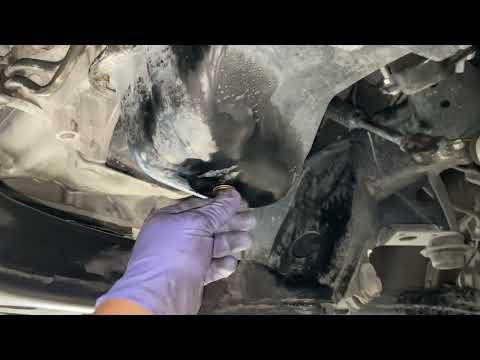
- Find the oil pan at the bottom of the engine; the 14mm drain plug is at the rear of the pan.
- Locate the round, black plastic or metal oil filter housing toward the front of the engine, pointing downward.
Step 4: Drain the engine oil
- Place the drain pan (at least 8-quart capacity) under the drain plug, slightly toward the rear because oil will shoot out at an angle.
- Use the 14mm socket and 3/8" drive ratchet to loosen the drain plug, then finish removing it by hand.
- Let the oil drain fully (this can take 5–10 minutes). Be patient; let it drip.
- While draining, remove the old crush washer from the drain plug and install the new oil drain plug crush washer (aluminum) by hand.
Step 5: Reinstall the drain plug
- Once the oil has slowed to a very slow drip, wipe the oil pan sealing surface with shop rags or paper towels.
- Thread the drain plug with new washer in by hand to avoid cross-threading.
- Use the 14mm socket and 3/8" drive torque wrench to tighten the plug to 40 Nm (30 ft-lbs).
- Wipe any oil around the drain plug with shop rags or paper towels.
Step 6: Drain the oil filter housing
- Move the drain pan (at least 8-quart capacity) under the oil filter housing.
- On the bottom of the housing, there is a small center plug. Use a 3/8" drive ratchet inserted into the square hole (or as designed) to loosen and remove this small plug.
- Some filter kits include a plastic drain tool: push it into the housing to open the internal valve and let oil drain into the pan.
- Allow the housing to drain completely, then remove the plastic drain tool.
Step 7: Remove the oil filter housing
- Install the oil filter cap wrench 64mm, 14-flute (specialty) onto the housing.
- Use the 3/8" drive ratchet and possibly a 3/8" drive extension (3"–6") to loosen the housing counterclockwise.
- Once loose, finish unscrewing it by hand and carefully lower the housing and old filter element into the drain pan (at least 8-quart capacity).
Step 8: Replace the filter element and O-rings
- Pull the old filter cartridge straight out of the housing and discard it.
- Use a small pick tool or dental pick to carefully remove the large O-ring from the outside of the housing and the small O-ring from the center drain plug. Do not scratch the plastic.
- Lightly coat the new large and small O-rings from the engine oil filter cartridge kit (with large and small O-rings) with a bit of fresh engine oil using your finger.
- Install the new small O-ring onto the drain plug and the new large O-ring into the correct groove on the housing (match the position of the old one).
- Push the new filter cartridge into the housing until it seats fully.
Step 9: Reinstall the filter housing and center plug
- Wipe the mating surface on the engine where the housing screws in with shop rags or paper towels.
- Start threading the housing in by hand to avoid cross-threading.
- Use the oil filter cap wrench 64mm, 14-flute (specialty) and 3/8" drive torque wrench to tighten the housing to 25 Nm (18 ft-lbs).
- Reinstall the small center drain plug and tighten it with the 3/8" drive ratchet to 10 Nm (7 ft-lbs).
- Clean any spilled oil with brake cleaner spray and shop rags or paper towels.
Step 10: Reinstall skid plate / access panel
- Lift the skid plate or access door back into position.
- Install the bolts by hand to avoid cross-threading.
- Use the 12mm socket and 3/8" drive ratchet to tighten them snugly; do not overtighten (Toyota does not require high torque here).
Step 11: Lower the truck
- Use the floor jack (rated 3-ton minimum) to raise the front slightly and remove the jack stands (rated 3-ton minimum, Qty: 2).
- Lower the truck fully to the ground and remove the wheel chocks from the rear wheels.
Step 12: Add new engine oil
- Open the hood and remove the engine oil fill cap on top of the engine.
- Place the oil funnel in the fill hole.
- Pour in about 5.8 quarts of 0W-20 full synthetic engine oil (API SN or newer) slowly to avoid spills.
- Reinstall the oil fill cap by hand.
Step 13: Start the engine and check for leaks
- Sit in the driver’s seat, depress the clutch, and start the engine.
- Let it idle for about 30–60 seconds.
- Turn the engine off.
- Look underneath with safety glasses on and a light: check around the drain plug and oil filter housing for any leaks or drips.
- If you see leaks, slightly tighten the leaking part using the correct socket and re-check.
Step 14: Check and adjust oil level
- Wait about 5 minutes to let the oil drain down into the oil pan.
- Pull out the dipstick, wipe it clean with shop rags or paper towels, reinsert fully, then pull it out again.
- The oil level should be between the low and full marks, ideally near the full mark.
- If it’s low, use the oil funnel to add oil a little at a time (about 0.1–0.2 quart), rechecking the dipstick until it’s right. Total with filter is about 6.1 quarts.
Step 15: Reset the maintenance reminder (if displayed)
- Turn the ignition to ON (engine off).
- Use the steering wheel buttons to go to Menu > Settings > Maintenance Reset or similar wording on your cluster.
- Confirm the reset so the "Maintenance Required" light turns off.
- Wording can vary slightly; follow on-screen prompts.
✅ After Repair
- 🔥 After driving a short trip (5–10 minutes), recheck under the truck for any fresh oil leaks.
- 📏 Re-check the dipstick when the engine is off and has sat a few minutes; top off if needed.
- 🗑️ Pour the used oil from the drain pan (at least 8-quart capacity) into the empty oil containers using the oil funnel and take them, along with the old filter, to a recycling center or local shop that accepts waste oil.
- 📝 Note your mileage and date so you know when the next oil change is due.
💰 DIY vs Shop Cost
Shop Cost: $110–$160 (parts + labor)
DIY Cost: $45–$70 (parts only)
You Save: $65–$90 by doing it yourself!
Shop labor rates vary but typically run $100–$150/hour. This repair takes a shop approximately 0.5–1.0 hours.
🎯 Ready to get started?
HowToo makes it easy: same-day/2-day shipping on every part, plus all the tools and specialty tools you need! Check out the parts and tools sections above to add everything to your cart.