









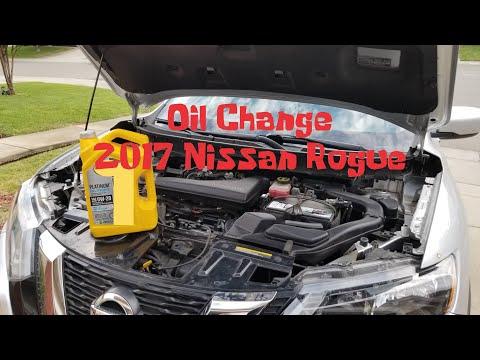







How to Change Engine Oil & Filter on a 2017 Nissan Rogue (Step-by-Step)
Complete DIY oil and filter change guide for the 2017 Nissan Rogue with tools, parts list, torque specs, safety tips, and money-saving advice
How to Change Engine Oil & Filter on a 2017 Nissan Rogue (Step-by-Step)
Complete DIY oil and filter change guide for the 2017 Nissan Rogue with tools, parts list, torque specs, safety tips, and money-saving advice


🔧 Rogue - Engine Oil & Filter Change
You’ll be draining the old oil, replacing the oil filter, and refilling with fresh oil. This keeps your engine in your Rogue protected, running cooler, and extends its life.
Difficulty Level: Beginner | Estimated Time: 1–1.5 hours
⚠️ Safety & Precautions
- 🛑 Make sure the hybrid system is OFF and the dash does NOT show “READY” before working under the car.
- 🔑 Keep the smart key at least 10 feet away so the engine cannot start by itself.
- 🔥 Engine oil and exhaust can get very hot; let the engine cool 20–30 minutes if it was fully warmed up.
- 🧱 Always support the Rogue with jack stands on solid ground; never rely only on a floor jack.
- 👓 Wear safety glasses and gloves; used oil is dirty and can irritate skin and eyes.
- ♻️ Plan ahead to recycle used oil and the old filter at an auto parts store or recycling center.
🔧 Required Tools
You'll need the following tools for this repair:
- 🧰 Floor jack (rated 3-ton minimum)
- 🧰 Jack stands (rated 3-ton minimum) - Qty: 2
- 🧰 Wheel chocks
- 🧰 10mm socket
- 🧰 3/8" drive ratchet
- 🧰 3/8" drive torque wrench (0–75 ft-lbs range)
- 🧰 14mm socket
- 🧰 Oil filter cup wrench (64mm, 14-flute) (specialty)
- 🧰 Drain pan (at least 7-liter capacity)
- 🧰 Plastic or metal funnel
- 🧰 Flathead screwdriver
- 🧰 Rag or shop towels
- 🧰 Nitrile or mechanic gloves
- 🧰 Safety glasses
- 🧰 Small trim tool or pick tool
🔩 Required Parts
HowToo sells all the parts you need for this repair:
- 🧱 Engine oil (0W-20 full synthetic) - Qty: 5 quarts (you will use about 4.3 quarts)
- 🧱 Engine oil filter (spin-on, for 2.0L hybrid) - Qty: 1
- 🧱 Oil drain plug crush washer (aluminum) - Qty: 1
- 🧱 Brake cleaner spray or parts cleaner - Qty: 1
- 🧱 Shop towels - Qty: 1 pack
📋 Before You Begin
- Park the Rogue on a level surface, engage the parking brake, shift to P, and turn off the hybrid system (no “READY” light).
- Keep the smart key away from the vehicle so the engine cannot start automatically.
- Let the engine cool enough so you won’t get burned by hot oil.
- Place wheel chocks behind the rear wheels before lifting the front.
- Lay out tools and parts so everything is within easy reach under the car.
🔨 Step-by-Step Instructions
Follow these steps in order:
Step 1: Lift and Support the Rogue
- Use the floor jack to lift the front of the Rogue at the front jacking point (center front crossmember behind the bumper).
- Place jack stands under the pinch welds on both sides, behind the front wheels.
- Lower the Rogue gently onto the jack stands using the floor jack.
- Give the car a small shake to confirm it is stable on the stands.
Step 2: Remove the Lower Engine Cover (Splash Shield)
- Slide the drain pan and your tools under the front of the Rogue.
- Use a 10mm socket and ratchet to remove the bolts holding the front part of the plastic shield.
- Use a flathead screwdriver or trim tool to pop out any plastic clips if present.
- Lower the shield carefully and set it aside. Keep clips and bolts together.
Step 3: Locate the Drain Plug and Oil Filter
- Locate the oil pan on the bottom of the engine; the drain plug is at the rear or side of the pan.
- Find the oil filter; on this engine it is a spin-on style mounted on the lower side of the engine block, accessible from underneath.
- Position the drain pan so it will catch the stream of oil from the drain plug.
Step 4: Drain the Old Engine Oil
- Use a 14mm socket and ratchet to loosen the drain plug while pressing in slightly to prevent oil from leaking early.
- Once loosened, finish removing the plug by hand and let the oil drain completely into the drain pan.
- Inspect the drain plug and remove the old crush washer using your fingers or a pick tool.
- Wipe the drain plug threads clean with a rag.
Step 5: Install New Crush Washer and Refit Drain Plug
- Install the new crush washer onto the drain plug by hand.
- Thread the drain plug back into the oil pan by hand to avoid cross-threading.
- Use the 14mm socket and ratchet to snug it up.
- Then use the torque wrench with the 14mm socket to tighten: Torque to 34 Nm (25 ft-lbs).
- Wipe any oil off the oil pan area with a rag. Clean metal makes leak checks easy.
Step 6: Remove the Old Oil Filter
- Move the drain pan under the oil filter because more oil will spill.
- Place the oil filter cup wrench (64mm, 14-flute) on the filter and use a ratchet to loosen it.
- Once loose, spin the filter off by hand and tip it upright into the drain pan.
- Wipe the sealing surface (the flat ring where the filter rubber gasket touches) on the engine with a rag so it’s clean and smooth.
- Confirm the old rubber gasket is not stuck to the engine; there should only be bare metal there.
Step 7: Prepare and Install the New Oil Filter
- Take the new filter and pour a small amount of fresh oil into it (if the opening points up enough to hold some oil).
- Use a gloved finger to spread a thin film of fresh oil on the new filter’s rubber gasket.
- Thread the new filter onto the engine by hand until the gasket touches the sealing surface.
- Once the gasket contacts, tighten the filter by hand an additional 2/3 to 3/4 turn. If you use the cup wrench, do not overtighten: Torque to about 17 Nm (13 ft-lbs).
- Wipe off any spilled oil around the filter with a rag.
Step 8: Reinstall the Lower Engine Cover
- Lift the plastic splash shield back into position under the engine.
- Install any plastic clips by hand, then push them fully in using your fingers or a flathead screwdriver.
- Use the 10mm socket and ratchet to reinstall and snug the bolts. These just need to be snug, not extremely tight.
Step 9: Lower the Vehicle
- Use the floor jack to lift the front slightly off the jack stands.
- Remove the jack stands from both sides.
- Lower the Rogue carefully to the ground with the floor jack.
- Remove the wheel chocks.
Step 10: Add New Engine Oil
- Open the hood and secure it with the prop rod.
- Locate the oil filler cap on top of the engine (usually marked “Engine Oil” or with an oil can symbol) and remove it by hand.
- Place the funnel in the filler opening.
- Pour in about 4.0 quarts of 0W-20 full synthetic oil through the funnel.
- Reinstall the oil filler cap by hand and snug it.
Step 11: Initial Level Check and Start the Engine
- Pull out the engine oil dipstick, wipe it with a rag, then reinsert it fully and pull it out again to read the level.
- The level will probably be slightly below “FULL” because the new filter is still empty.
- Sit in the driver seat with your foot on the brake and press the power button to start the hybrid system (engine may start or may take a moment).
- Let the engine run for about 1–2 minutes to circulate the new oil, then turn the hybrid system OFF completely (no “READY” light).
Step 12: Final Oil Level Check and Top Off
- Wait about 2–3 minutes for oil to drain back to the pan.
- Pull out the dipstick, wipe, reinsert, and check again.
- If the level is below the “FULL” mark, add oil through the funnel in small amounts (about 100–150 ml at a time), checking the dipstick after each addition.
- Bring the level to near the “FULL” line, but do not exceed it.
- Reinstall the dipstick fully and make sure the oil filler cap is tight.
Step 13: Clean Up and Check for Leaks
- Use brake cleaner spray and a rag to clean any oil residue from the oil pan and filter areas.
- Start the hybrid system again and let the engine run while you look underneath.
- Check carefully around the drain plug and the oil filter for any fresh oil seeping out.
- If there are no leaks, you’re done under the car; shut the hybrid system OFF.
✅ After Repair
- 🧪 Check the dipstick again after your first short drive; top off if needed.
- 💡 Reset your maintenance reminder in the dash menu if your Rogue shows one (Settings > Maintenance > Oil and Filter > Reset).
- 📅 Note the mileage and date of the oil change so you know when the next one is due.
- ♻️ Pour used oil into the empty new oil bottles or a sealed container and take it, and the old filter, to a recycling center or auto parts store.
💰 DIY vs Shop Cost
Shop Cost: $90–$150 (parts + labor)
DIY Cost: $35–$70 (parts only)
You Save: $55–$80 by doing it yourself!
Shop labor rates vary but typically run $100–$150/hour. This repair takes a shop approximately 0.5–0.8 hours.
🎯 Ready to get started?
HowToo makes it easy: same-day/2-day shipping on every part, plus all the tools and specialty tools you need! Check out the parts and tools sections below to add everything to your cart.