








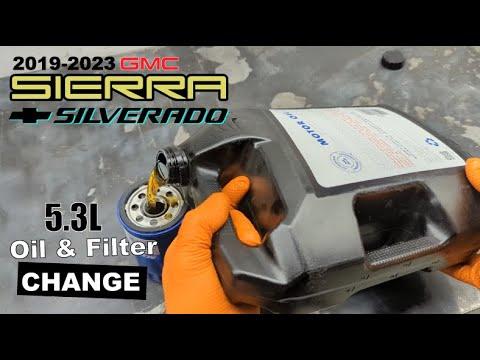







How to Change Engine Oil & Filter on a 2014-2022 GMC Sierra 1500 5.3L (Engine: V8 5.3L)
Step-by-step DIY oil and filter change with tools, parts list, torque specs, safety tips, and reset instructions
How to Change Engine Oil & Filter on a 2014-2022 GMC Sierra 1500 5.3L (Engine: V8 5.3L)
Step-by-step DIY oil and filter change with tools, parts list, torque specs, safety tips, and reset instructions for 2014, 2015, 2016, 2017, 2018, 2019, 2020, 2021


🔧 Sierra 1500 - Engine Oil & Filter Change
You’ll drain the old oil, replace the oil filter, then refill with fresh oil that meets GMC’s specs. This keeps your 5.3L running smoothly and protects it from internal wear.
Difficulty Level: Beginner | Estimated Time: 1–1.5 hours
⚠️ Safety & Precautions
- 🚨 Always support the truck with jack stands if you raise it; never rely only on a jack.
- 🔥 Engine oil and exhaust can get very hot; let the engine cool 15–30 minutes if recently driven.
- 🧯 Keep the area well-ventilated and away from open flames; used oil is flammable.
- 🧤 Wear gloves and safety glasses to protect your skin and eyes from hot oil.
- 🚗 Park on level ground and set the parking brake so the truck cannot roll.
- 🔌 Battery disconnection is not required for this job.
- 🌍 Dispose of used oil and the old filter at a recycling center or auto parts store; never dump it.
🔧 Required Tools
You'll need the following tools for this repair:
- 🛠️ Floor jack (rated 3-ton minimum)
- 🛠️ Jack stands (rated 3-ton minimum, set of 2)
- 🛠️ Wheel chocks
- 🛠️ 13mm socket
- 🛠️ 3/8" drive ratchet
- 🛠️ 3/8" drive torque wrench (5–75 ft-lbs range)
- 🛠️ Oil filter wrench (band, cap, or strap type)
- 🛠️ Large drain pan (at least 10-quart capacity)
- 🛠️ Funnel (medium size)
- 🛠️ Shop rags or paper towels
- 🛠️ Latex or nitrile gloves
- 🛠️ Safety glasses
- 🛠️ Plastic trim tool or flathead screwdriver
- 🛠️ Creeper or mat
🔩 Required Parts
HowToo sells all the parts you need for this repair:
- 🔩 Engine oil (0W-20 full synthetic, dexos1 Gen 2 approved) - Qty: 8 quarts
- 🔩 Engine oil filter (5.3L V8) - Qty: 1
- 🔩 Oil drain plug gasket (crush washer, if equipped) - Qty: 1
- 🔩 Shop towels - Qty: 1 pack
- 🔩 Disposable oil drain bag or container liners - Qty: 1–2
📋 Before You Begin
- 🅿️ Park the Sierra 1500 on level ground, set the parking brake, and place wheel chocks behind the rear wheels.
- 🧊 Let the engine cool slightly; warm oil drains faster, but it should not be scalding hot.
- 📱 Note your current mileage so you can track the next oil change.
- 🧼 Lay cardboard or an old mat under the engine area to catch any spills.
- 📺 Plan to reset the oil life monitor through the driver information center after refilling.
🔨 Step-by-Step Instructions
Follow these steps in order:
Step 1: Safely raise and support the truck (if needed)
- If you want more room, use the floor jack (3-ton) to lift the front of the Sierra 1500 at the front crossmember.
- Place jack stands under the frame rails on both sides and gently lower the truck onto them with the floor jack.
- Make sure the truck is stable by gently pushing the body; it should not move.
- Truck is tall; some people skip jacking.
Step 2: Remove any skid plate or splash shield (if equipped)
- Slide under the front of the truck on a creeper or mat and locate the metal or plastic shield under the engine.
- Use a 13mm socket with the 3/8" ratchet to remove any bolts holding the skid plate.
- If there are plastic clips, gently pry them out with a plastic trim tool or flathead screwdriver.
- Lower the skid plate and set it aside so you can see the oil pan and filter.
Step 3: Position the drain pan
- Locate the oil pan at the bottom of the engine; the drain plug is a bolt at the lowest point, facing the rear or side.
- Place the drain pan under the drain plug, slightly toward the direction the oil will flow (usually rearward).
- Leave extra room; oil can shoot out.
Step 4: Remove the oil fill cap
- Open the hood and locate the oil fill cap on top of the engine cover.
- Twist the oil fill cap counterclockwise by hand and remove it; set it nearby.
- This helps the oil drain faster by letting air in.
Step 5: Drain the old engine oil
- Use a 13mm socket and 3/8" ratchet to loosen the oil drain plug.
- Finish removing the drain plug by hand while holding it firmly so it doesn’t fall into the pan.
- Let the oil drain completely into the drain pan; this can take 5–10 minutes.
- Inspect the drain plug and gasket; replace the drain plug gasket if it looks damaged or crushed.
Step 6: Reinstall and tighten the drain plug
- Once the oil is down to a slow drip, clean the area around the drain hole with a shop rag.
- Reinstall the drain plug by hand to avoid cross-threading.
- Use the 13mm socket and torque wrench to tighten the plug.
- Torque to 25 Nm (18 ft-lbs).
- Do not overtighten; oil pans crack easily.
Step 7: Remove the old oil filter
- Locate the oil filter (it’s a spin-on canister on the lower side of the engine block).
- Position the drain pan under the filter area; some oil will spill when you loosen it.
- Use the oil filter wrench to turn the filter counterclockwise until you can spin it off by hand.
- Carefully lower the filter into the drain pan and let it drain.
- Wipe the filter mounting surface on the engine with a shop rag and make sure the old rubber gasket is not stuck there.
Step 8: Prepare and install the new oil filter
- Take the new oil filter from its box.
- Dip a clean finger in fresh oil and lightly coat the rubber gasket on the new filter; this helps it seal and makes removal easier next time.
- Thread the new filter onto the engine by hand until the gasket first contacts the mounting surface.
- Once the gasket touches, tighten the filter an additional 3/4 turn by hand; use the oil filter wrench only if you cannot grip it well.
- Hand-tight is enough; don’t crush the gasket.
Step 9: Reinstall skid plate or splash shield (if removed)
- Lift the skid plate or shield back into position.
- Install the bolts by hand to avoid cross-threading, then tighten them with the 13mm socket and 3/8" ratchet.
- Reinstall any plastic clips using the plastic trim tool or flathead screwdriver.
Step 10: Lower the truck (if raised)
- Use the floor jack to lift the front of the Sierra 1500 slightly off the jack stands.
- Remove the jack stands from under the frame rails.
- Slowly lower the truck to the ground using the floor jack.
Step 11: Add new engine oil
- Place the funnel into the oil fill opening on top of the engine.
- Pour in about 7 quarts of 0W-20 full synthetic (dexos1 Gen 2) oil slowly.
- Wait a minute, then check the dipstick: pull it out, wipe it, reinsert fully, then pull it again to read the level.
- Add oil in small amounts until the oil level is at the “FULL” mark on the dipstick; total should be around 8 quarts with filter.
- Remove the funnel and reinstall the oil fill cap by hand.
Step 12: Start the engine and check for leaks
- Start the engine and let it idle for 1–2 minutes.
- Look underneath with a light at the drain plug and oil filter areas to make sure there are no leaks.
- Shut off the engine and wait 3–5 minutes for the oil to settle back into the pan.
- Recheck the oil level on the dipstick and top up if needed so it’s right at the “FULL” mark.
Step 13: Reset the oil life monitor
- Turn the ignition to ON (engine can be running or not).
- Use the steering wheel buttons to navigate the Driver Information Center.
- Follow this path: Home > Info > Oil Life.
- Press and hold the checkmark/OK button when “Oil Life” is displayed until it resets to 100%.
- Check your owner’s manual if menus look different.
Step 14: Clean up and dispose of used oil
- Pour the used oil from the drain pan into sealed containers using the funnel.
- Place the old oil filter in a plastic bag to prevent drips.
- Take the used oil and filter to a recycling center or auto parts store that accepts waste oil.
- Wipe any spilled oil from under the truck and the driveway with shop rags.
✅ After Repair
- 🧪 After driving for 5–10 minutes, park on level ground and recheck the oil level; top off if it’s below “FULL”.
- 👂 Listen for any unusual noises from the engine; it should sound normal and smooth.
- 🧾 Check under the truck and around the oil filter and drain plug again after your first drive for any signs of leaks.
- 📅 Note your mileage and date so you know when the next oil change is due.
💰 DIY vs Shop Cost
Shop Cost: $100–$160 (parts + labor)
DIY Cost: $45–$80 (parts only)
You Save: $55–$80 by doing it yourself!
Shop labor rates vary but typically run $100–$150/hour. This repair takes a shop approximately 0.7–1.0 hours.
🎯 Ready to get started?
HowToo makes it easy: same-day/2-day shipping on every part, plus all the tools and specialty tools you need! Check out the parts and tools sections below to add everything to your cart.
Guide for Engine Oil Filter replace for these GMC vehicles
| Year Make Model | Sub Model | Engine | Body Style |
|---|---|---|---|
| 2022 GMC Sierra 1500 | - | V8 5.3L | - |
| 2022 GMC Sierra 1500 | - | V8 6.2L | - |
| 2021 GMC Sierra 1500 | - | V6 4.3L | - |
| 2021 GMC Sierra 1500 | - | V8 5.3L | - |
| 2021 GMC Sierra 1500 | - | V8 6.2L | - |
| 2020 GMC Sierra 1500 | - | V6 4.3L | - |
| 2020 GMC Sierra 1500 | - | V8 5.3L | - |
| 2020 GMC Sierra 1500 | - | V8 6.2L | - |
| 2019 GMC Sierra 1500 | - | V6 4.3L | - |
| 2019 GMC Sierra 1500 | - | V8 5.3L | - |
| 2019 GMC Sierra 1500 | - | V8 6.2L | - |
| 2018 GMC Sierra 1500 | - | V6 4.3L | - |
| 2018 GMC Sierra 1500 | - | V8 5.3L | - |
| 2018 GMC Sierra 1500 | - | V8 6.2L | - |
| 2017 GMC Sierra 1500 | - | V6 4.3L | - |
| 2017 GMC Sierra 1500 | - | V8 5.3L | - |
| 2017 GMC Sierra 1500 | - | V8 6.2L | - |
| 2016 GMC Sierra 1500 | - | V6 4.3L | - |
| 2016 GMC Sierra 1500 | - | V8 5.3L | - |
| 2016 GMC Sierra 1500 | - | V8 6.2L | - |
| 2015 GMC Sierra 1500 | - | V6 4.3L | - |
| 2015 GMC Sierra 1500 | - | V8 5.3L | - |
| 2015 GMC Sierra 1500 | - | V8 6.2L | - |
| 2014 GMC Sierra 1500 | - | V6 4.3L | - |
| 2014 GMC Sierra 1500 | - | V8 5.3L | - |
| 2014 GMC Sierra 1500 | - | V8 6.2L | - |