









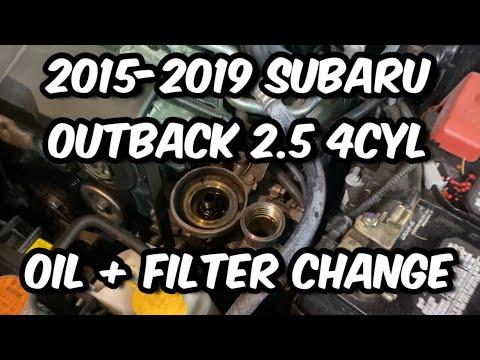







How to Change Engine Oil and Replace the Oil Filter on a 2015 Subaru Outback
Step-by-step DIY guide with required tools, oil capacity, torque specs, and leak-check tips
How to Change Engine Oil and Replace the Oil Filter on a 2015 Subaru Outback
Step-by-step DIY guide with required tools, oil capacity, torque specs, and leak-check tips


🔧 Outback - Engine Oil & Oil Filter Change
Changing the oil and filter keeps your engine lubricated and helps it last longer. On your Outback, the oil drains from the bottom of the engine, and the oil filter is up top in the engine bay, which makes it beginner-friendly.
Difficulty Level: Beginner | Estimated Time: 0.8-1.5 hours
⚠️ Safety & Precautions
- ⚠️ Work on level ground and set the parking brake.
- ⚠️ Let the engine cool 20-30 minutes; hot oil can burn you.
- ⚠️ If you lift the car, support it with jack stands (never rely on a jack alone).
- ⚠️ Keep oil off the exhaust and belts; wipe spills right away.
- ⚠️ Battery disconnect is not required for this job.
🔧 Required Tools
You'll need the following tools for this repair:
- Floor jack (rated 3-ton minimum)
- Jack stands (rated 3-ton minimum)
- Wheel chocks
- Safety glasses
- Nitrile gloves
- Drain pan (7-quart minimum)
- Funnel
- Shop rags
- Metric socket set
- 17mm socket
- 12mm socket
- 3/8" ratchet
- Torque wrench (10-80 ft-lbs range)
- Flat trim clip remover
- Oil filter wrench (65mm, 14-flute)
- Fluid measuring container (6-quart minimum)
🔩 Required Parts
HowToo sells all the parts you need for this repair:
- Engine oil (0W-20 full synthetic) - Qty: 6 quarts
- Engine oil filter - Qty: 1
- Oil drain plug crush washer - Qty: 1
📋 Before You Begin
- 🧰 Warm the engine for 2-3 minutes, then shut it off. This helps oil drain faster.
- 🧰 Park on level ground, set the parking brake, and place wheel chocks behind the rear wheels.
- 🧰 Open the hood and remove the oil fill cap (this helps the crankcase vent while draining).
- 🧰 If equipped, plan to remove the lower engine under cover (a plastic splash shield).
🔨 Step-by-Step Instructions
Follow these steps in order:
Step 1: Lift and support the front (if needed)
- Use wheel chocks behind the rear wheels.
- Use a floor jack at the front center jack point and raise the front enough to work.
- Place jack stands under the front pinch welds and lower the car onto them.
- Give the car a small shake to confirm stable.
Step 2: Remove the lower engine under cover (if equipped)
- Use a 12mm socket and 3/8" ratchet to remove the bolts holding the cover.
- Use a flat trim clip remover to pop out any plastic clips (a trim clip remover is a fork-shaped pry tool that removes push-clips without breaking them).
- Set the cover and hardware aside in a small pile so nothing gets lost.
Step 3: Drain the old engine oil
- Place the drain pan under the oil pan drain plug.
- Use a 17mm socket and 3/8" ratchet to loosen the drain plug.
- Finish removing the plug by hand and let the oil drain completely (usually 5-10 minutes).
- Remove the old crush washer from the drain plug and install the new crush washer.
Step 4: Reinstall and torque the drain plug
- Thread the drain plug in by hand first to avoid cross-threading.
- Use a torque wrench with a 17mm socket to tighten the drain plug: Torque to 42 Nm (31 ft-lbs).
- Wipe the area clean with shop rags.
Step 5: Remove the oil filter (top of engine)
- Locate the oil filter at the top front area of the engine.
- Place shop rags around the filter area to catch drips.
- Try to loosen by hand first. If it’s too tight, use an oil filter wrench (65mm, 14-flute).
- Unscrew the filter and keep it upright as you lift it out to minimize spills.
- Check that the old rubber gasket isn’t stuck to the engine (it should come off with the old filter).
Step 6: Install the new oil filter
- Put a small dab of fresh oil on your fingertip and lightly oil the new filter’s rubber gasket.
- Screw the new filter on by hand until the gasket touches the engine surface.
- Tighten by hand an additional 2/3 turn (do not use a wrench to tighten unless the filter instructions specifically call for it).
- Hand-tight is usually perfect for spin-on filters.
Step 7: Refill with new oil
- Insert a funnel into the oil fill hole.
- Pour in 0W-20 full synthetic oil.
- Target fill amount is typically about 5.1 quarts with a filter change; use your fluid measuring container so you don’t overfill.
- Reinstall the oil fill cap.
Step 8: Start, check for leaks, and set the level
- Start the engine and let it idle for 30-60 seconds.
- Look under the car for leaks at the drain plug and check around the oil filter area.
- Shut the engine off and wait 5 minutes.
- Use the dipstick to check oil level, then add oil in small amounts if needed (a little goes a long way).
Step 9: Reinstall the under cover and lower the car
- Reinstall the lower cover using the flat trim clip remover (for clips) and 12mm socket (for bolts).
- Use the floor jack to lift slightly, remove jack stands, then lower the car.
- Do a final dipstick check on level ground and top off if necessary.
✅ After Repair
- ✅ Verify the oil level is between the dipstick marks (near the top mark is ideal).
- ✅ Check for any drips after a short 5-10 minute drive.
- ✅ Dispose of used oil and the old filter at a recycling center or auto parts store that accepts oil.
- ✅ Reset the maintenance reminder if it’s on (if your Outback displays one).
💰 DIY vs Shop Cost
Shop Cost: $90-$160 (parts + labor)
DIY Cost: $35-$70 (parts only)
You Save: $55-$90 by doing it yourself!
Shop labor rates vary but typically run $100-$150/hour. This repair takes a shop approximately 0.7-1.0 hours.
🎯 Ready to get started?
HowToo makes it easy: same-day/2-day shipping on every part, plus all the tools and specialty tools you need! Check out the parts and tools sections below to add everything to your cart.