















How to Change Engine Oil and Filter on a 2022 Toyota Tacoma 3.5L
Step-by-step DIY oil and filter service with tools, parts list, torque specs, safety tips, and cost savings for 2017, 2018, 2019, 2020, 2021, 2022, 2023
How to Change Engine Oil and Filter on a 2022 Toyota Tacoma 3.5L
Step-by-step DIY oil and filter service with tools, parts list, torque specs, safety tips, and cost savings for 2017, 2018, 2019, 2020, 2021, 2022, 2023


🔧 Tacoma - Engine Oil & Filter Change
You’ll drain the old engine oil, replace the oil filter, install a new drain plug washer, and refill with fresh oil that meets Toyota specs. This keeps your 3.5L running smoothly and protects it from wear.
Difficulty Level: Beginner | Estimated Time: 1–1.5 hours
⚠️ Safety & Precautions
- ⚠️ Always work on a cool or only slightly warm engine to avoid burns from hot oil.
- ⚠️ Park on level ground, set the parking brake, and keep the transmission in Park.
- ⚠️ If you raise the front of the truck, always support it with jack stands under the frame; never rely on the jack alone.
- ⚠️ Wear safety glasses and gloves; used oil can irritate skin and eyes.
- ⚠️ Keep rags handy; spilled oil can make the floor very slippery.
- ⚠️ Dispose of used oil and the old filter at a proper recycling center or parts store, not in the trash or drain.
🔧 Required Tools
You'll need the following tools for this repair:
- 🛠️ Floor jack (rated 3-ton minimum)
- 🛠️ Jack stands (rated 3-ton minimum)
- 🛠️ Wheel chocks
- 🛠️ Socket wrench (3/8" drive)
- 🛠️ Socket wrench (1/2" drive)
- 🛠️ 10mm socket
- 🛠️ 12mm socket
- 🛠️ 14mm socket
- 🛠️ Torque wrench (3/8" or 1/2" drive)
- 🛠️ Oil filter cap wrench 64mm, 14-flute (specialty)
- 🛠️ Oil filter drain tool or Toyota filter drain adapter (specialty)
- 🛠️ Large drain pan (at least 8-quart capacity)
- 🛠️ Funnel (medium)
- 🛠️ Flathead screwdriver (small)
- 🛠️ Trim clip removal tool
- 🛠️ Shop rags or paper towels
- 🛠️ Nitrile gloves
- 🛠️ Safety glasses
- 🛠️ Creeper or mat
🔩 Required Parts
HowToo sells all the parts you need for this repair:
- 🔩 0W-20 full synthetic engine oil (API SN Plus or newer) - Qty: 6.2 quarts
- 🔩 Engine oil filter cartridge (2GR-FKS) - Qty: 1
- 🔩 Oil filter housing O-ring - Qty: 1
- 🔩 Oil filter drain plug O-ring (small) - Qty: 1
- 🔩 Engine oil drain plug crush washer - Qty: 1
- 🔩 Brake cleaner spray - Qty: 1
- 🔩 Disposable shop towels - Qty: 1 pack
📋 Before You Begin
- Park the Tacoma on level ground, set the parking brake, and place wheel chocks behind the rear wheels.
- You can do this without jacking the truck, but lifting the front slightly with a floor jack and supporting it on jack stands gives more room.
- Run the engine for 3–5 minutes, then shut it off. Slightly warm oil drains faster but is still safe to handle.
- Gather all tools and parts so you’re not crawling out mid-job.
- No battery disconnect or scan tool is required for this job.
🔨 Step-by-Step Instructions
Follow these steps in order:
Step 1: Safely raise and support the truck (if needed)
- Position the floor jack (rated 3-ton minimum) under the front crossmember and lift until the front wheels are slightly off the ground.
- Place jack stands (rated 3-ton minimum) under the frame rails on both sides and slowly lower the truck onto them.
- Leave the jack in place as a backup, but do not rely on it alone.
- Give the truck a firm shake to confirm stability.
Step 2: Remove the front skid plate to access the oil pan
- The TRD Off-Road skid plate covers the oil pan and filter area.
- Use a 12mm socket and socket wrench (3/8" drive) to remove the four front skid plate bolts.
- Support the skid plate with one hand; it will drop slightly as bolts come out.
- Remove any rear skid plate bolts or clips with the 12mm socket and trim clip removal tool if present.
- Set the skid plate aside where it won’t get stepped on.
Step 3: Locate the drain plug and filter housing
- Slide under the engine on your creeper or mat.
- Find the oil pan: a black metal pan at the bottom of the engine with a plug at the rear or side.
- The drain plug is a hex-head bolt; on this engine, it uses a 14mm socket.
- The oil filter housing is a round plastic or metal canister toward the front of the pan (cartridge style), pointing downward.
Step 4: Drain the engine oil
- Position the large drain pan (at least 8-quart capacity) under the drain plug, offset slightly toward where the oil will flow.
- Use a 14mm socket and socket wrench (3/8" drive) to loosen the drain plug, then finish removing it by hand.
- Let the oil drain completely; this can take 5–10 minutes.
- Remove the old crush washer from the drain plug and wipe the plug with shop rags or paper towels.
- Install the new engine oil drain plug crush washer onto the plug.
- Once the flow has slowed to a drip, reinstall the drain plug by hand to avoid cross-threading.
- Use the 14mm socket and torque wrench (3/8" or 1/2" drive) to tighten the drain plug to 39 Nm (29 ft-lbs).
- Do not overtighten; the pan threads can strip.
Step 5: Drain the oil filter housing
- Move the large drain pan (at least 8-quart capacity) under the oil filter housing.
- On the bottom center of the housing there is a small plastic drain plug (for the cartridge filter).
- Use a socket wrench (3/8" drive) with the oil filter drain tool or Toyota filter drain adapter (specialty) to gently press into or engage the housing drain port (design varies slightly).
- Once engaged, oil will begin to drain from the housing into the pan.
- Allow the housing to drain fully (a few minutes).
- Remove the drain tool and the small drain plug if your design uses a removable plug, using a flathead screwdriver (small) carefully if needed.
Step 6: Remove the oil filter housing
- Place the oil filter cap wrench 64mm, 14-flute (specialty) over the filter housing.
- Attach a socket wrench (3/8" drive) to the cap wrench.
- Turn counterclockwise to loosen the housing. It may be tight from the factory.
- Once loose, spin it off by hand and lower it straight down into the large drain pan (at least 8-quart capacity) to catch any remaining oil.
- Pull the old filter cartridge out of the housing and let it drain.
Step 7: Replace the filter and O-rings
- On the housing, locate the large O-ring near the top groove. Carefully remove it with a flathead screwdriver (small), taking care not to scratch the plastic/metal.
- Remove the small O-ring from the housing’s drain plug (if separate) the same way.
- Wipe the housing clean with shop rags or paper towels.
- Install the new small O-ring on the drain plug and the new large O-ring in the correct groove on the housing.
- Lightly coat both new O-rings with clean engine oil using your finger; this helps them seal and prevents tearing.
- Insert the new engine oil filter cartridge (2GR-FKS) into the housing; it will only fit one way.
- Reinstall the filter housing drain plug if removed, tightening it snugly with the socket wrench (3/8" drive). Do not overtighten.
Step 8: Reinstall the oil filter housing
- Wipe the mounting surface on the engine where the housing seals.
- Carefully thread the housing back onto the engine by hand to avoid cross-threading.
- Once hand-tight, place the oil filter cap wrench 64mm, 14-flute (specialty) back on the housing and attach the torque wrench (3/8" or 1/2" drive).
- Tighten the housing to 25 Nm (18 ft-lbs).
- Stop when torque is reached; overtightening can crack the housing.
Step 9: Clean the area and reinstall the skid plate
- Spray a little brake cleaner spray on any oily surfaces around the drain plug and filter housing, then wipe with shop rags or paper towels. This helps you spot leaks later.
- Lift the skid plate back into position under the front of the truck.
- Install the front skid plate bolts by hand, then tighten them with a 12mm socket and socket wrench (3/8" drive).
- Install and tighten any rear bolts or clips using the 12mm socket and trim clip removal tool as needed.
- Tighten skid plate bolts snugly; do not strip them. Typical torque is around 39 Nm (29 ft-lbs) if you want to use the torque wrench.
Step 10: Lower the truck
- Use the floor jack (rated 3-ton minimum) to lift the front of the truck slightly off the jack stands (rated 3-ton minimum).
- Remove the jack stands and slowly lower the truck to the ground.
- Remove the wheel chocks.
Step 11: Refill the engine with fresh oil
- Open the hood using the interior hood release, then the safety catch under the front edge of the hood.
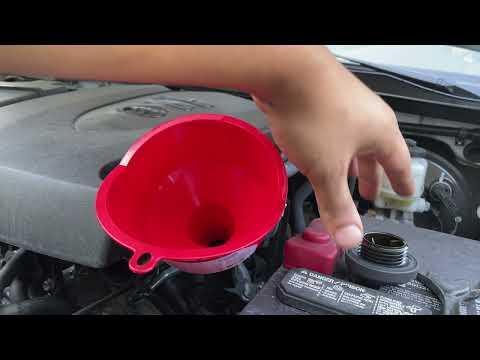
- Locate the oil filler cap on top of the engine, labeled “SAE 0W-20”.
- Unscrew the cap by hand.
- Insert the funnel (medium) into the opening.
- Pour in about 5.5 quarts of 0W-20 full synthetic engine oil (API SN Plus or newer) to start.
- Reinstall the oil filler cap by hand.
Step 12: Start the engine and check for leaks
- Start the engine and let it idle for about 30–60 seconds.
- While it idles, look underneath with a flashlight for leaks around the drain plug and filter housing.
- If you see any drips, shut off the engine and gently snug the leaking part using the correct socket and socket wrench (3/8" drive).
- Shut the engine off and wait at least 5 minutes so the oil can drain back into the pan.
Step 13: Check and top off oil level
- Locate the engine oil dipstick, pull it out, and wipe it clean with shop rags or paper towels.
- Reinsert the dipstick fully, then pull it out again to read the level.
- The oil should be between the “Low” and “Full” marks, ideally closer to “Full.”
- If it’s low, remove the filler cap and add oil in small amounts (about 0.2–0.3 quart at a time) using the funnel (medium), then recheck.
- Total capacity with filter is about 6.2 quarts, but always go by the dipstick.
Step 14: Reset the maintenance reminder
- Turn the ignition to ON (engine off) with the push button or key.
- Use the steering wheel buttons to navigate the multi-information display to the settings or gear icon.
- Go to Menu > Settings > Maintenance Reset or similar wording, then select engine oil and confirm reset.
- Names vary slightly, but follow on-screen prompts.
✅ After Repair
- Check under the truck again after your first short drive (5–10 km) for any fresh oil spots around the drain plug, filter housing, or skid plate area.
- Confirm the oil level is still at the proper mark on the dipstick once the engine has cooled and the truck is on level ground.
- Make a note of the mileage and date so you know when the next oil change is due.
- Take your used oil and old filter to a local recycling center or parts store that accepts used oil.
💰 DIY vs Shop Cost
Shop Cost: $120–$180 (parts + labor)
DIY Cost: $45–$80 (parts only)
You Save: $75–$100 by doing it yourself!
Shop labor rates vary but typically run $100–$150/hour. This repair takes a shop approximately 0.7–1.0 hours.
🎯 Ready to get started?
HowToo makes it easy: same-day/2-day shipping on every part, plus all the tools and specialty tools you need! Check out the parts and tools sections above to add everything to your cart.