









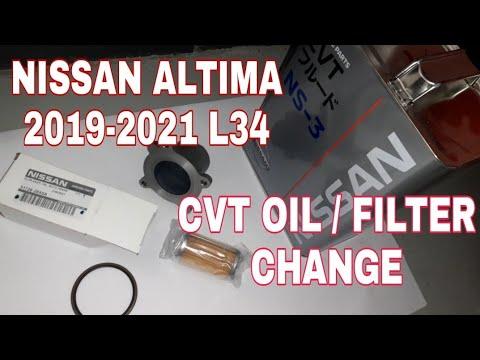







How to Change CVT Transmission Fluid on a 2021 Nissan Altima (Drain & Refill)
Step-by-step Xtronic CVT service with required tools, NS-3 fluid, temp-based level check, and safety tips for 2007, 2008, 2009, 2010, 2011, 2012, 2013, 2014, 2015, 2016, 2017, 2018, 2019, 2020, 2021, 2022, 2023
How to Change CVT Transmission Fluid on a 2021 Nissan Altima (Drain & Refill)
Step-by-step Xtronic CVT service with required tools, NS-3 fluid, temp-based level check, and safety tips for 2007, 2008, 2009, 2010, 2011, 2012, 2013, 2014, 2015, 2016, 2017, 2018, 2019, 2020, 2021, 2022, 2023


🔧 Altima - CVT Fluid Drain & Refill
Your Altima uses an Xtronic CVT, and the fluid level is checked through a level/overflow plug at a specific fluid temperature (there is no traditional dipstick procedure). To avoid underfilling or overfilling (both can damage a CVT), you’ll want the correct CVT fluid and a way to monitor CVT fluid temperature.
Difficulty Level: Advanced | Estimated Time: 1.5-3.0 hours
⚠️ Safety & Precautions
- ⚠️ Work on a level surface and support your Altima with jack stands before going underneath.
- ⚠️ CVT fluid can be very hot; wear gloves and safety glasses.
- ⚠️ The level check is temperature-sensitive; guessing the level can cause CVT damage.
- ⚠️ Keep everything extremely clean—dirt in a CVT is a big problem.
- ⚠️ Battery disconnect is not typically required for a drain/refill, but keep the key fob away from the car to prevent unintended ignition-on events.
🔧 Required Tools
You'll need the following tools for this repair:
- Floor jack (rated 3-ton minimum)
- Jack stands (rated 3-ton minimum)
- Wheel chocks
- Safety glasses
- Nitrile gloves
- Metric socket set (8mm-19mm)
- 3/8" drive ratchet
- Torque wrench (5-80 Nm range)
- Trim clip removal tool
- Drain pan (at least 10-quart)
- Fluid transfer pump (specialty)
- OBD2 scan tool with CVT fluid temperature data (specialty)
- Shop rags
- Brake cleaner spray
🔩 Required Parts
HowToo sells all the parts you need for this repair:
- CVT fluid (Nissan NS-3 equivalent) - Qty: 5-7 quarts
- CVT drain plug crush washer - Qty: 1
- CVT level/overflow plug seal - Qty: 1
📋 Before You Begin
- Park your Altima on level ground, set the parking brake, and chock the rear wheels.
- Plan to monitor CVT fluid temperature with an OBD2 scan tool that can read transmission/CVT temperature (not all basic code readers can).
- Remove any lower engine under-covers as needed to access the CVT pan area.
- Have a clean way to measure what you drain out (a marked drain pan or measuring container) so you can refill the same amount before final level-setting.
🔨 Step-by-Step Instructions
Follow these steps in order:
Step 1: Quick confirmation (so I keep this 100% trim-accurate)
- Do you want a drain-and-refill (most DIY-friendly) or a full fluid exchange?
- Do you have an OBD2 scan tool with CVT fluid temperature (TFT/CVT Temp) data?
- Reply with those 2 answers and I’ll give you the exact torque specs, temp window, and plug locations for your Altima.
Step 2: Lift and access the CVT
- Use a floor jack (rated 3-ton minimum) to lift the front of the car at the proper jacking point.
- Set it down securely on jack stands (rated 3-ton minimum).
- Use a trim clip removal tool and metric socket set (8mm-19mm) with a 3/8" drive ratchet to remove the lower splash shield/under-cover as needed.
Step 3: Identify the fill plug and level/overflow plug first
- Before draining anything, locate the CVT fill plug and confirm you can loosen it using your metric socket set (8mm-19mm) and 3/8" drive ratchet.
- If the fill plug is stuck and you already drained the CVT, you can’t refill—so always confirm fill access first.
- Clean around plugs using brake cleaner spray and shop rags.
Step 4: Drain the CVT fluid
- Position a drain pan (at least 10-quart) under the CVT drain plug.
- Use the correct size from your metric socket set (8mm-19mm) and a 3/8" drive ratchet to remove the drain plug carefully.
- Let the fluid drain fully, then install a new CVT drain plug crush washer.
- Reinstall the drain plug using a torque wrench (5-80 Nm range) and Torque to OEM specification (I’ll provide the exact number once you answer Step 1).
Step 5: Refill the same amount you drained (baseline refill)
- Measure the drained amount (quarts) and write it down.
- Use a fluid transfer pump (specialty) to pump in the same amount of CVT fluid (Nissan NS-3 equivalent) through the fill port.
- Reinstall the fill plug snugly with your metric socket set (8mm-19mm) and 3/8" drive ratchet (final torque comes after level-set).
Step 6: Set the CVT fluid level at the correct temperature
- Connect your OBD2 scan tool with CVT fluid temperature data (specialty) and monitor CVT fluid temp.
- Start the engine and, with your foot on the brake, slowly move the shifter through each gear position and back to Park to circulate fluid.
- With the CVT at the OEM temperature window, remove the level/overflow plug using your metric socket set (8mm-19mm) and 3/8" drive ratchet.
- Add fluid with the fluid transfer pump (specialty) until it flows from the level/overflow opening in the correct way (this behavior is also temperature-dependent).
- Install a new CVT level/overflow plug seal and tighten with a torque wrench (5-80 Nm range) and Torque to OEM specification (I’ll provide the exact number once you answer Step 1).
Step 7: Reinstall under-covers and lower the car
- Reinstall the under-cover using the trim clip removal tool and metric socket set (8mm-19mm) with a 3/8" drive ratchet.
- Remove the jack stands (rated 3-ton minimum) and lower the car using the floor jack (rated 3-ton minimum).
✅ After Repair
- Check for leaks around the drain plug and level/overflow plug with the engine running.
- Test drive 10-15 minutes, then recheck for seepage underneath.
- If you have a scan tool, check for any stored transmission codes after the drive.
💰 DIY vs Shop Cost
Shop Cost: $250-$450 (parts + labor)
DIY Cost: $70-$160 (parts only)
You Save: $180-$290 by doing it yourself!
Shop labor rates vary but typically run $100-$150/hour. This repair takes a shop approximately 1.5-3.0 hours.
🎯 Ready to get started?
HowToo makes it easy: same-day/2-day shipping on every part, plus all the tools and specialty tools you need! Check out the parts and tools sections below to add everything to your cart.