









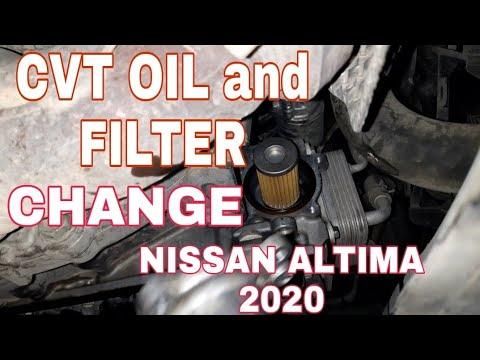







How to Change CVT Transmission Fluid on a 2020 Nissan Altima
Step-by-step drain and fill guide with tools, parts, torque specs, safety tips, and cost savings for DIY owners for 2007, 2008, 2009, 2010, 2011, 2012, 2013, 2014, 2015, 2016, 2017, 2018, 2019, 2020, 2021, 2022, 2023, 2024
How to Change CVT Transmission Fluid on a 2020 Nissan Altima
Step-by-step drain and fill guide with tools, parts, torque specs, safety tips, and cost savings for DIY owners for 2007, 2008, 2009, 2010, 2011, 2012, 2013, 2014, 2015, 2016, 2017, 2018, 2019, 2020, 2021, 2022, 2023, 2024


🔧 Altima - CVT Transmission Fluid Change (Drain & Fill)
You’ll be doing a basic “drain and fill” on the CVT, not a full machine flush. This replaces a good portion of the old fluid and is the safest DIY method for your CVT.
Difficulty Level: Intermediate | Estimated Time: 2-3 hours
⚠️ Safety & Precautions
- ⚠️ CVT fluid gets very hot; let the car cool so the exhaust and transmission are warm, not burning hot.
- ⚠️ Always support the car with jack stands, never trust only a jack.
- ⚠️ Use only Nissan NS-3 CVT fluid; other types can damage the CVT.
- ⚠️ Work on a flat, level surface so the fluid level is accurate.
- ⚠️ Wear safety glasses; fluid can splash when the drain plug is removed.
- ⚠️ Keep the area clean. Dirt or sand in the CVT can cause serious damage.
- ⚠️ Do not over-tighten small bolts; the aluminum case can strip easily.
🔧 Required Tools
You'll need the following tools for this repair:
- 🛠️ Floor jack (rated 3-ton minimum)
- 🛠️ Jack stands (rated 3-ton minimum, set of 4)
- 🛠️ Wheel chocks
- 🛠️ 10mm socket
- 🛠️ Ratchet handle (3/8" drive)
- 🛠️ Short socket extension (3/8" drive)
- 🛠️ 19mm socket
- 🛠️ 8mm hex (Allen) socket
- 🛠️ Torque wrench (inch-lb and ft-lb capable)
- 🛠️ Fluid transfer pump (for CVT fluid)
- 🛠️ Catch pan (at least 10-liter capacity)
- 🛠️ Measuring jug with liter or quart markings
- 🛠️ Flathead screwdriver (medium)
- 🛠️ Trim clip removal tool
- 🛠️ Funnel with long flexible hose
- 🛠️ Infrared thermometer
- 🛠️ OBD2 scan tool with transmission temperature readout (specialty)
- 🛠️ Shop rags
- 🛠️ Nitrile gloves
- 🛠️ Safety glasses
🔩 Required Parts
HowToo sells all the parts you need for this repair:
- 🔩 Nissan NS-3 CVT fluid - Qty: 5 quarts (drain and fill)
- 🔩 CVT drain plug crush washer - Qty: 1
- 🔩 CVT level/overflow plug crush washer - Qty: 1
- 🔩 Brake cleaner spray - Qty: 1
- 🔩 Disposable shop towels - Qty: 1 pack
- 🔩 Latex or nitrile gloves - Qty: 1 box
📋 Before You Begin
- Park the Altima on a flat, level surface. Set the parking brake and chock the rear wheels.
- Let the engine cool down so you can comfortably touch the exhaust and transmission.
- You do not need to disconnect the battery for this job.
- Have your OBD2 scan tool ready if you have one, so you can watch CVT fluid temperature.
- Plan to keep the car level on jack stands at all four corners when checking the final fluid level.
🔨 Step-by-Step Instructions
Follow these steps in order:
Step 1: Raise and support the car safely
- Use the floor jack to lift the front of the car at the front center jacking point (behind the front bumper, under the subframe).
- Place jack stands under the front pinch welds and lower the car onto them.
- Repeat with the rear so the car is supported level on four jack stands.
- Double-check stability by gently rocking the car by hand.
- Never crawl under a car supported only by a jack.
Step 2: Remove the plastic under-cover
- Use the 10mm socket and ratchet to remove the bolts holding the front under-cover.
- Use the trim clip removal tool or flathead screwdriver to pop out any plastic clips.
- Lower the under-cover and set it aside.
Step 3: Identify drain, level, and fill points
- Locate the CVT oil pan at the bottom of the transmission (flat metal pan).
- The drain plug is usually a larger plug near the lowest point of the pan, removed with a 19mm socket.
- The level/overflow plug is on the side of the transmission case, typically removed with an 8mm hex socket.
- The fill point is often a plug on top/side of the transmission or you may fill through a vent using a hose and funnel. On many Altimas, you can access the fill plug from above by removing the air intake ducting if needed.
- Take pictures so you remember locations.
Step 4: Loosen the fill and level plugs first
- From above, locate the CVT fill plug area. Use the 10mm socket and ratchet to remove any air ducting blocking access.
- Crack loose (do not remove yet) the fill plug using the correct socket or hex if present.
- Under the car, use the 8mm hex socket to crack loose (do not fully remove) the level/overflow plug.
- Always confirm you can refill before draining.
Step 5: Drain the old CVT fluid
- Place the catch pan under the CVT drain plug.
- Use the 19mm socket and ratchet to remove the drain plug completely.
- Let the fluid drain fully until it slows to a drip (this may take several minutes).
- While draining, clean the drain plug with a rag and check for metal shavings on the magnet (a light paste is normal; chunks are bad).
- Pour the old fluid from the catch pan into the measuring jug to see exactly how much came out. Note this amount; you’ll put the same amount back in.
Step 6: Reinstall the drain plug
- Install a new drain plug crush washer on the drain plug.
- Thread the drain plug in by hand to avoid cross-threading.
- Use the 19mm socket and torque wrench to tighten the drain plug to 34 Nm (25 ft-lbs).
- Wipe the area clean with a rag and a bit of brake cleaner.
Step 7: Add new CVT fluid through the fill point
- Remove the fill plug completely (if not already removed) using the correct socket/hex.
- Set up your fluid transfer pump or funnel with flexible hose into the fill opening.
- Slowly pump or pour in the same amount of new NS-3 fluid you measured coming out (for most drain and fills, this is usually around 3.5–4.5 quarts, but always go by what you measured).
- Pour slowly to avoid spills and air pockets.
Step 8: Initial level check prep (engine off)
- Reinstall the fill plug finger-tight for now to prevent splashing.
- Under the car, confirm the level/overflow plug is still just “snug” but not fully torqued (you will remove it for final level check).
- Wipe any spilled fluid from the transmission and pan area with shop rags.
Step 9: Warm up the CVT fluid
- Lower the car enough that the wheels are on the ground but keep it on level surface. Alternatively, you can leave it on level jack stands as long as they are very stable.
- Start the engine and with your foot on the brake, slowly move the shifter through all gears: P → R → N → D → L, pausing 3–5 seconds in each, then back to Park.
- Let the engine idle until the CVT fluid reaches about 35–45°C (95–113°F). Use the OBD2 scan tool to monitor transmission temperature if possible.
- If you don’t have a scan tool, use the infrared thermometer on the CVT oil pan; you are aiming for warm but not too hot to touch (roughly 40°C).
- Correct level must be set at this temperature range.
Step 10: Final level adjustment using overflow plug
- With the engine running and the shifter in P, raise the car back up so it’s level on all four jack stands if you had lowered it.
- Position the catch pan under the level/overflow plug.
- Use the 8mm hex socket to slowly remove the level/overflow plug.
- What you see:
- If fluid begins to stream out and then slow to a steady drip: the fluid level is correct when it becomes a small drip.
- If no fluid comes out: level is low; add more fluid through the fill plug.
- If no fluid comes out, stop and go back up top, remove the fill plug with the correct tool, and add fluid in small amounts (about 0.25 quart at a time) using the fluid pump, then recheck at the overflow until it drips steadily.
- Once you have a steady drip, allow it to drip until it becomes a light drip, then reinstall the level/overflow plug with a new crush washer.
- Torque the level/overflow plug using the 8mm hex socket and torque wrench to 7 Nm (62 in-lbs).
Step 11: Tighten the fill plug and clean up
- Up top, reinstall and tighten the fill plug with the correct socket or hex.
- Torque the fill plug to approximately the same as the overflow plug, 7 Nm (62 in-lbs), using the torque wrench.
- Reinstall any air intake ducting you removed using the 10mm socket.
- Spray brake cleaner on the pan and plug areas and wipe clean so you can easily spot any future leaks.
Step 12: Reinstall under-cover and lower the car
- Reinstall the plastic under-cover using the 10mm socket for bolts and the trim clip removal tool or fingers to push clips back in.
- Use the floor jack to lift the car slightly and remove the jack stands, then lower the car fully to the ground.
- Remove the wheel chocks.
✅ After Repair
- Start the engine and let it idle. Check under the car for any leaks at the drain plug, overflow plug, pan, and fill area.
- Shift slowly through all gears again: P → R → N → D → L, pausing a few seconds in each, then back to Park.
- Take a short, gentle test drive (5–10 minutes). Listen for any unusual noises and pay attention to how smoothly the CVT changes ratio.
- After the drive, re-check under the car for any fresh leaks.
- If you have a scan tool, confirm CVT temperature and ensure there are no transmission-related fault codes.
- Consider repeating this drain-and-fill again after a few hundred to a thousand kilometers if the fluid was very dark; each drain dilutes more of the old fluid.
💰 DIY vs Shop Cost
Shop Cost: $220-$380 (parts + labor)
DIY Cost: $80-$140 (parts only)
You Save: $140-$240 by doing it yourself!
Shop labor rates vary but typically run $100-$150/hour. This repair takes a shop approximately 1.0-1.5 hours.
🎯 Ready to get started?
HowToo makes it easy: same-day/2-day shipping on every part, plus all the tools and specialty tools you need! Check out the parts and tools sections above to add everything to your cart.