









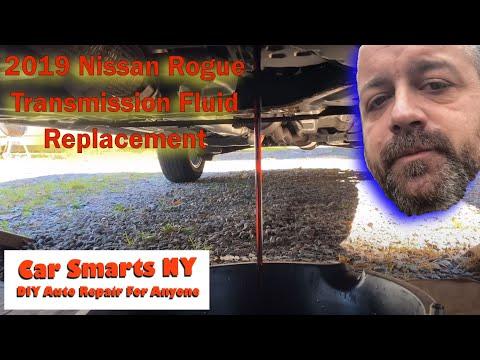






How to Change CVT Transmission Fluid on a 2019 Nissan Rogue
Step-by-step 2019 Rogue CVT drain and fill guide with tools, parts list, torque specs, safety tips, and DIY cost savings
How to Change CVT Transmission Fluid on a 2019 Nissan Rogue
Step-by-step 2019 Rogue CVT drain and fill guide with tools, parts list, torque specs, safety tips, and DIY cost savings


🔧 Rogue - CVT Transmission Fluid Drain & Fill
You’ll be doing a drain-and-fill service on the CVT (continuously variable transmission) fluid in your Rogue. This replaces a good portion of the old fluid and helps protect the transmission from wear and overheating.
Difficulty Level: Advanced (for a first-timer) | Estimated Time: 2–3 hours
⚠️ Safety & Precautions
- ⚠️ Always support the vehicle on jack stands; never rely only on a floor jack.
- ⚠️ Transmission fluid gets hot; let the engine and transmission cool until you can comfortably touch the pan.
- ⚠️ The CVT is a “sealed” system and fluid level is set using a special overflow method at a specific temperature. Take your time and follow the steps exactly.
- ⚠️ Use only Nissan NS-3 CVT fluid. The wrong fluid can damage the CVT.
- ⚠️ Work in a well-ventilated area and keep fluid off belts, exhaust, and tires.
- Battery does not need to be disconnected for this job.
🔧 Required Tools
You'll need the following tools for this repair:
- 🛠️ Floor jack (rated 3-ton minimum)
- 🛠️ Jack stands (rated 3-ton, set of 4)
- 🛠️ Wheel chocks
- 🛠️ 10mm socket
- 🛠️ 19mm socket
- 🛠️ 5mm hex (Allen) socket
- 🛠️ 3/8" drive ratchet
- 🛠️ Torque wrench (5–80 Nm range)
- 🛠️ Flathead screwdriver (medium)
- 🛠️ Drain pan (at least 10-liter capacity)
- 🛠️ Funnel with long flexible hose
- 🛠️ Clean measuring jug (at least 5-liter)
- 🛠️ OBD2 scan tool with CVT fluid temperature reading (specialty)
- 🛠️ Infrared thermometer
- 🛠️ Shop rags
- 🛠️ Nitrile gloves
- 🛠️ Safety glasses
🔩 Required Parts
HowToo sells all the parts you need for this repair:
- 🔩 Nissan NS-3 CVT fluid - Qty: 5–6 liters (drain & fill)
- 🔩 CVT drain plug crush washer - Qty: 1
- 🔩 CVT level/overflow plug O-ring or washer - Qty: 1
- 🔩 Brake cleaner spray - Qty: 1
- 🔩 Shop towels / absorbent pads - Qty: 1 pack
📋 Before You Begin
- Park your Rogue on a level, solid surface. Set the parking brake and chock the rear wheels.
- Make sure the transmission is at normal operating temperature, then let the vehicle cool until the pan is warm, not hot. Warm fluid drains better than cold.
- Plan to keep the vehicle as level as possible when on jack stands. This is important for correct fluid level.
- Have your OBD2 scan tool ready to read CVT fluid temperature later when you set the level.
🔨 Step-by-Step Instructions
Follow these steps in order:
Step 1: Safely raise and support the Rogue
- Use the floor jack on the front center jacking point to lift the front of the Rogue.
- Place jack stands under the factory pinch welds on both sides and slowly lower the vehicle onto them.
- If possible, lift the rear slightly with the floor jack and support with jack stands so the vehicle sits level front-to-rear.
- Verify stability by gently shaking the vehicle before going underneath.
Step 2: Remove the lower splash shield
- Use the 10mm socket and ratchet to remove the bolts holding the plastic splash shield under the engine/transmission.
- Use the flathead screwdriver to carefully pry out any plastic clips.
- Set the shield and hardware aside in order. Lay clips in removal order.
Step 3: Locate the CVT drain and level plugs
- Under the vehicle, find the aluminum transmission pan (not the engine oil pan).
- The CVT drain plug is a larger hex-head bolt near the bottom rear of the pan, usually for a 19mm socket.
- The level/overflow plug is a smaller internal hex plug (for a 5mm hex socket) in a tube near the center of the pan.
- Wipe both plugs clean now.
Step 4: Measure existing fluid out (very important)
- Position the drain pan under the CVT drain plug.
- Use the 19mm socket and ratchet to loosen and remove the CVT drain plug; let the fluid drain completely.
- After flow slows to a drip, carefully pour the used fluid from the drain pan into your measuring jug to see exactly how much came out.
- Write this amount down. Match this amount when refilling.
Step 5: Reinstall drain plug with new washer
- Clean the drain plug with a rag and install the new drain plug crush washer.
- Thread the plug in by hand to avoid cross-threading.
- Use the 19mm socket and torque wrench to tighten the drain plug to 34 Nm (25 ft-lbs).
- Wipe the area clean with a rag and a little brake cleaner.
Step 6: Remove the CVT fill plug
- On this CVT, the fill is usually done through a plug on the top of the transmission or via the vent/fill opening reachable from above.
- Open the hood and locate the CVT area just below the air intake; look for a small cap or plug on top of the transmission case.
- If there is a removable plug, use the appropriate 10mm socket or flathead screwdriver to loosen and remove it.
- Do not remove any sensor connectors.
Step 7: Add new CVT fluid (initial fill)
- Insert the funnel with flexible hose into the CVT fill opening.
- Pour in the same amount of Nissan NS-3 CVT fluid that you measured coming out (for example, if 4.2 liters came out, pour in 4.2 liters).
- Pour slowly to avoid spills and air pockets.
- Leave the funnel in place for now in case you need to add more later.
Step 8: Warm up the CVT fluid for level check
- With the vehicle still safely on jack stands, start the engine.
- Keep your foot on the brake and move the shifter through all positions: P → R → N → D → L, pausing 3–5 seconds in each, then back to P.
- Connect your OBD2 scan tool and select transmission or CVT data to view CVT fluid temperature.
- Let the engine idle until CVT fluid temperature reaches about 35–45°C (95–113°F).
Step 9: Set fluid level using the overflow plug
- With the engine idling and CVT temperature in the 35–45°C range, go under the vehicle carefully.
- Place the drain pan under the level/overflow plug.
- Use the 5mm hex socket and ratchet to slowly remove the overflow plug.
- If fluid runs out in a small steady stream, wait until it slows to a drip. This means the level is correct.
- If no fluid comes out, use the funnel with hose to slowly add a small amount (100–200 ml at a time) of NS-3 at the fill opening, checking at the overflow again until a small stream appears and then reduces to a drip.
- Once at a drip, install a new overflow plug O-ring/washer on the plug, thread it in by hand, then tighten with the 5mm hex socket and torque wrench to 7 Nm (62 in-lbs).
Step 10: Final checks and clean-up underneath
- With the engine still idling, check the drain plug and overflow plug areas for leaks using a light and shop rags.
- If dry, shut the engine off.
- Reinstall the lower splash shield using the 10mm socket and any clips you removed.
- Use the floor jack to lift the vehicle slightly, remove the jack stands, and carefully lower the Rogue to the ground.
Step 11: Short test drive
- Start the engine, shift through all gears again, then go for a short, gentle drive (10–15 minutes).
- Check that shifts feel smooth, with no shuddering or slipping.
- Park on level ground, leave the engine running for a couple of minutes, then shut off.
- Look underneath for any signs of fresh fluid leaks.
✅ After Repair
- Monitor how the transmission behaves over the next few days: it should feel smooth and consistent.
- Check the parking spot for any new fluid spots, especially after longer drives.
- If you notice slipping, harsh operation, or warning lights, avoid hard driving and have the CVT professionally checked.
- Used CVT fluid is hazardous waste; take it to a recycling center or shop that accepts used oil/ATF.
💰 DIY vs Shop Cost
Shop Cost: $260–$400 (parts + labor)
DIY Cost: $90–$150 (parts only, depending on fluid price)
You Save: $170–$250 by doing it yourself!
Shop labor rates vary but typically run $100–$150/hour. This repair takes a shop approximately 1.5–2.0 hours.
🎯 Ready to get started?
HowToo makes it easy: same-day/2-day shipping on every part, plus all the tools and specialty tools you need! Check out the parts and tools sections above to add everything to your cart.
Guide for Automatic Transmission Fluid replace for these Nissan vehicles
| Year Make Model | Sub Model | Engine | Body Style |
|---|