









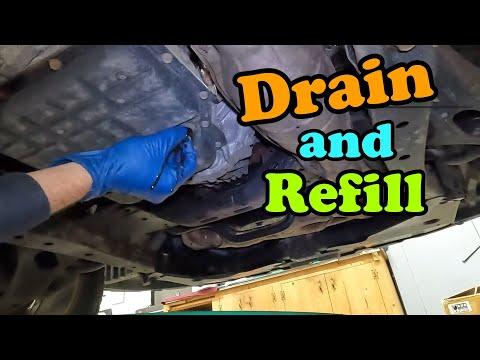







How to Change CVT Transmission Fluid on a 2016 Subaru Legacy (Drain & Refill Guide)
Step-by-step CVT drain-and-refill with required CVTF-II fluid, tools, fluid temperature check, and torque specs for 2010, 2011, 2012, 2013, 2014, 2015, 2016, 2017, 2018, 2019
How to Change CVT Transmission Fluid on a 2016 Subaru Legacy (Drain & Refill Guide)
Step-by-step CVT drain-and-refill with required CVTF-II fluid, tools, fluid temperature check, and torque specs for 2010, 2011, 2012, 2013, 2014, 2015, 2016, 2017, 2018, 2019


🔧 Legacy - CVT Transmission Fluid Drain & Refill
This is a drain-and-refill service for the CVT (not a power flush). You’ll drain the old CVT fluid, refill with the correct Subaru CVT fluid, then set the fluid level using the level/overflow plug at a specific fluid temperature.
Difficulty Level: Intermediate | Estimated Time: 1.5-3 hours
Assumption: Your Legacy uses the TR580 CVT and Subaru CVTF-II fluid.
⚠️ Safety & Precautions
- ⚠️ Work on a level surface; the CVT level check is inaccurate if the car isn’t level.
- ⚠️ CVT fluid can be hot and can burn you—wear gloves and safety glasses.
- ⚠️ Use jack stands; never rely on a floor jack alone.
- ⚠️ Keep the engine OFF while draining; the level check is done with the engine running (later).
- ⚠️ Use only Subaru-spec CVT fluid; the wrong fluid can damage the CVT.
- 🔌 Battery disconnect is not required for this service.
🔧 Required Tools
You'll need the following tools for this repair:
- Floor jack (rated 3-ton minimum)
- Jack stands (rated 3-ton minimum)
- Wheel chocks
- Safety glasses
- Nitrile gloves
- Drain pan (10-quart minimum)
- Metric socket set (8mm-19mm)
- 3/8" drive ratchet
- Torque wrench (10-100 ft-lbs range)
- Trim clip remover tool
- Flathead screwdriver
- 6mm hex bit socket
- Fluid transfer pump (specialty)
- OBD2 scan tool that reads CVT/ATF temperature (specialty)
- Shop rags
- Funnel with hose
- Measuring container (quart/liter marked)
🔩 Required Parts
HowToo sells all the parts you need for this repair:
- Subaru CVT fluid (CVTF-II) - Qty: 6 quarts
- CVT drain plug crush washer - Qty: 1
- CVT level/overflow plug crush washer - Qty: 1
📋 Before You Begin
- Park on a flat, level surface and chock the rear wheels.
- Raise the front and rear and support with jack stands so the car sits level in the air.
- Gather your scan tool. You’ll use it to monitor CVT fluid temperature (this is the temperature of the fluid inside the transmission).
- Lay out a measuring container so you can measure how much fluid comes out (this helps you get close on the refill).
🔨 Step-by-Step Instructions
Follow these steps in order:
Step 1: Remove the undertray/splash shield
- Use a trim clip remover tool and flathead screwdriver to remove the plastic clips.
- Use a 10mm socket with a 3/8" drive ratchet to remove any bolts holding the undertray.
- Set the panel and clips aside in a small pile so you don’t lose them.
Step 2: Locate the CVT drain plug and level/overflow plug
- Place your drain pan (10-quart minimum) under the CVT.
- Use a flashlight (from your phone is fine) to identify the CVT drain plug at the bottom of the transmission.
- Identify the level/overflow plug on the transmission case/pan area (this plug is used to set the final fluid level).
Step 3: Crack the level/overflow plug loose first
- Use a 6mm hex bit socket with a 3/8" drive ratchet to carefully loosen the level/overflow plug.
- If it won’t loosen, stop and do not drain yet. You must be able to re-check level.
Step 4: Drain the old CVT fluid
- Use the correct metric socket (commonly 14mm socket) with a 3/8" drive ratchet to remove the CVT drain plug.
- Let the fluid drain fully into the drain pan (this may take 10-20 minutes).
- Pour the drained fluid into your measuring container so you know how much came out.
- Replace the drain plug crush washer with the new CVT drain plug crush washer.
Step 5: Reinstall and torque the CVT drain plug
- Thread the drain plug in by hand first (to avoid cross-threading).
- Use a torque wrench (10-100 ft-lbs range) to tighten the drain plug: Torque to 44 Nm (32 ft-lbs).
- Wipe the area clean with shop rags so you can spot leaks later.
Step 6: Refill CVT fluid (initial fill)
- Locate the CVT fill port (top-side fill plug/port on the transmission).
- Use a fluid transfer pump (specialty) and/or funnel with hose to add new Subaru CVT fluid (CVTF-II).
- Add roughly the same amount you measured coming out (usually around 4-6 quarts on a drain-and-refill).
- Reinstall the fill plug snugly using the appropriate metric socket (do not over-tighten yet if access is awkward).
Step 7: Circulate fluid and bring CVT fluid to level-check temperature
- Plug in your OBD2 scan tool that reads CVT/ATF temperature (specialty).
- Start the engine and let it idle.
- With your foot on the brake, move the shifter slowly through P-R-N-D, pausing 3 seconds in each position, then return to P.
- Monitor CVT fluid temperature on the scan tool and warm it to 35-45°C (95-113°F) for the level check.
Step 8: Set the final CVT fluid level at the overflow/level plug
- With the engine idling and the car level on stands, place the drain pan under the level/overflow plug.
- Use the 6mm hex bit socket with a 3/8" drive ratchet to remove the level/overflow plug.
- Correct level behavior:
- If fluid streams out heavily, let it drain until it becomes a light trickle.
- If nothing comes out, add CVT fluid through the fill port using the fluid transfer pump (specialty) until fluid just begins to trickle from the level hole.
- Once it’s a light trickle/drip at the correct temperature, install a new CVT level/overflow plug crush washer and reinstall the plug.
- Use a torque wrench to tighten the level/overflow plug: Torque to 20 Nm (15 ft-lbs).
Step 9: Reinstall undertray
- Reinstall the undertray using a 10mm socket and 3/8" drive ratchet.
- Reinstall clips with the trim clip remover tool (push-pin style clips press in by hand after the center pin is raised).
✅ After Repair
- With the car still level, let it idle for 1-2 minutes and inspect for leaks at the drain and level plugs using shop rags.
- Road test 10-15 minutes. Verify smooth takeoff and no flare or shudder.
- Recheck for leaks after the road test.
- If you have a scan tool, check for any stored transmission codes and make sure none return.
- Dispose of used fluid at a recycling center.
💰 DIY vs Shop Cost
Shop Cost: $250-$450 (parts + labor)
DIY Cost: $80-$160 (parts only)
You Save: $170-$290 by doing it yourself!
Shop labor rates vary but typically run $100-$150/hour. This repair takes a shop approximately 1.5-2.5 hours.
🎯 Ready to get started?
HowToo makes it easy: same-day/2-day shipping on every part, plus all the tools and specialty tools you need! Check out the parts and tools sections below to add everything to your cart.