









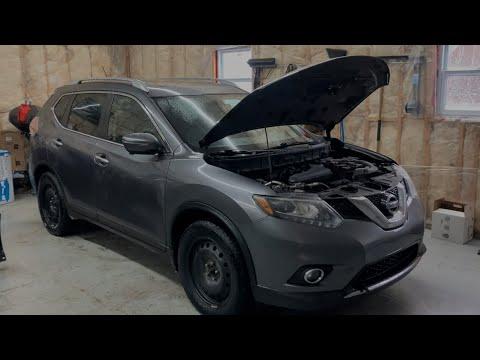







How to Change CVT Transmission Fluid on a 2014 Nissan Rogue
Step-by-step DIY CVT drain-and-fill guide with tools, parts list, torque specs, safety tips, and cost savings
How to Change CVT Transmission Fluid on a 2014 Nissan Rogue
Step-by-step DIY CVT drain-and-fill guide with tools, parts list, torque specs, safety tips, and cost savings


🔧 Rogue - CVT Transmission Fluid Drain & Fill
You’ll be doing a drain-and-fill on the CVT (continuously variable transmission), which replaces part of the old fluid with fresh Nissan CVT NS-3 fluid. This helps the CVT run cooler and smoother, and can extend its life.
Difficulty Level: Intermediate (careful but doable for a first-timer) | Estimated Time: 1.5–2.5 hours
⚠️ Safety & Precautions
- ⚠️ Always support the Rogue with jack stands, never only a jack.
- ⚠️ CVT fluid and the exhaust can get very hot; let the vehicle cool before working under it.
- ⚠️ Work on level ground. An unlevel vehicle will give the wrong fluid level.
- ⚠️ Keep dirt out of the transmission. Any contamination can damage the CVT.
- ⚠️ Wear safety glasses and gloves; CVT fluid is slippery and irritating to skin.
- ⚠️ Do not “pressure flush” a CVT. Only drain-and-fill is recommended for DIY.
- Battery disconnect is not required for this job.
🔧 Required Tools
You'll need the following tools for this repair:
- 🔧 Floor jack (rated 3-ton minimum)
- 🔧 Jack stands (rated 3-ton minimum, set of 2–4)
- 🔧 Wheel chocks
- 🔧 19mm socket
- 🔧 3/8" drive ratchet
- 🔧 3/8" drive torque wrench (7–75 ft-lbs range)
- 🔧 10mm socket
- 🔧 Ratchet extension (6")
- 🔧 Flathead screwdriver (medium size)
- 🔧 Drain pan (at least 8-liter capacity)
- 🔧 Measuring container with liter or quart markings
- 🔧 Long-neck funnel (narrow tip)
- 🔧 3/8" clear vinyl hose (about 1 meter long)
- 🔧 Infrared thermometer
- 🔧 Shop rags or paper towels
- 🔧 Nitrile gloves
- 🔧 Safety glasses
- 🔧 OBD2 scan tool with CVT fluid temp reading (specialty, optional but recommended)
🔩 Required Parts
HowToo sells all the parts you need for this repair:
- 🔩 Nissan CVT fluid NS-3 - Qty: 5 quarts (you’ll use ~4–4.5)
- 🔩 CVT drain plug crush washer - Qty: 1
- 🔩 Brake cleaner spray - Qty: 1 can
- 🔩 Shop towels - Qty: 1 pack
📋 Before You Begin
- Park the Rogue on level ground, set the parking brake, and chock the rear wheels.
- Loosen the CVT fill area first (so you know you can refill before you drain).
- If you have a scan tool, get familiar with the menu to read CVT fluid temperature.
- Plan to do this with the engine and exhaust only slightly warm, not hot.
🔨 Step-by-Step Instructions
Follow these steps in order:
Step 1: Lift and support the Rogue
- Use the floor jack to lift the front of the Rogue at the front center jacking point (behind the front bumper on the subframe).
- Place jack stands under the left and right front pinch welds or frame points, then slowly lower the vehicle onto the stands.
- Make sure the vehicle is stable by gently shaking it by the body.
- Always keep at least two jack stands under the vehicle.
Step 2: Remove the front under-cover (splash shield)
- Use the 10mm socket and ratchet to remove the bolts holding the plastic splash shield under the engine/transmission.
- Use the flathead screwdriver to gently pry out any plastic clips.
- Set the shield and hardware aside in order so reassembly is easier.
Step 3: Locate the CVT drain plug and fill area
- The CVT oil pan is on the driver’s side of the engine bay, between the engine and the driver-side wheel.
- From underneath, find the drain plug on the bottom of the CVT pan (it looks like a normal plug bolt).
- From above, remove the air intake snorkel if needed using the 10mm socket to give more room near the CVT.
- On the upper side of the transmission (driver’s side), locate the CVT fill plug (usually a bolt with a washer on top of the transmission case).
- Finding the fill point first ensures you can refill after draining.
Step 4: Crack loose the CVT fill plug
- Use the ratchet with the correct socket (usually 19mm) on the fill plug.
- Carefully break it loose, but do not remove it fully yet—just confirm it can be opened.
- Wipe around the area with a rag to keep dirt away.
Step 5: Drain the old CVT fluid
- Place the drain pan under the CVT drain plug.
- Use the 19mm socket and ratchet to carefully loosen and remove the drain plug.
- Let the fluid drain completely; this can take 10–15 minutes.
- While it drains, clean the drain plug with a rag and inspect it for metal shavings.
- Once it finishes dripping, pour the fluid from the drain pan into your measuring container and note exactly how much came out.
- You will refill with the same amount that you drained.
Step 6: Reinstall the drain plug with new washer
- Install a new crush washer on the drain plug.
- Thread the drain plug in by hand to avoid cross-threading.
- Use the 19mm socket and torque wrench to tighten the drain plug to 34 Nm (25 ft-lbs).
- Spray the area with brake cleaner and wipe clean so you can later check for leaks.
Step 7: Add new CVT fluid from the top
- Now fully remove the CVT fill plug using the ratchet and correct socket.
- Push one end of the 3/8" clear vinyl hose into the fill opening.
- Place the other end of the hose into the long-neck funnel.
- Pour in the same amount of fresh NS-3 CVT fluid that you measured draining out (usually about 4–4.5 quarts), slowly to avoid spilling.
- Pour slowly; trapped air can cause burping and spills.
Step 8: Reinstall the fill plug (initially)
- Remove the hose and funnel carefully and wipe the area clean.
- Reinstall the fill plug by hand.
- Use the torque wrench and correct socket to tighten the fill plug to 34 Nm (25 ft-lbs).
Step 9: Warm up and circulate the fluid
- Lower the Rogue back to the ground by using the floor jack and removing the jack stands.
- Start the engine and keep your foot on the brake.
- Move the gear selector slowly through all positions: P > R > N > D > L, pausing 3–5 seconds in each, then back to P.
- Do this cycle 2–3 times to work the fluid through the CVT.
- If you have a scan tool, monitor CVT fluid temperature and let it reach about 35–45°C (95–113°F).
- If you do not have a scan tool, let the engine idle for about 10–15 minutes, making sure the fans may cycle once; use the infrared thermometer on the CVT pan and aim for around 35–45°C (warm, but not hot to the touch).
Step 10: Recheck for leaks and reinstall under-cover
- Turn the engine off.
- Lift and support the Rogue again using the floor jack and jack stands.
- Inspect the CVT drain plug and fill area for any fresh fluid leaks.
- If dry, reinstall the splash shield using the 10mm socket and any clips you removed.
Step 11: Final road check
- Lower the vehicle back to the ground fully.
- Take a short, gentle drive (5–10 km) with normal acceleration only.
- Listen for any unusual noises and feel for shuddering or slipping.
- After the drive, check under the Rogue for any signs of leaks.
✅ After Repair
- Check the area under the CVT after the first drive and again the next day for any leaks.
- If you have a scan tool, verify no new transmission-related fault codes have appeared.
- For the next few days, drive gently—avoid hard acceleration so the CVT can adapt to the fresh fluid.
- Consider repeating another drain-and-fill after a short interval (e.g., 5,000–10,000 km) if the original fluid was very dark; this replaces more of the old fluid.
💰 DIY vs Shop Cost
Shop Cost: $250–$450 (parts + labor)
DIY Cost: $60–$140 (parts only, depending on fluid brand and quantity)
You Save: $190–$310 by doing it yourself!
Shop labor rates vary but typically run $100–$150/hour. This repair takes a shop approximately 1.0–1.5 hours.
🎯 Ready to get started?
HowToo makes it easy: same-day/2-day shipping on every part, plus all the tools and specialty tools you need! Check out the parts and tools sections above to add everything to your cart.