









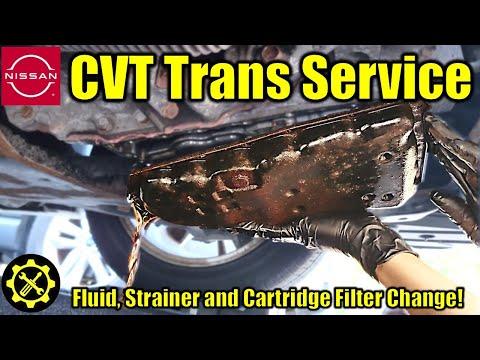







How to Change CVT Transmission Fluid on a 2013 Nissan Altima (NS-3 Drain & Refill)
Step-by-step CVT service with required tools, NS-3 fluid/washer list, fluid temp level-check procedure, and torque specs for 2007, 2008, 2009, 2010, 2011, 2012, 2013, 2014, 2015, 2016, 2017, 2018, 2019, 2020, 2021, 2022, 2023, 2024
How to Change CVT Transmission Fluid on a 2013 Nissan Altima (NS-3 Drain & Refill)
Step-by-step CVT service with required tools, NS-3 fluid/washer list, fluid temp level-check procedure, and torque specs for 2007, 2008, 2009, 2010, 2011, 2012, 2013, 2014, 2015, 2016, 2017, 2018, 2019, 2020, 2021, 2022, 2023, 2024


🔧 Altima - CVT Transmission Fluid Change
Your Altima uses a CVT (continuously variable transmission), and the fluid level is set by temperature and an overflow/check plug—not a dipstick. The job is mainly a drain-and-refill, then setting the final level at the correct CVT fluid temperature to prevent slipping or overheating.
Difficulty Level: Intermediate | Estimated Time: 1.5-3.0 hours
⚠️ Safety & Precautions
- ⚠️ Work on a level surface and support the car on jack stands—never rely on a jack alone.
- ⚠️ CVT fluid level is checked with the engine running; keep hands/clothes away from belts and fans.
- ⚠️ CVT fluid can be hot; wear gloves and safety glasses.
- ⚠️ Keep the CVT fill area clean—small dirt can cause CVT problems.
- ⚠️ Battery disconnect is not required for this service.
🔧 Required Tools
You'll need the following tools for this repair:
- Floor jack (rated 3-ton minimum)
- Jack stands (rated 3-ton minimum) - Qty: 2
- Wheel chocks - Qty: 2
- Safety glasses
- Nitrile gloves
- Drain pan (8-quart minimum)
- 10mm socket
- Ratchet (3/8" drive)
- Extension (3"-6")
- 19mm socket
- Hex key socket 6mm
- Torque wrench (10-80 ft-lb range)
- Fluid transfer pump
- Funnel with hose
- OBD2 scan tool with CVT fluid temperature data (specialty)
- Infrared thermometer (backup option)
- Clean rags
🔩 Required Parts
HowToo sells all the parts you need for this repair:
- Nissan CVT fluid (NS-3 spec) - Qty: 5 quarts
- CVT drain plug crush washer - Qty: 1
- CVT fill plug crush washer - Qty: 1
📋 Before You Begin
- Park your Altima on a flat, level surface.
- Chock the rear wheels with wheel chocks.
- Gather enough NS-3 spec CVT fluid; using the wrong fluid can damage the CVT.
- If you have a scan tool, set it up now so you can read CVT fluid temperature (this is the temperature of the fluid inside the transmission).
- Tip: Clean around plugs before opening them.
🔨 Step-by-Step Instructions
Follow these steps in order:
Step 1: Warm the CVT fluid slightly
- Drive 10–15 minutes so the CVT fluid is warm (not scorching hot).
- Park on level ground and leave the engine off for 2–3 minutes.
Step 2: Raise and level the car
- Use a floor jack (rated 3-ton minimum) to lift the front.
- Set it down on jack stands (rated 3-ton minimum).
- The car must sit level for the final fluid level check. If you lift the front, lift the rear too (same height) using the same floor jack and jack stands.
Step 3: Remove the lower splash shield (under cover)
- Use a 10mm socket with a ratchet and extension to remove the bolts and drop the cover.
- Set the hardware aside so nothing gets lost.
Step 4: Identify the CVT drain and fill plugs
- Place a drain pan (8-quart minimum) under the CVT.
- Use a 19mm socket to locate the drain plug at the bottom of the CVT case.
- Locate the CVT fill plug (typically on the CVT case, accessed from the front/side). You’ll use the 19mm socket here too.
- Tip: Always loosen the fill plug first.
Step 5: Loosen the fill plug first
- Use a 19mm socket and ratchet to crack the fill plug loose (do not remove it fully yet).
- This prevents getting stuck with an empty CVT you can’t refill.
Step 6: Drain the old CVT fluid
- Use a 19mm socket and ratchet to remove the drain plug.
- Let it drain into the drain pan until it slows to a drip.
- Clean the drain plug and replace the washer with a new CVT drain plug crush washer.
Step 7: Reinstall the drain plug
- Thread the drain plug in by hand first to avoid cross-threading.
- Use a torque wrench with a 19mm socket and Torque to 34 Nm (25 ft-lbs).
Step 8: Fill with new NS-3 CVT fluid (initial fill)
- Remove the fill plug using a 19mm socket.
- Install your fluid transfer pump (or funnel with hose) into the fill port.
- Pump in Nissan CVT fluid (NS-3 spec) slowly. A typical drain-and-fill is around 4 quarts, but final level is set by the check procedure.
- Install a new CVT fill plug crush washer and reinstall the fill plug snug (final torque after level set).
Step 9: Run the transmission and circulate fluid
- Start the engine and keep your foot on the brake.
- Slowly move the shifter through P-R-N-D and back to P, pausing 3 seconds in each position.
- Keep the engine idling.
Step 10: Set the final fluid level at the correct temperature
- Connect your OBD2 scan tool with CVT fluid temperature data (specialty) and monitor CVT fluid temperature.
- Target the CVT fluid temperature range of 35–45°C (95–113°F) for the level check.
- If you don’t have CVT temperature data, use an infrared thermometer as a backup by measuring the CVT case near the pan area; it’s less accurate, so go slowly and stay in the target range.
- With engine idling and the car level, use a hex key socket 6mm to remove the level/check plug (overflow plug) if equipped on your CVT case.
- Correct level behavior in the target temp range: a thin stream that turns into a steady drip.
- If no fluid comes out, reinstall the check plug, shut engine off, add a little more NS-3 through the fill port using the fluid transfer pump, then repeat the check.
- When level is correct, reinstall the check plug with the hex key socket 6mm and tighten securely.
- Re-torque the fill plug using a torque wrench with a 19mm socket and Torque to 34 Nm (25 ft-lbs).
Step 11: Reinstall the under cover
- Reinstall the splash shield using the 10mm socket, ratchet, and extension.
Step 12: Lower the car
- Use the floor jack (rated 3-ton minimum) to lift slightly, remove the jack stands, then lower the car carefully.
✅ After Repair
- Start the engine and check underneath for leaks with a flashlight (use safety glasses).
- Take a 10–15 minute test drive. Pay attention to shuddering, slipping, or delayed engagement.
- Recheck for leaks after the drive.
- Tip: Dispose of old fluid at a recycler.
💰 DIY vs Shop Cost
Shop Cost: $250-$450 (parts + labor)
DIY Cost: $80-$140 (parts only)
You Save: $170-$310 by doing it yourself!
Shop labor rates vary but typically run $100-$150/hour. This repair takes a shop approximately 1.5-2.5 hours.
🎯 Ready to get started?
HowToo makes it easy: same-day/2-day shipping on every part, plus all the tools and specialty tools you need! Check out the parts and tools sections below to add everything to your cart.
Quick check so I guide you perfectly (pick one):
- ❓ Do you have an OBD2 scan tool that can show CVT fluid temperature?
- ❓ When you look at the CVT case, do you see a small 6mm hex level/check plug in addition to the main drain plug?