









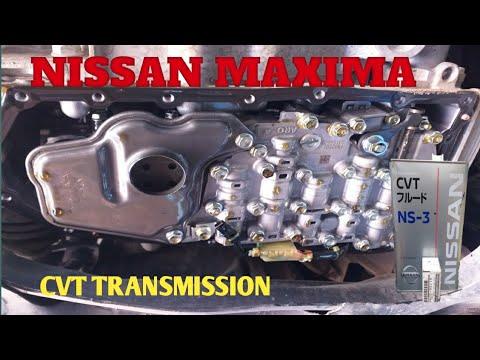







How to Change CVT Transmission Fluid (Drain & Refill) on a 2018 Nissan Maxima
Step-by-step NS-3 fluid service with tools list, washers, torque specs, and correct fluid level setting by temperature for 2009, 2010, 2011, 2012, 2013, 2014, 2016, 2017, 2018, 2019, 2020, 2021, 2022, 2023
How to Change CVT Transmission Fluid (Drain & Refill) on a 2018 Nissan Maxima
Step-by-step NS-3 fluid service with tools list, washers, torque specs, and correct fluid level setting by temperature for 2009, 2010, 2011, 2012, 2013, 2014, 2016, 2017, 2018, 2019, 2020, 2021, 2022, 2023


🔧 Maxima - CVT Transmission Fluid Drain & Refill
Your Maxima uses a Nissan CVT (continuously variable transmission) that relies on clean, correct-spec fluid to protect the belt and pulleys. This job is a controlled drain-and-refill, then a fluid level “set” at a specific fluid temperature—this temperature step is the key to doing it right.
Difficulty Level: Intermediate | Estimated Time: 1.5-3.0 hours
⚠️ Safety & Precautions
- 🛑 Support the car with jack stands on a level surface—never rely on a jack alone.
- 🔥 CVT fluid and exhaust parts can be hot. Let the car cool before opening plugs.
- 🧯 Keep the vehicle level during fill and level-setting, or the final level will be wrong.
- 👓 Wear safety glasses; CVT fluid can splash when plugs are removed.
- 🔌 Battery disconnect is not required for a drain/fill, but keep the key away from the car while under it.
🔧 Required Tools
You'll need the following tools for this repair:
- Floor jack (rated 3-ton minimum)
- Jack stands (rated 3-ton minimum, pair)
- Wheel chocks
- Safety glasses
- Nitrile gloves
- Drain pan (10-quart minimum)
- Socket set (metric, 8mm-19mm)
- Ratchet (3/8" drive)
- Torque wrench (10-100 ft-lbs range)
- Trim clip removal tool
- Flathead screwdriver
- Funnel with long hose
- Clean measuring container (marked quarts/liters)
- Scan tool with live data CVT fluid temp (specialty)
- Shop rags
- Brake cleaner
🔩 Required Parts
HowToo sells all the parts you need for this repair:
- Nissan CVT fluid (NS-3) - Qty: 5-6 quarts
- CVT drain plug crush washer - Qty: 1
- CVT overflow/level plug washer - Qty: 1
📋 Before You Begin
- Park your Maxima on a level surface, set the parking brake, and chock the rear wheels.
- Make sure you have Nissan NS-3 CVT fluid (do not substitute ATF).
- Confirm your scan tool can read CVT fluid temperature (this is the temperature of the fluid inside the transmission).
- Plan to remove the lower splash shield/undercover to access the CVT drain/fill points.
🔨 Step-by-Step Instructions
Follow these steps in order:
Step 1: Warm the CVT fluid slightly
- Drive 5-10 minutes so the fluid is warm (not fully hot).
- Park on level ground and shut the engine off.
- Warm fluid drains faster and carries more debris.
Step 2: Raise and level the vehicle
- Use a floor jack to lift the front, then support with jack stands.
- Keep the car level front-to-rear (don’t leave the rear on the ground if it tilts a lot).
Step 3: Remove the lower engine splash shield/undercover
- Use a trim clip removal tool and flathead screwdriver to remove plastic clips.
- Use a socket set (metric) with a ratchet to remove the bolts.
- Set clips/bolts aside in a tray so nothing is lost.
Step 4: Loosen the CVT fill plug first
- Locate the CVT fill plug (upper-side fill point).
- Use the correct socket and ratchet to crack it loose.
- If the fill plug won’t loosen, stop here (you don’t want to drain it and then be unable to refill).
Step 5: Drain the old CVT fluid
- Position a drain pan under the CVT drain plug.
- Use the correct socket and ratchet to remove the drain plug.
- Let the fluid drain completely (this may take 10-20 minutes).
- Pour the drained fluid into a clean measuring container and record how much came out.
Step 6: Reinstall the drain plug with a new washer
- Clean the drain plug area with shop rags and brake cleaner.
- Install a new crush washer on the drain plug.
- Thread the drain plug in by hand first, then tighten with a torque wrench: Torque to 34 Nm (25 ft-lbs).
Step 7: Refill with NS-3 CVT fluid
- Insert a funnel with long hose into the CVT fill port.
- Add the same amount you measured coming out (usually around 4-5 quarts on a drain/fill).
- Reinstall the fill plug snug for now using a ratchet (final level is set next).
Step 8: Run the car and circulate the fluid
- Start the engine with your foot on the brake.
- Slowly move the shifter through P-R-N-D and back to P, pausing 3 seconds in each position.
- Keep the engine idling.
Step 9: Set the CVT fluid level at the correct temperature
- Connect your scan tool with live data CVT fluid temp (specialty) and monitor CVT fluid temperature.
- With the engine idling and vehicle level, bring CVT fluid temperature to 35°C to 45°C (95°F to 113°F).
- Locate the CVT overflow/level plug on the transmission.
- Place the drain pan underneath, then remove the overflow/level plug using the correct socket and ratchet.
- Correct level behavior:
- If fluid dribbles in a thin stream then slows to a drip, the level is correct.
- If no fluid comes out, add NS-3 through the fill port (small amounts), then re-check.
- If a strong stream pours out, let it drain until it becomes a drip.
- Install a new washer on the overflow/level plug and tighten with a torque wrench: Torque to 34 Nm (25 ft-lbs).
Step 10: Reinstall the fill plug and undercovers
- Reinstall and tighten the CVT fill plug using a torque wrench: Torque to 34 Nm (25 ft-lbs).
- Reinstall the splash shield/undercover using the socket set and trim clip removal tool.
- Lower the vehicle using the floor jack.
✅ After Repair
- 🧪 Test drive 10-15 minutes with gentle acceleration. Make sure there’s no slipping, shudder, or warning lights.
- 🔎 Check underneath for leaks around the drain plug, fill plug, and overflow/level plug.
- 🧾 If you have a scan tool, check for stored transmission codes and clear any that were set during service.
- ♻️ Dispose of used CVT fluid at a recycling center/auto parts store that accepts waste oil.
💰 DIY vs Shop Cost
Shop Cost: $250-$450 (parts + labor)
DIY Cost: $80-$160 (parts only)
You Save: $170-$290 by doing it yourself!
Shop labor rates vary but typically run $100-$150/hour. This repair takes a shop approximately 1.5-3.0 hours.
🎯 Ready to get started?
HowToo makes it easy: same-day/2-day shipping on every part, plus all the tools and specialty tools you need! Check out the parts and tools sections below to add everything to your cart.