









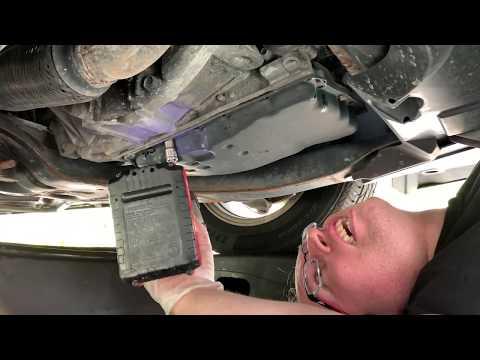







How to Change CVT Transmission Fluid (Drain & Fill) on a 2011 Nissan Altima
Step-by-step drain-and-fill guide with NS-2 fluid, tools list, safety tips, and fluid level check procedure
How to Change CVT Transmission Fluid (Drain & Fill) on a 2011 Nissan Altima
Step-by-step drain-and-fill guide with NS-2 fluid, tools list, safety tips, and fluid level check procedure


🔧 Altima - CVT Transmission Fluid Drain & Fill
This service replaces a portion of the CVT fluid by draining the pan and refilling with the correct Nissan CVT fluid. Fresh fluid helps protect the CVT’s belt and pulleys and can improve smoothness, especially as fluid ages.
Difficulty Level: Intermediate | Estimated Time: 1.0-2.0 hours
⚠️ Safety & Precautions
- ⚠️ Support the car with jack stands; never rely on a jack.
- ⚠️ CVT fluid can be hot; wear gloves and safety glasses.
- ⚠️ Hybrid system: avoid touching orange high-voltage cables/connectors.
- ⚠️ Keep the car level during draining and filling, or the fluid level will be wrong.
- ⚠️ Do not “power flush” the CVT; do a drain-and-fill only unless a shop procedure is being followed.
🔧 Required Tools
You'll need the following tools for this repair:
- Floor jack (rated 3-ton minimum)
- Jack stands (rated 3-ton minimum)
- Wheel chocks
- Safety glasses
- Nitrile gloves
- Drain pan (at least 8-quart)
- 19mm socket
- 3/8" drive ratchet
- Torque wrench (10–80 ft-lb range)
- Trim clip tool
- Phillips screwdriver
- Long-neck funnel
- Measuring container (marked quarts/liters)
- OBD2 scan tool with CVT fluid temperature data (specialty)
- Infrared thermometer (specialty)
- Shop rags
🔩 Required Parts
HowToo sells all the parts you need for this repair:
- Nissan CVT fluid (NS-2 specification) - Qty: 5 quarts
- CVT drain plug crush washer - Qty: 1
📋 Before You Begin
- 🅿️ Park on a level surface, set the parking brake, and chock the rear wheels.
- 📏 Confirm your Altima has a CVT dipstick tube under the hood (a small handled dipstick). If you do not see a dipstick, stop here and tell me—your CVT may use a different level-check procedure.
- 🧼 Wipe dirt from around the dipstick area so debris doesn’t fall into the CVT.
- 🌡️ Plan your fluid level check: best method is with an OBD2 scan tool reading CVT fluid temperature; backup method is using the dipstick “HOT” range after a normal warm-up drive.
🔨 Step-by-Step Instructions
Follow these steps in order:
Step 1: Warm the CVT fluid
- Start the car and let it idle 2–3 minutes.
- With your foot on the brake, move the shifter slowly through P-R-N-D-L and back to P.
- Warm fluid drains more completely.
Step 2: Raise and level the car
- Use a floor jack to lift the front safely.
- Place the car on jack stands and keep it as level as possible (front not excessively higher than rear).
- Use wheel chocks to prevent rolling.
Step 3: Remove the lower splash shield (if equipped)
- Use a trim clip tool to pop out plastic clips.
- Use a Phillips screwdriver to remove any screws.
- Set clips/screws aside so you don’t lose them.
Step 4: Drain the CVT fluid
- Place a drain pan under the CVT drain plug.
- Use a 19mm socket with a 3/8" drive ratchet to loosen and remove the drain plug.
- Let the fluid drain until it becomes a slow drip (typically 10–15 minutes).
Step 5: Measure what came out (important)
- Pour the drained fluid into a measuring container.
- Record the amount—this is your starting refill amount.
- Refill the same amount first, then level-check.
Step 6: Reinstall the drain plug with a new crush washer
- Remove the old washer and install the new crush washer on the drain plug.
- Thread the drain plug in by hand first to avoid cross-threading.
- Use a torque wrench with a 19mm socket and Torque to 34 Nm (25 ft-lb).
- Wipe the area clean with shop rags.
Step 7: Refill with the correct CVT fluid
- Open the hood and remove the CVT dipstick.
- Insert a long-neck funnel into the dipstick tube.
- Pour in the same amount you measured using Nissan CVT fluid (NS-2 specification).
- Reinstall the dipstick fully.
Step 8: Circulate fluid and check level (best method: scan tool)
- Start the car and let it idle.
- Use an OBD2 scan tool with CVT fluid temperature data (specialty) to monitor CVT fluid temp.
- When CVT fluid is around warm operating range (about 35–45°C / 95–113°F), move the shifter slowly through all positions again, then leave it in P.
- Pull the dipstick, wipe it with shop rags, reinsert fully, then pull and read.
- Add small amounts through the funnel if needed (about 0.25 qt at a time), then re-check.
Step 9: Backup level check (if you don’t have scan tool data)
- Reinstall the splash shield temporarily (optional), lower the car using the floor jack, and take a normal 10–15 minute drive.
- Park level, idle in P, cycle the shifter through all positions, then check the dipstick against the “HOT” range.
- Use the long-neck funnel to add small amounts if low; do not overfill.
Step 10: Reinstall splash shield and final inspection
- Reinstall the splash shield using the trim clip tool and Phillips screwdriver.
- Inspect around the drain plug for leaks with safety glasses on.
- Dispose of old fluid responsibly (most parts stores accept used fluid).
✅ After Repair
- 🧪 Test drive 5–10 minutes and confirm there’s no slipping, flare, or delayed engagement.
- 🔎 Recheck for leaks under the CVT drain plug after the test drive.
- 📏 Recheck the CVT level one more time on level ground (same method you used earlier).
- 🧾 If you have a scan tool, check for stored transmission codes and address any that return.
💰 DIY vs Shop Cost
Shop Cost: $250-$450 (parts + labor)
DIY Cost: $60-$120 (parts only)
You Save: $130-$390 by doing it yourself!
Shop labor rates vary but typically run $100-$150/hour. This repair takes a shop approximately 1.0-1.5 hours.
🎯 Ready to get started?
HowToo makes it easy: same-day/2-day shipping on every part, plus all the tools and specialty tools you need! Check out the parts and tools sections below to add everything to your cart.