















How to Change Automatic Transmission Fluid on a 2018 Toyota RAV4
Step-by-step DIY drain-and-fill guide with tools, Toyota WS ATF, torque specs, and safe fluid level check method for 2006, 2007, 2008
How to Change Automatic Transmission Fluid on a 2018 Toyota RAV4
Step-by-step DIY drain-and-fill guide with tools, Toyota WS ATF, torque specs, and safe fluid level check method for 2006, 2007, 2008


RAV4 - Automatic Transmission Fluid Change ⚙️
On your 2018 RAV4 SE AWD, the transmission is a “sealed” unit. That means there’s no dipstick and Toyota expects a drain-and-fill with a level check, not a full flush. You must set the fluid level at a specific temperature using a scan tool or the dash “temperature check” mode.
I’ll walk you through a safe drain & fill + level check, which is what dealers do.
Before we start ❓
Two quick questions so I can be exact:
- ✅ Do you have access to a basic OBD2 scan tool that can read live data (transmission fluid temperature), or only the car’s dashboard?
- ✅ Do you have a way to safely lift the RAV4 level (all four corners) – like four jack stands or a lift?
If you answer, I can tailor the temperature-check method. For now, I’ll give the standard Toyota method using the built-in temp-check mode (no fancy scan tool needed).
Parts & Fluids Needed 🧴
- 🛠️ ATF (Automatic Transmission Fluid): Toyota Genuine ATF WS (World Standard) only.
- Buy: ~4 liters (4.2 qt) for a typical drain & fill.
- Do not mix other brands or types.
- 🛠️ New drain plug gasket (washer) for the transmission pan.
- 🛠️ New refill plug gasket (for the side/top fill plug, if separate).
- 🛠️ Brake cleaner spray (to clean the area and check for leaks).
- 🛠️ Shop rags / paper towels.
Tools Required 🔧
- 🛠️ Floor jack + 4 jack stands (or a lift).
- Car must be level when checking fluid level.
- 🛠️ Socket set (metric) and ratchet.
- Transmission drain plug is typically a 10mm hex/Allen or standard hex bolt (varies slightly by build).
- 🛠️ Hex/Allen key socket set (for the inner level plug if equipped).
- 🛠️ Torque wrench (click-type) – needed to tighten bolts correctly.
- Range: 10–50 N·m (7–37 ft-lb) is enough.
- 🛠️ Fluid transfer pump (hand pump that screws onto the ATF bottle).
- This lets you push fluid up into the transmission from below.
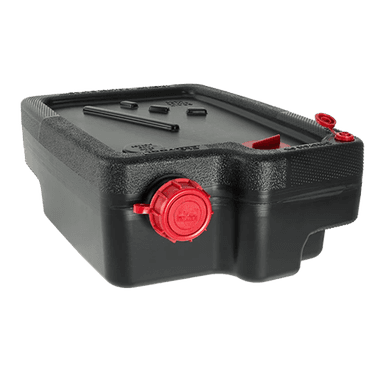
- 🛠️ Drain pan (at least 8–10 liters capacity).
- 🛠️ Safety gear: gloves, safety glasses, wheel chocks.
Key Torque Specs (Typical for this transmission) 📏
- 🛠️ Transmission drain plug: ~37 N·m (27 ft-lb).
- 🛠️ Overflow/level plug (inner): ~20 N·m (15 ft-lb).
- 🛠️ Fill plug: ~29–35 N·m (21–26 ft-lb).
These are typical values for the 6‑speed U760 series. If your drain/fill plugs are clearly different, stop and ask before proceeding.
Safety First ⚠️
- 🛠️ Work on a cool engine and transmission at first. You’ll warm it up later for level check.
- 🛠️ Always support the RAV4 with jack stands, never just the jack.
- 🛠️ Keep the car in PARK with the parking brake set and wheels chocked.
Step 1 – Get Access Under the RAV4 🧰
- 🛠️ Park on a flat surface, set parking brake, chock rear wheels.
- 🛠️ Jack up the front, place jack stands under the proper pinch welds or frame points.
- 🛠️ Jack up the rear and place jack stands so the vehicle sits level.
- 🛠️ Remove the front engine under-cover / splash shield if it blocks the transmission pan.
- Usually held by 10mm bolts and plastic clips.
Step 2 – Identify the Plugs 🔍
Your transmission pan has a special setup:
- 🛠️ Drain plug: On the bottom of the pan. Often a larger hex head or 10mm Allen with an inner “straw”/standpipe.
- 🛠️ Overflow/level plug: Sometimes a small inner plug inside the drain plug or nearby. This sets the fluid level.
- 🛠️ Fill plug: On the side of the transmission case (usually facing the front or driver side), about halfway up.
If you’re unsure which is which, snap a clear photo and I’ll label them.
Step 3 – Remove the Fill Plug First 🧪
- 🛠️ Place the drain pan under the transmission just in case.
- 🛠️ Loosen and remove the fill plug on the side of the transmission.
- This confirms you can refill before you drain anything.
- 🛠️ Check the old gasket; you’ll replace it later.
Step 4 – Drain the Old Fluid 💧
- 🛠️ Move the drain pan under the drain plug in the transmission pan.
- 🛠️ Carefully loosen the drain plug and remove it.
- Fluid will come out quickly; keep your face and hands clear.
- 🛠️ Let it drain until it slows to a drip (a few minutes).
- 🛠️ If there is an inner level/overflow plug, remove it now and let any remaining fluid drain.
- 🛠️ Clean the drain plug and magnet (if present) with brake cleaner and a rag.
- 🛠️ Install a new gasket on the drain plug.
- 🛠️ Reinstall the drain plug and torque to about 37 N·m (27 ft-lb).
Step 5 – Measure What Came Out 📏
- 🛠️ Pour the old fluid from the drain pan into a clean container with markings.
- 🛠️ Note the amount (for example, 3.7 liters). You’ll put back about the same amount of new fluid.
Step 6 – Initial Refill from the Side Fill Plug 🧴
- 🛠️ Attach the fluid transfer pump to the ATF WS bottle.
- 🛠️ Insert the pump hose into the fill hole on the side of the transmission.
- 🛠️ Pump in slightly less than what you drained (e.g., if 3.7 L came out, start with ~3.3–3.5 L).
- 🛠️ Install the fill plug loosely (hand tight) to keep dirt out for now.
Step 7 – Warm Up the Transmission & Enter Temp Check Mode 🌡️
You must set the level with the fluid at a specific temperature (about 35–45°C / 95–113°F).
Using the built-in “ATF temp check” mode (no scan tool):
- 🛠️ Start the engine with the RAV4 still on stands and level.
- 🛠️ With your foot on the brake, slowly move the shifter:
- P → R → N → D → S (or manual mode) and back to P.
- Pause 2–3 seconds in each position. This fills all circuits with fluid.
- 🛠️ Let the engine idle until the transmission warms up. You’ll use the dash to confirm temp mode:
- Turn ignition OFF.
- Turn ignition ON (engine off), don’t start.
- Within 30 seconds, move the shifter: P → N → D → N → D → N → P (pattern can vary slightly; if this doesn’t work, tell me and I’ll adjust for your exact shifter pattern).
- The “D” indicator will start blinking when in temp check mode.
- 🛠️ Start the engine again. When the ATF reaches the correct range, the “D” light will change blink pattern or stay solid (depends on cluster style).
- This indicates the fluid is in the correct temperature window for level check.
If your dash behavior doesn’t match this, tell me what you see and I’ll fine-tune the steps.
Step 8 – Final Level Check (Overflow Method) 💦
- 🛠️ With the engine idling, parking brake on, and transmission in P, go under the RAV4 (carefully).
- 🛠️ Remove the overflow/level plug (small inner plug) from the pan.
- If fluid pours out strongly, you have too much. Let it drain until it becomes a thin stream or slow drip.
- If no fluid comes out, you are low. Reinstall the plug loosely, add ~0.2–0.3 L through the side fill plug, then re-check.
- 🛠️ Once you have a thin stream / drip at the correct temperature:
- Let it drip for a few seconds.
- Install a new gasket on the overflow/level plug.
- Tighten to about 20 N·m (15 ft-lb).
- 🛠️ Turn engine OFF.
- 🛠️ Remove and reinstall the fill plug with a new gasket, torque to about 29–35 N·m (21–26 ft-lb).
Step 9 – Reassemble & Road Test 🚗
- 🛠️ Clean the area around the pan and plugs with brake cleaner so any new leaks are easy to see.
- 🛠️ Reinstall the under-cover / splash shield.
- 🛠️ Lower the RAV4 off the jack stands.
- 🛠️ Take a short drive (10–15 minutes), using all gears normally.
- 🛠️ Park, check under the vehicle for any fresh leaks.
Tips & Tricks for a Beginner 🧠
- 🛠️ Label bolts you remove from the splash shield so they go back in the same place.
- 🛠️ Wear nitrile gloves; ATF is messy and has a strong smell.
- 🛠️ If anything feels forced (bolt won’t start by hand), stop and re-check alignment to avoid stripping threads.
What’s Next 👍
Reply with:
- 🛠️ Whether you have a scan tool or will rely only on the dash.
- 🛠️ A photo of your transmission pan and plugs if you want me to mark exactly which plug is which.
HowToo makes it easy: below this answer you’ll see the correct Toyota WS ATF, new plug gaskets, a fluid transfer pump, and the torque wrench you’ll need. You can add them to your cart right from the parts section for fast shipping.