









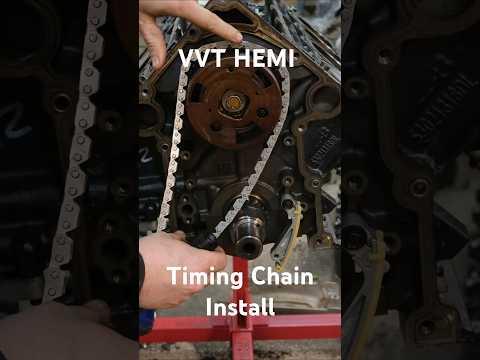







2018 Dodge Charger Timing Chain Replacement Guide (Timing Belt Clarification)
Step-by-step timing chain, tensioner, and guide service with tools, parts list, safety tips, and torque spec notes for 2012, 2013, 2014, 2015, 2016, 2017, 2018
2018 Dodge Charger Timing Chain Replacement Guide (Timing Belt Clarification)
Step-by-step timing chain, tensioner, and guide service with tools, parts list, safety tips, and torque spec notes for 2012, 2013, 2014, 2015, 2016, 2017, 2018


🔧 Charger - Timing Belt (Clarification) & Timing Chain Replacement
Your Charger’s 5.7L HEMI does not use a timing belt—it uses a timing chain. If you’re trying to fix a rattle on cold start, timing-related fault codes, or high-mile wear, the repair you want is a timing chain/tensioner/guide service.
Difficulty Level: Advanced | Estimated Time: 6-10 hours
⚠️ Safety & Precautions
- ⚠️ Work on a cold engine; hot coolant can burn.
- ⚠️ Disconnect the negative battery cable before starting.
- ⚠️ Support the car securely on jack stands; never rely on a jack.
- ⚠️ Keep hands clear when rotating the crankshaft; remove the key/fob from the car.
- ⚠️ Do not rotate the crank/cam with the chain removed; timing can jump.
🔧 Required Tools
You'll need the following tools for this repair:
- Floor jack (rated 3-ton minimum)
- Jack stands (rated 3-ton minimum)
- Wheel chocks
- Safety glasses
- Nitrile gloves
- Drain pan (at least 10-quart)
- Shop rags
- Plastic trim clip tool
- Serpentine belt tool (specialty)
- 3/8" drive ratchet
- 1/2" drive breaker bar
- Torque wrench (10-100 ft-lbs range)
- Torque wrench (50-250 ft-lbs range)
- Socket set (8mm-24mm)
- Wrench set (8mm-18mm)
- Torx bit set
- Harmonic balancer puller (specialty)
- Harmonic balancer installer (specialty)
- Gasket scraper (plastic)
- Brake cleaner
- RTV silicone (engine oil resistant)
- Funnel
- Cooling system fill funnel (specialty)
- OBD2 scan tool
- Paint marker
🔩 Required Parts
HowToo sells all the parts you need for this repair:
- Timing chain - Qty: 1
- Timing chain tensioner - Qty: 1
- Timing chain guides - Qty: 1 set
- Timing cover gasket set - Qty: 1
- Front crankshaft seal - Qty: 1
- Water pump gasket - Qty: 1
- Engine coolant (HOAT/OAT compatible for your Charger) - Qty: 2-3 gallons (mixed as directed)
- Engine oil - Qty: 7 quarts
- Oil filter - Qty: 1
- Serpentine belt - Qty: 1
📋 Before You Begin
- Park on level ground, set the parking brake, and chock the rear wheels.
- Disconnect the battery negative terminal using a 10mm socket.
- Raise the front and support with jack stands.
- Plan for fluids: you’ll drain coolant, and it’s smart to do an oil change after opening the timing cover.
- Take photos before removing brackets and bolts.
🔨 Step-by-Step Instructions
Follow these steps in order:
Step 1: Remove the intake ducting and upper access parts
- Use an 8mm socket to loosen intake clamps and remove the intake duct/airbox pieces as needed.
- Disconnect any electrical connectors carefully using a plastic trim clip tool.
Step 2: Drain the coolant
- Place a drain pan under the radiator drain.
- Open the drain using the appropriate pliers or hand-turn (varies by radiator style).
- Open the coolant reservoir cap to help it drain faster.
Step 3: Remove the serpentine belt
- Use a serpentine belt tool to rotate the belt tensioner and slip the belt off.
- Draw a belt routing diagram first.
Step 4: Remove front accessory components blocking the timing cover
- Remove the radiator fan/shroud as needed using a socket set (8mm-13mm).
- Remove accessory brackets and any components blocking the timing cover using a socket set (10mm-15mm).
- Set bolts aside in labeled groups (cardboard “bolt map” works great).
Step 5: Remove the harmonic balancer (crank pulley)
- Remove the crank bolt using a 1/2" breaker bar and correct-size socket.
- Use a harmonic balancer puller (specialty) to pull the balancer off evenly.
- Never pry against the timing cover sealing surface.
- Torque to OEM spec (consult factory spec for crank bolt)
Step 6: Remove the timing cover
- Remove timing cover bolts using a socket set (8mm-13mm).
- Break the seal gently with a plastic gasket scraper; do not gouge aluminum.
- Clean mating surfaces using brake cleaner and shop rags.
- Torque to OEM spec (consult factory spec for timing cover bolts)
Step 7: Set the engine to Top Dead Center (TDC) on cylinder 1
- Use a socket and breaker bar on the crank to rotate the engine clockwise.
- Align timing marks on the crank sprocket and cam sprocket(s) as designed.
- Use a paint marker to add your own reference marks on chain/sprockets.
- Only rotate clockwise to keep tension predictable.
Step 8: Remove the timing chain tensioner and guides
- Remove tensioner fasteners using a socket set.
- Remove the chain guides using a socket set.
- Torque to OEM spec (consult factory spec for tensioner/guide bolts)
Step 9: Remove the timing chain and sprockets (if required by your kit)
- Slip the chain off the sprockets carefully by hand.
- If sprockets must be replaced, remove fasteners using a socket set and hold the cam/crank as required.
- Torque to OEM spec (consult factory spec for cam/crank sprocket fasteners)
Step 10: Install the new chain, guides, and tensioner
- Install guides using a torque wrench.
- Install the chain with timing marks aligned exactly to the sprocket marks.
- Install the tensioner last using a torque wrench.
- Torque to OEM spec (consult factory spec for all timing hardware)
Step 11: Verify timing alignment
- Rotate the engine clockwise by hand two full revolutions using a breaker bar.
- Re-check timing marks line up correctly.
- If marks are off, stop and correct before reassembly.
Step 12: Replace the front crank seal and reinstall the timing cover
- Replace the front crank seal from the cover using an appropriate socket as a driver (tap evenly) or seal driver if available.
- Apply a small bead of RTV silicone (engine oil resistant) only where the factory calls for it (typically junction corners).
- Install the timing cover and tighten bolts evenly using a torque wrench.
- Torque to OEM spec (consult factory spec for timing cover and seal areas)
Step 13: Reinstall the harmonic balancer
- Use a harmonic balancer installer (specialty) to press the balancer on straight.
- Install the crank bolt using a torque wrench.
- Torque to OEM spec (consult factory spec for crank bolt procedure)
Step 14: Reinstall accessories, belt, and refill fluids
- Reinstall brackets/components using a socket set and torque wrench.
- Install the serpentine belt using a serpentine belt tool.
- Refill coolant using a funnel and ideally a cooling system fill funnel (specialty) to reduce air pockets.
- Change oil and filter using a socket set and drain pan.
Step 15: Reconnect battery and initial start
- Reconnect the battery negative terminal using a 10mm socket.
- Start the engine and let it idle.
- Check for oil leaks at the timing cover and crank seal area.
- Watch coolant temperature and verify the heater blows hot (helps confirm coolant circulation).
✅ After Repair
- Use an OBD2 scan tool to check and clear any stored codes, then recheck after a short drive.
- Recheck coolant level after the first full heat cycle and top off as needed.
- Inspect for leaks again the next morning (cold start).
- If you hear a new rattle or get a timing-related code, shut it down and re-check timing alignment.
💰 DIY vs Shop Cost
Shop Cost: $1,500-$3,000 (parts + labor)
DIY Cost: $250-$750 (parts only)
You Save: $1,250-$2,250 by doing it yourself!
Shop labor rates vary but typically run $100-$150/hour. This repair takes a shop approximately 6-10 hours.
🎯 Ready to get started?
HowToo makes it easy: same-day/2-day shipping on every part, plus all the tools and specialty tools you need! Check out the parts and tools sections below to add everything to your cart.