









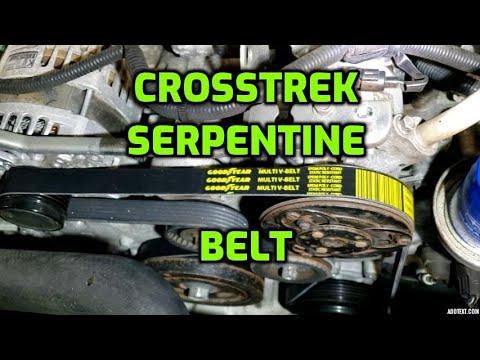







2016 Subaru Crosstrek 2.0L: Timing Belt vs Timing Chain + Serpentine Belt Replacement Guide
Clarifies FB20 timing chain design and provides step-by-step accessory drive belt replacement with tools, parts, and torque specs for 2016, 2017
2016 Subaru Crosstrek 2.0L: Timing Belt vs Timing Chain + Serpentine Belt Replacement Guide
Clarifies FB20 timing chain design and provides step-by-step accessory drive belt replacement with tools, parts, and torque specs for 2016, 2017


🔧 Crosstrek - Timing Belt Replacement
Your Crosstrek’s 2.0L FB20 engine does not use a timing belt. It uses a timing chain, which is internal and typically not a routine maintenance replacement item.
Assumption: You meant the engine accessory drive belt (serpentine belt), which is the belt you can actually replace as normal DIY maintenance.
Difficulty Level: Beginner | Estimated Time: 0.5-1.0 hours
⚠️ Safety & Precautions
- 🧤 Work on a cool engine; hot parts can burn you.
- 🧯 Keep fingers and tools away from pulleys; the belt area can pinch.
- 🔌 No battery disconnect is required for this job, but keep the key away from the vehicle so it can’t be started accidentally.
- 🧱 If you raise the front, support the car with jack stands on solid ground; never rely on a jack alone.
🔧 Required Tools
You'll need the following tools for this repair:
- Wheel chocks
- Floor jack (rated 2-ton minimum)
- Jack stands (rated 2-ton minimum)
- Safety glasses
- Nitrile gloves
- Flashlight
- 10mm socket
- 12mm socket
- 3/8" drive ratchet
- 6" extension (3/8" drive)
- 14mm box wrench
- Torque wrench (10-60 Nm range)
- Trim clip removal tool
🔩 Required Parts
HowToo sells all the parts you need for this repair:
- Accessory drive belt (serpentine belt) - Qty: 1
- Engine undercover clips - Qty: 2-6 (only if any break)
📋 Before You Begin
- 🅿️ Park on level ground and set the parking brake.
- 🧱 Place wheel chocks behind the rear wheels.
- 🔦 Have your flashlight ready so you can confirm the belt ribs are seated in every pulley groove.
🔨 Step-by-Step Instructions
Follow these steps in order:
Step 1: Remove the lower engine undercover (splash shield)
- Raise the front safely using a floor jack (rated 2-ton minimum) and support it with jack stands (rated 2-ton minimum).
- Remove the undercover bolts using a 10mm socket and 3/8" drive ratchet.
- Pop out plastic clips using a trim clip removal tool.
- Reinstall later and Torque to 7.5 Nm (66 in-lb) for the 10mm undercover bolts.
Step 2: Locate the belt routing
- Use a flashlight to look up at the front of the engine and identify each pulley the belt runs around.
- Take a quick photo before removal.
Step 3: Release belt tension
- Find the automatic belt tensioner.
- Place a 14mm box wrench on the tensioner’s hex and rotate it smoothly to relieve tension. (A tensioner is a spring-loaded arm that keeps the belt tight.)
- While holding the tensioner rotated, slide the belt off the easiest-to-reach smooth pulley.
Step 4: Remove the old belt
- Remove the belt fully by hand.
- Inspect pulleys with a flashlight for cracks, wobble, or rough bearings (a rough “gritty” feel when turned by hand).
Step 5: Install the new belt
- Route the new belt around the pulleys the same way as your photo.
- Make sure the belt ribs sit fully in the grooved pulleys; use a flashlight to confirm alignment.
- Use the 14mm box wrench to rotate the tensioner again, slip the belt onto the final pulley, then slowly release the tensioner.
- Release the tensioner slowly to avoid snapping.
Step 6: Reinstall the undercover
- Reinstall clips and bolts using a trim clip removal tool (for clips) and 10mm socket with 3/8" drive ratchet (for bolts).
- Torque to 7.5 Nm (66 in-lb) for the 10mm undercover bolts using a torque wrench (10-60 Nm range).
- Lower the vehicle safely using the floor jack.
✅ After Repair
- 🔍 Before starting, do one last check with a flashlight that the belt is centered on every pulley.
- 🚗 Start the engine and let it idle for 30-60 seconds while you listen for squeal or slapping.
- 🛑 Shut it off and re-check belt seating if anything looks or sounds off.
💰 DIY vs Shop Cost
Shop Cost: ₹1,500-₹4,000 (parts + labor)
DIY Cost: ₹800-₹2,000 (parts only)
You Save: ₹700-₹2,000 by doing it yourself!
Shop labor rates vary but typically run ₹800-₹2,000/hour. This repair takes a shop approximately 0.5-1.0 hours.
🎯 Ready to get started?
HowToo makes it easy: same-day/2-day shipping on every part, plus all the tools and specialty tools you need! Check out the parts and tools sections below to add everything to your cart.